INTERNAL MARTIAL FOUNDATIONS · 内家拳筑基

The Six Harmonies (Liuhe) in Wudang Internal Martial Arts: Coordinating Hand-Foot, Elbow-Knee, Shoulder-Hip and Mind-Breath 内家拳“六合”详解:手与足合、肘与膝合、肩与胯合及心意气力的内外相合

How classical Wudang training links the Three External Harmonies (Wai San He) and Three Internal Harmonies (Nei San He) so the whole body moves as a single integrated breath.

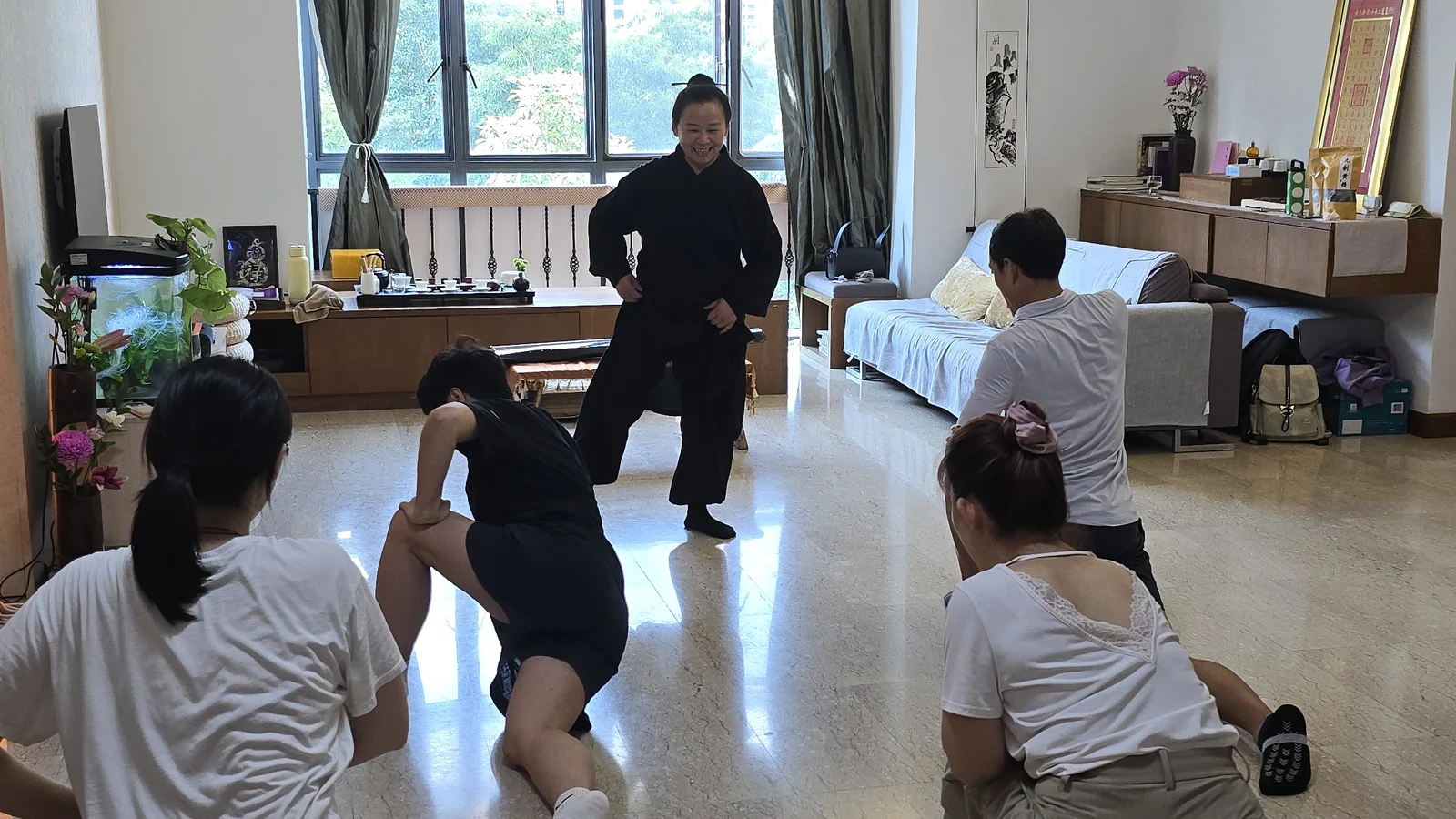
A Wudang taijiquan lesson in a sunlit room: students seen from behind kneel into deep lunges to open the hips while a teacher in black Taoist-style clothing stands in a wide stance, smiling, with an ink-painting scroll on the wall behind.

Watch an experienced Wudang Taijiquan or Xingyiquan teacher move across a courtyard, and the first thing you notice is that no part of the body ever seems to hurry ahead or lag behind. When the front foot settles, the lead palm arrives at that exact instant; when the hip crease folds, the shoulder drops in quiet sympathy. In classical Chinese internal martial arts (Foundations of Internal Arts), this whole-body unity is taught through a concise six-part framework known as the Six Harmonies (六合, Liuhe)—divided into the Three External Harmonies (外三合) and the Three Internal Harmonies (内三合).

1. The Three External Harmonies (外三合): Aligning the Frame from Root to Tip

In Wang Zongyue’s Taijiquan Treatise (《太极拳论》), whole-body power is described as a continuous chain: “Its root is in the feet, it is issued through the legs, governed by the waist, and expressed in the fingers—from feet to legs to waist, all must be one unified breath (总须完整一气).” To prevent the upper body from floating away from the lower body, the Three External Harmonies pair the three joints of the arm with the three joints of the leg:

  1. Shoulder Harmonizes with Hip (肩与胯合 · Root of the Torso Frame): Whenever the shoulder blade stiffens or rises, the hip crease (kua 胯) immediately locks; conversely, when you let the shoulder sink directly over the relaxed hip socket, the spine forms a stable cylinder (Song and Rooting Jin).
  2. Elbow Harmonizes with Knee (肘与膝合 · The Middle Relay): Keep the elbows weighted gently downward (“sinking the elbows,” 坠肘) in alignment with the direction and bend of the knees, protecting the ribs and preventing the knee joint from collapsing inward.
  3. Hand Harmonizes with Foot (手与足合 · The Arriving Tip): Whether stepping into “Brush Knee and Twist Step” or extending a Wudang Taiji Jian thrust, the hand and the foot arrive together and settle together (手到步到,上下相随).
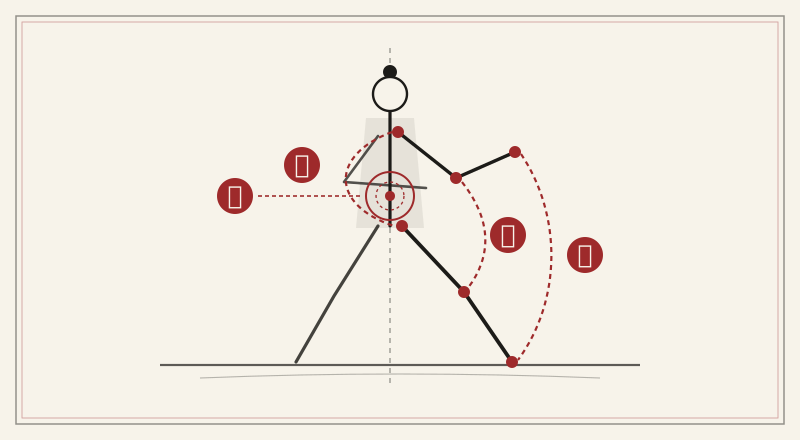
Classical ink-and-cinnabar diagram of a Wudang practitioner in bow stance showing the Three External Harmonies linking shoulder-hip, elbow-knee, and hand-foot around the central Dantian axis

The Six Harmonies (内外六合) in Wudang internal martial arts: uniting structural geometry with calm intention and breath.

  1. Shoulder with Hip (肩与胯合): sinking the shoulder socket directly into the folded hip crease (kua) to unify the torso
  2. Elbow with Knee (肘与膝合): heavy elbows and aligned knees guarding the middle gate without stiffness
  3. Hand with Foot (手与足合): upper and lower tips advancing, settling, and arriving as one continuous arc
  4. The Three Internal Harmonies (内三合 · 心与意合、意与气合、气与力合): quiet heart-mind guiding intention, breath, and whole-body structural strength from the Dantian

2. The Three Internal Harmonies (内三合): Why Mechanics Alone Are Not Enough

If you copy the outer angles of a posture with a distracted mind and a held breath, the frame remains an empty shell. The Mental Explanation of the Thirteen Postures in Practice (《十三势行功心解》) explains how the inner chain animates the outer frame: “Use the heart-mind to guide the qi, making it sink calmly… use the qi to move the body, making it flow smoothly.”

  • Heart-Mind Harmonizes with Intention (心与意合): First, quiet the scattered emotional mind (Xin 心, compare Qingjing Jing and Shouyi) so it crystallizes into clear, unhurried directional awareness (Yi 意).
  • Intention Harmonizes with Breath/Qi (意与气合): Wherever calm attention goes, the breath and vital sensation naturally follow—supported by Natural Abdominal Breathing rather than muscular straining.
  • Qi Harmonizes with Whole-Body Strength (气与力合 / 气与劲合): As breath settles to the lower Dantian on exhalation, the aligned bones and elastic tendons transmit unified whole-body strength (zhengjin 整劲, see Wudang vs Shaolin).

3. How to Check Your Own Six Harmonies in Daily Practice

You can test the Six Harmonies in three minutes without any special equipment:

  • In Zhan Zhuang (Standing Post): Stand in the Hunyuan posture and mentally scan three vertical plumblines: are your hands resting over the front of your feet, your elbows hanging over your knees, and your shoulders melting into your hips?
  • In Slow Solo Stepping: Notice whether your hand finishes moving half a second after your front foot has already stopped. Slow the arm down so hand, waist, and foot complete the phrase on the same breath.
  • In Cooperative Push Hands (Tuishou): As the Song of Playing Hands states, “When upper and lower follow each other, the other person finds it hard to enter” (上下相随人难进)—supported by Tingjin.
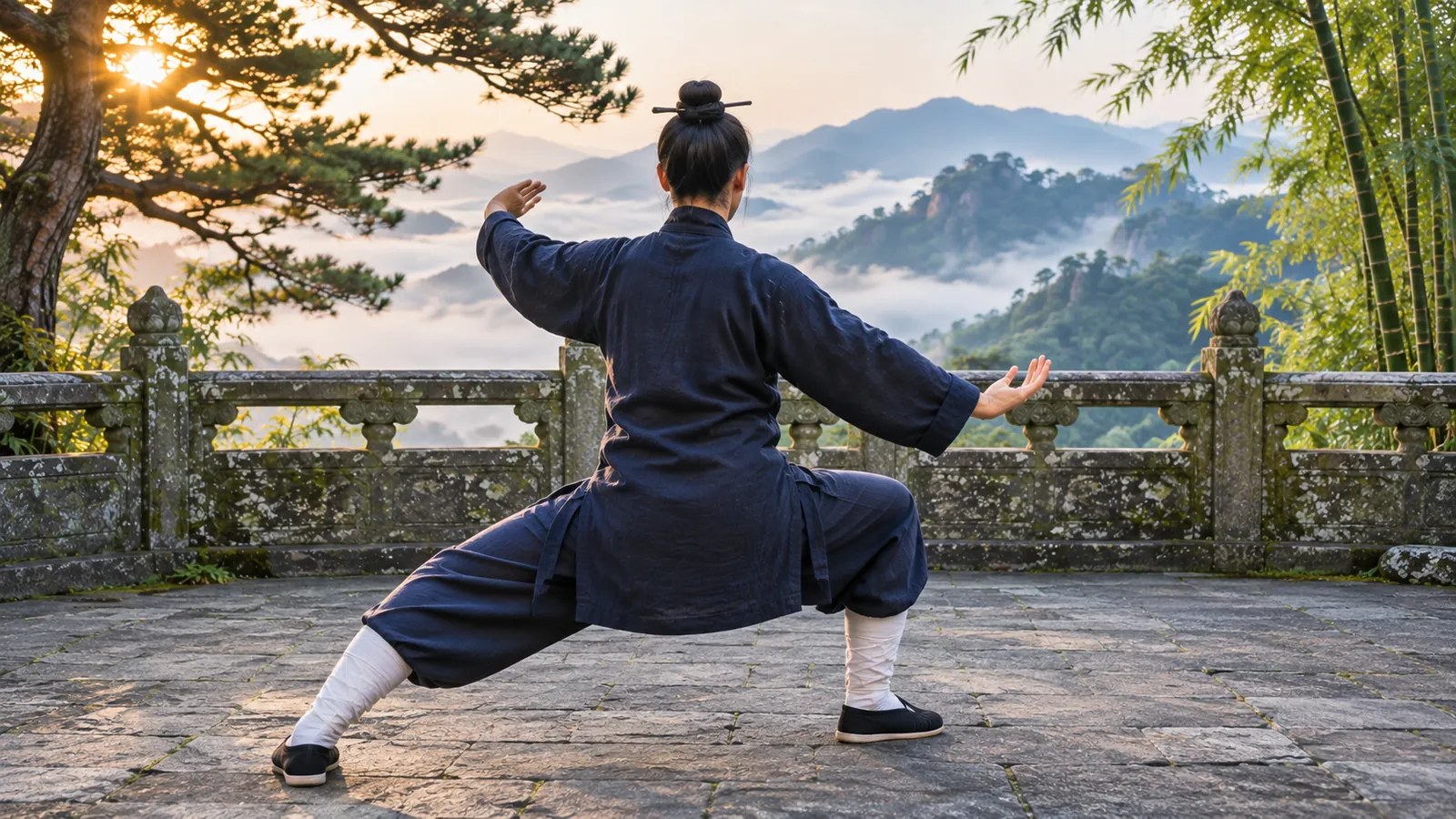
A practitioner in dark indigo Taoist attire and white cotton leg wraps seen from behind in a low, rooted stance on a grey stone mountain terrace above a sea of morning clouds.

The Six Harmonies (Liuhe) in practice: when shoulders sink into the hips, elbows align with the knees, and hands arrive with the feet, the whole frame moves as one breath.

4. Training Whole-Body Harmony Between Wudang Mountain and Singapore

Connecting the living heritage of Wudang Mountain’s UNESCO World Heritage ancient Taoist temples with our regular classes in Singapore, Wudang.Org teaches the Six Harmonies step by step across Qigong, Taijiquan, and classical weapons. Explore the four study paths on Start Here or experience hands-on postural feedback at our Tai Chi Retreat Camp in Singapore.

Safety note: Practice joint alignment within a comfortable, pain-free range of motion; internal martial arts are a cultural discipline for coordination and vitality rather than medical treatment.

Seeker’s Q&A · Frequently Asked Questions

What are the Three External Harmonies (Wai San He 外三合) and Three Internal Harmonies (Nei San He 内三合)?

The Three External Harmonies are Shoulder with Hip (肩与胯合), Elbow with Knee (肘与膝合), and Hand with Foot (手与足合). The Three Internal Harmonies are Heart-Mind with Intention (心与意合), Intention with Qi/Breath (意与气合), and Qi with Whole-Body Strength/Jin (气与力合).


Why is “Shoulder harmonizing with Hip” (肩与胯合) considered the key to unlocking the torso in Tai Chi?

Because the shoulder and hip are the root joints connecting the limbs to the spine. If the shoulders rise or tense, force gets trapped in the upper chest and cannot sink through the waist into the hips and feet.

How can a beginner practise the Six Harmonies without getting overwhelmed by six rules at once?

Start with just two cues: in standing meditation (Zhan Zhuang), let your shoulders melt vertically toward your hips (肩与胯合); in slow stepping, let your front foot and lead hand finish their movement at the exact same moment on a calm exhalation (手与足合).
