Tea in Chinese Letters: Gifts, Visits, Friendship and the Limits of ‘Private’ Writing
中国书信中的茶:馈赠、访友、人情与“私语”证据的边界
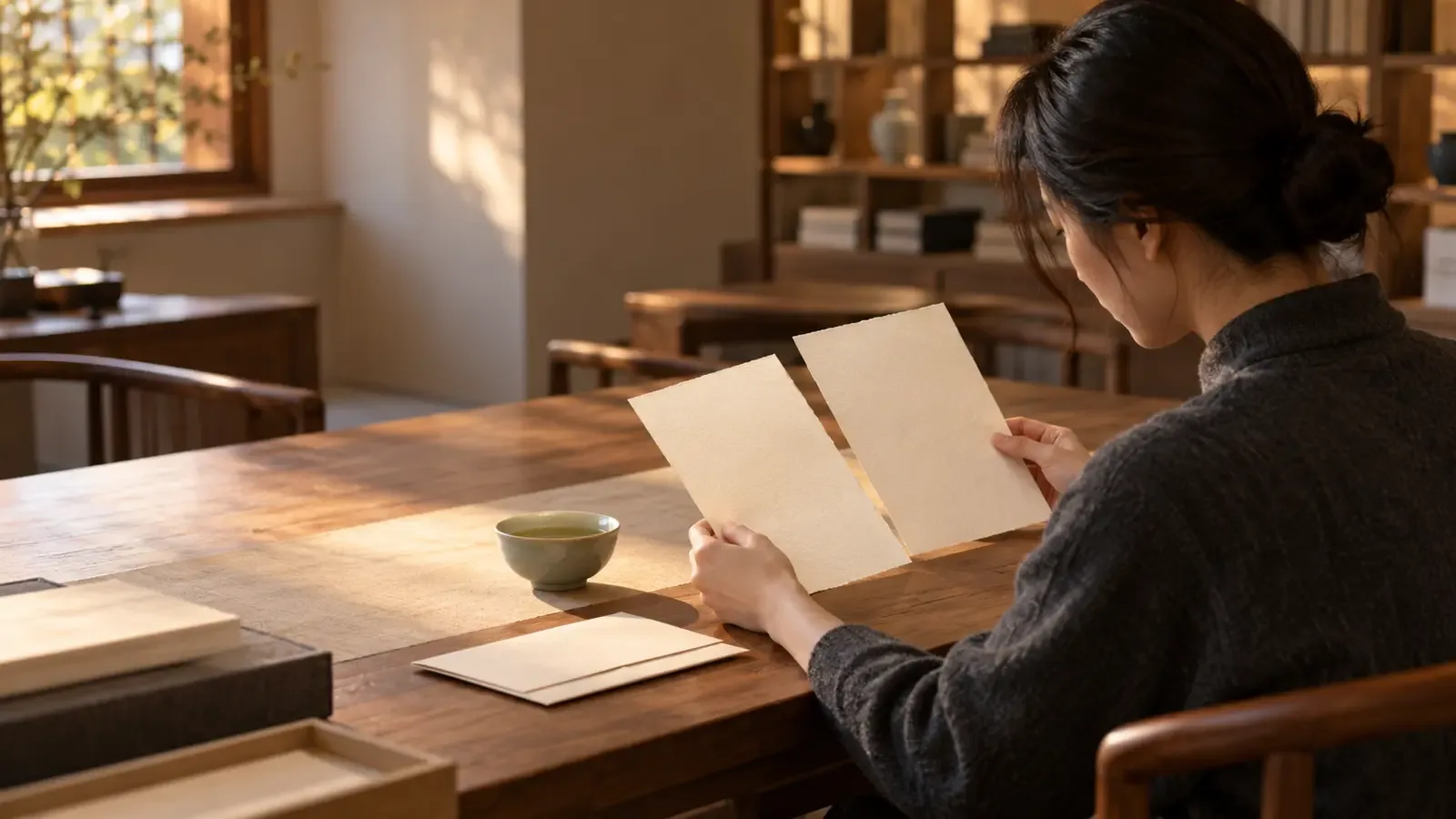
A letter is an action before it is a confession
Brief writing can make a visit happen
Historical Chinese correspondence includes greetings, requests, thanks, condolences, farewells and arrangements as well as sustained reflection. A line about tea may invite someone over, accompany a gift or prepare a face-to-face conversation. Begin with what the note does between writer, bearer and recipient rather than assuming it reveals an unguarded inner self. Our guides to Chinese calligraphy and attention and hospitality provide the two necessary frames.
“Private” is a question, not a default
A message might be read by servants, secretaries, family members or later collectors; it might be copied, mounted, anthologized or carved into a modelbook. Address, formula, handwriting and paper all shape how intimacy is performed. Surviving letters therefore preserve social relations, but not a sealed transcript of thought.
Tea opens the door to a meeting
Su Shi’s tea invitation is also unfinished business
A calligraphic modelbook preserves a short note attributed to Su Shi asking whether Daoyuan might come for tea because something should be explained in person. Tea is not the whole subject: it creates a hospitable setting for speech that the written note deliberately does not contain. The source records an invitation, not the conversation, recipe, room or number of cups that followed.
Hospitality can be practical and relational
An offer to drink may acknowledge friendship, rank, timing or the need to talk. The same phrase can work differently across a farewell, request or routine call. Compare the letter’s immediate purpose with tea in Chinese poetry and in tea books, where genre changes the evidence.
Tea gifts bind people and things
Cai Xiang’s farewell note joins gift, status and memory
The National Palace Museum describes a 1051 farewell letter in which Cai Xiang gave Feng Jing Great Dragon tea and a celadon tea bowl—both presented as precious objects in that setting. Letter, tea and vessel formed one social act. This elite gift cannot stand for every exchange, but it shows why containers and tea ware belong in the history of correspondence.
A gift may create obligation without stating it
Tea can express regard, farewell, gratitude, patronage or expectation. Yet a surviving note may not tell us who grew, processed, packed, carried or paid for it, nor whether a return gift followed. Read the object’s route and the social asymmetry around it instead of translating every gift into uncomplicated friendship.
A few words can preserve taste and uncertainty
Huaisu’s Kusun tie brings tea beside bitter bamboo shoots
The Shanghai Museum identifies Huaisu’s Kusun tie as a fourteen-character Tang autograph. Its brief wording praises bitter bamboo shoots and tea and urges a direct response or arrival, but the compact note leaves much unstated. It is strong evidence for a particular association of foods, taste and contact; it is weak evidence for a complete meal, universal pairing or precise preparation.
Names and later titles need careful handling
Modern object titles such as “Tea Note” help readers find a work, but they may foreground one phrase from a longer or differently functioning message. Distinguish the words on the sheet, the museum title, the attributed author, the physical carrier and the later catalogue history. A famous name does not eliminate questions of transmission.
Paper and brushwork are part of the message
Surface, fold and script shape reception
Decorated paper, dimensions, spacing and the speed or restraint of a brush can communicate care and status before the recipient parses every word. The National Palace Museum’s Song decorated-paper exhibition makes this material setting visible. Read it alongside Chinese calligraphy paper and the living brush line, without treating handwriting as a reliable diagnosis of personality.
Material splendour does not make content transparent
A costly sheet or elegant hand may suit rank, occasion and self-presentation; it does not prove sincerity, spontaneity or wealth on its own. The absence of decoration is equally ambiguous. Material choices become historical evidence only when connected to sender, recipient, date, genre, availability and comparison.
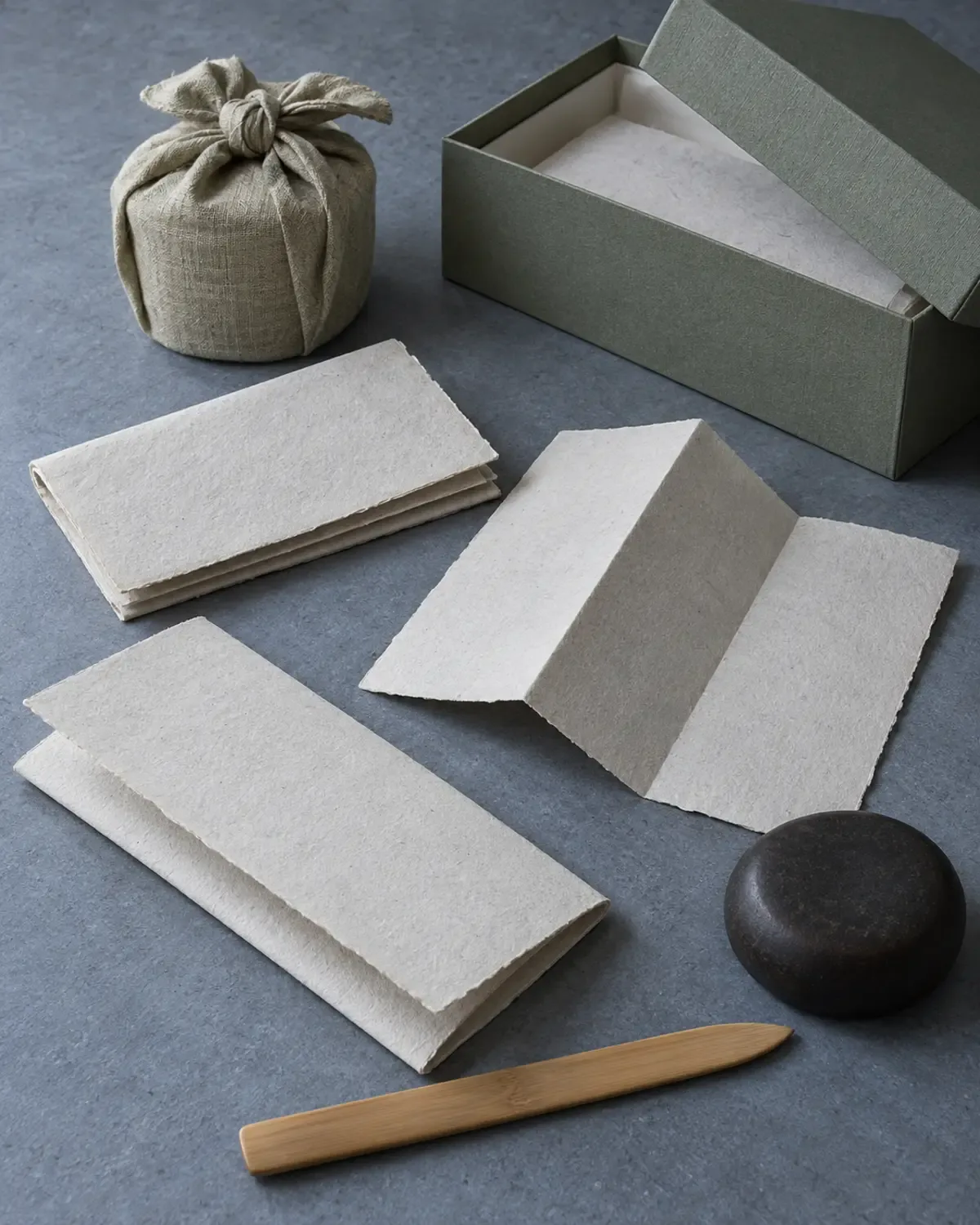
The message can become a work of art
Mounting and collecting change the audience
Once a letter is detached from delivery, mounted, titled and viewed as calligraphy, later readers meet a new object. Colophons, seals, borders and albums may preserve it while adding layers of response and prestige. Compare these transformations with mounting and seals.
Copies and rubbings preserve—and transform
The surviving Su Shi tea invitation cited here belongs to a later modelbook, while the National Palace Museum’s Qicha tie is a Song rubbing of a letter attributed to Wang Xizhi. Such objects can transmit wording and calligraphic models without being the original delivered sheets. Our guide to Chinese ink rubbings explains why medium and recension must remain visible.
Survival creates a selective archive
Famous hands are overrepresented
Letters prized as calligraphy have a better chance of being copied and collected than routine notes by unknown writers. Edited literary collections may also omit debts, errands, trade and domestic friction. A cache of late-Ming paper ephemera studied by Thomas Kelly—notes, invoices and name cards—shows how much broader writing practice could be than the canonical masterpiece.
Missing labour and missing voices still matter
Bearers, paper makers, mounters, household workers and tea producers enabled each exchange, yet letters often name only elite correspondents. Gender, literacy, office and wealth shaped whose writing survived. Treat silence as a feature of the archive, not proof that these people or activities were absent; bookmaking and reading formats offer a parallel history of material mediation.
A seven-question method for tea in a letter
Move from wording to circulation
Begin with the sheet or reliable record, then ask seven questions:
- Is this an autograph, copy, rubbing, modelbook or later transcription?
- Who is identified as writer, recipient and bearer?
- What action does the tea reference perform?
- Which gift, vessel, paper or packaging travels with the words?
- What remains deliberately reserved for speech or another message?
- How did mounting, collecting or editing reshape the object?
- Whose labour and voice fall outside the surviving frame?
Objects, primary records and further reading
Examine Huaisu’s Kusun tie, the National Palace Museum’s Song decorated-paper exhibition, its modelbook record of Su Shi’s tea invitation and its Qicha tie rubbing. For method, use Antje Richter’s edited History of Chinese Letters and Epistolary Culture and Thomas Kelly’s “Paper Trails”. Continue with tea reading and practice.