TAOIST PHILOSOPHY · 道家哲学

Weapons Are Instruments of Ill Omen (Jia Bing Bu Xiang Zhi Qi): Left-Right Ritual Polarity and 'Calm Equanimity Is Highest' (Tian Dan Wei Shang) in Tao Te Ching Chapter 31 夫佳兵者,不祥之器:《道德经》第三十一章的“吉事尚左”与“恬淡为上”

A primary-source study of Tao Te Ching (Dao De Jing) Chapter 31, examining why even the finest weapons are 'instruments of ill omen' (Bu Xiang Zhi Qi), the classical ritual polarity of Left (auspicious/Yang) and Right (martial/Yin), and why the Wudang martial tradition places 'calm equanimity above all' (Tian Dan Wei Shang).

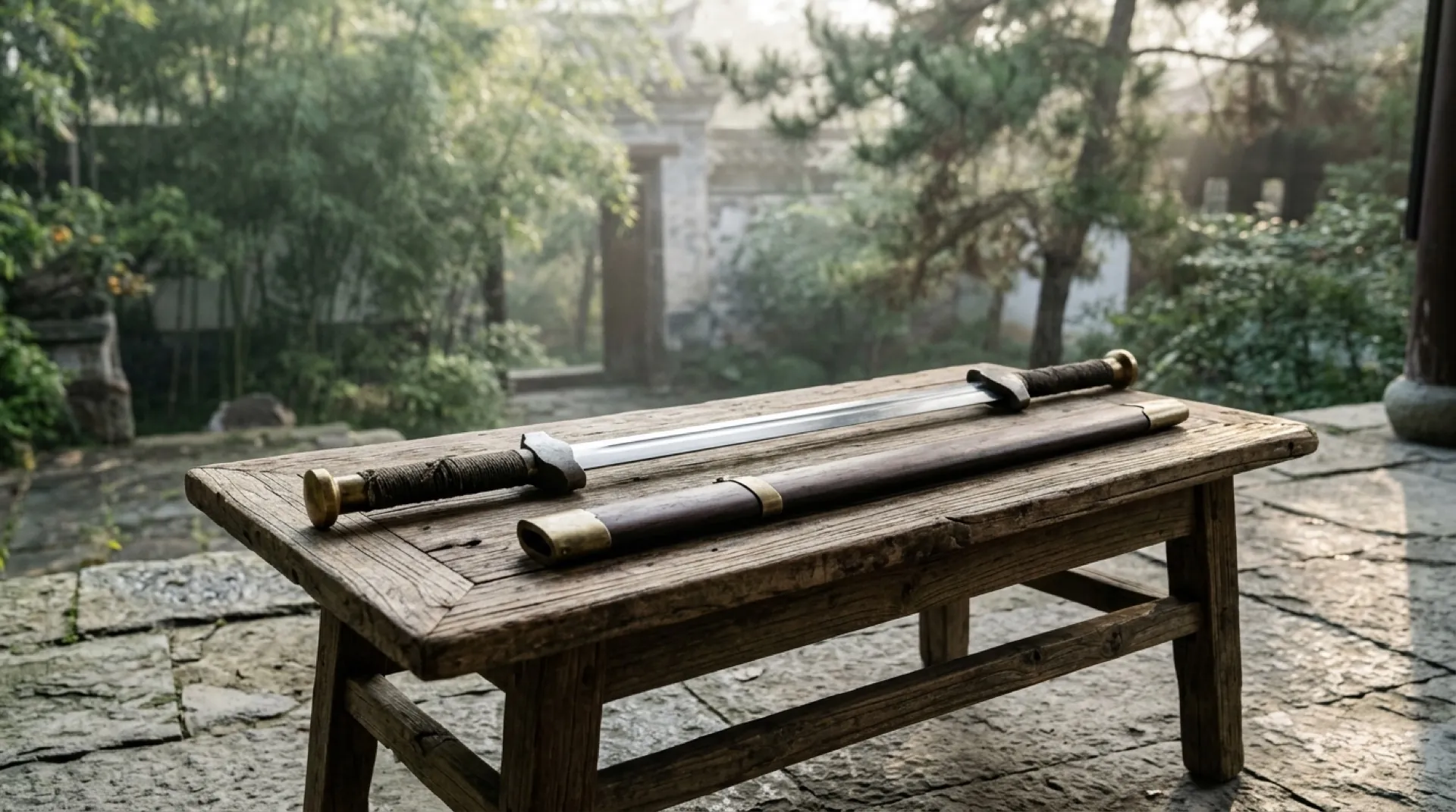
A Chinese straight sword (jian) lying drawn beside its scabbard on a weathered wooden table in a stone-paved courtyard, with pines and a gateway in the mist behind.

1. Primary Text & Classical Context: Why Fine Weapons Are Instruments of Ill Omen

Chapter 31 of the Tao Te Ching (Dao De Jing) deepens Chapter 30's critique of coercive force by examining the nature of weapons themselves: 'Even fine weapons are instruments of ill omen; all creatures naturally detest them, and therefore one who embodies the Tao does not dwell in them (夫佳兵者,不祥之器,物或恶之,故有道者不处).' In early Chinese usage, jia bing (佳兵) denotes either finely crafted armaments or theglorification of military prowess, while bu xiang (不祥) means inauspicious—running counter to the life-generating harmony of heaven and earth. Rather than romanticizing combat, Laozi insists that weapons belong to the realm of loss and emergency: 'Weapons are instruments of ill omen, not the instruments of a noble person; only when there is no alternative does one use them, holding calm equanimity as highest (兵者不祥之器,非君子之器,不得已而用之,恬淡为上).'

2. Left-Right Ritual Polarity: 'In Auspicious Affairs the Left Is Honored; in Martial Affairs the Right Is Honored'

To anchor this ethical principle in classical Chinese cosmology and ritual orientation, Chapter 31 contrasts the Left and Right sides: 'When the noble person dwells at peace, the left is honored; when deploying arms, the right is honored (君子居则贵左,用兵则贵右)... In auspicious affairs, the left is esteemed; in mournful or martial affairs, the right is esteemed. The lieutenant general stands on the left; the supreme commander stands on the right—meaning that a campaign is arranged according to funeral rites (言以丧礼处之).' Facing south in traditional Chinese cosmology, the Left corresponds to the East, spring, sunrise, and the 生 (sheng) principle of life-generation (Yang), whereas the Right corresponds to the West, autumn, sunset, and the 肃 (su) principle of contraction and severity (肃杀, Yin). Even when forced to take up arms to protect life, the sage refuses to celebrate victory as 'beautiful' (胜而不美), because to delight in conquest is to delight in harming living beings.

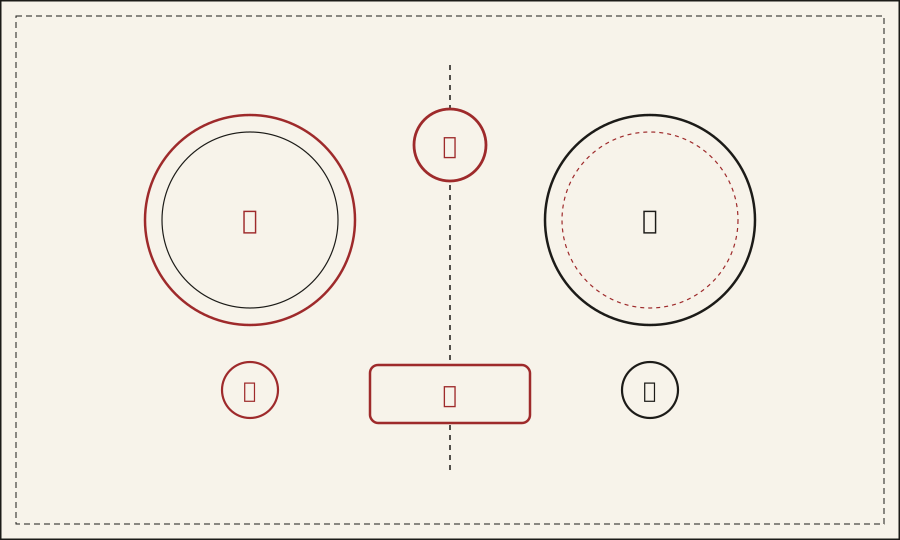
Numbers-only classical Wudang ink-and-cinnabar diagram of Tao Te Ching Chapter 31 showing the Left-Right ritual polarity (①–④), the supreme principle of Calm Equanimity (⑤), and Victory Without Triumphalism (⑥).

Classical Wudang diagram of Tao Te Ching Chapter 31 (numbers-only SVG key)

  1. ① Left Side Honored in Peace & Auspicious Affairs (Ju Ze Gui Zuo / Ji Shi Shang Zuo — East, Spring, Life-Generating Yang)
  2. ② Right Side Used in Martial & Mournful Affairs (Yong Bing Ze Gui You / Xiong Shi Shang You — West, Autumn, Restraining Yin)
  3. ③ Left-Over-Right Wudang Salute (Embodying Peaceful Virtue Over Force)
  4. ④ Using Arms Only When Unavoidable (Bu De Yi Er Yong Zhi)
  5. ⑤ Upper Seal: Calm Equanimity Is Highest (Tian Dan Wei Shang)
  6. ⑥ Lower Seal: Resolve Without Glorifying Violence (Sheng Er Bu Mei).

3. Wudang Wushu & Neidan Embodiment: The Left-Over-Right Salute (Ziwu / Baoquan) and 'Tian Dan Wei Shang'

Across the historical courtyard halls of Wudang Mountain's UNESCO World Heritage ancient Taoist architectural complex and in daily classes at Lee Wudang International Pte. Ltd., Chapter 31 directly governs martial etiquette (武德, Wude) and internal state. When Wudang practitioners offer the traditional salute before and after practice, the Left hand (auspicious Yang, representing peace and virtue) wraps over the Right hand—explicitly embodying 'in auspicious affairs the left is honored' (吉事尚左) and signaling that martial skill is governed by peaceful cultivation. Likewise, 'holding calm equanimity as highest' (恬淡为上, tian dan wei shang)—echoing the Huangdi Neijing phrase 'tranquil and serene in emptiness, true Qi follows' (恬惔虚无,真气从之)—trains the sword or fist practitioner to remain free of anger, bloodlust, or agitation even in the midst of rapid defensive exchanges.

4. Cross-References & Practice Bridges Across the Wudang Curriculum

To see how Chapters 29, 30, and 31 form a continuous triad on non-coercion and martial ethics, pair this essay with Achieve the Result Without Boasting or Forcing: Guo Er Wu Qiang (Tao Te Ching Ch. 30), The Tao Te Ching Overview, and our newcomer guide at Start Here: Wudang Taoist Culture, Internal Martial Arts & Wellness. To study how 'calm equanimity' shapes unarmed and morning cultivation, explore Wudang Xuanwu Quan Fundamentals: Tortoise-Snake Body Mechanics, Combing the Scalp with Ten Fingers (Jie Fa / Shizhi Shutou) Daoyin Guide, and our guide to Wudang Mountain.

Seeker’s Q&A · Frequently Asked Questions

What is the core takeaway of Weapons Are Instruments of Ill Omen (Jia Bing Bu Xiang Zhi Qi)?

A primary-source study of Tao Te Ching (Dao De Jing) Chapter 31, examining why even the finest weapons are 'instruments of ill omen' (Bu Xiang Zhi Qi), the classical ritual polarity of Left (auspicious/Yang) and Right (martial/Yin), and why the Wudang martial tradition places 'calm equanimity above all' (Tian Dan Wei Shang).
