SCRIPTURES · 典籍

How to Read a Classical Taoist Miracle Record: A Three-Layer Method for Decoding Ling Ying Lu (灵应录) 如何读懂古典道教灵验记:解读《灵异录》(常作灵应录)的三层阅读法

A practical step-by-step method for reading the Zhengtong Daozang’s Xuantian Shangdi Qisheng Lingyi Lu (玄天上帝启圣灵异录, often cited as Ling Ying Lu 灵应录) — separating dated historical facts, institutional rhetoric, and contemplative meaning.

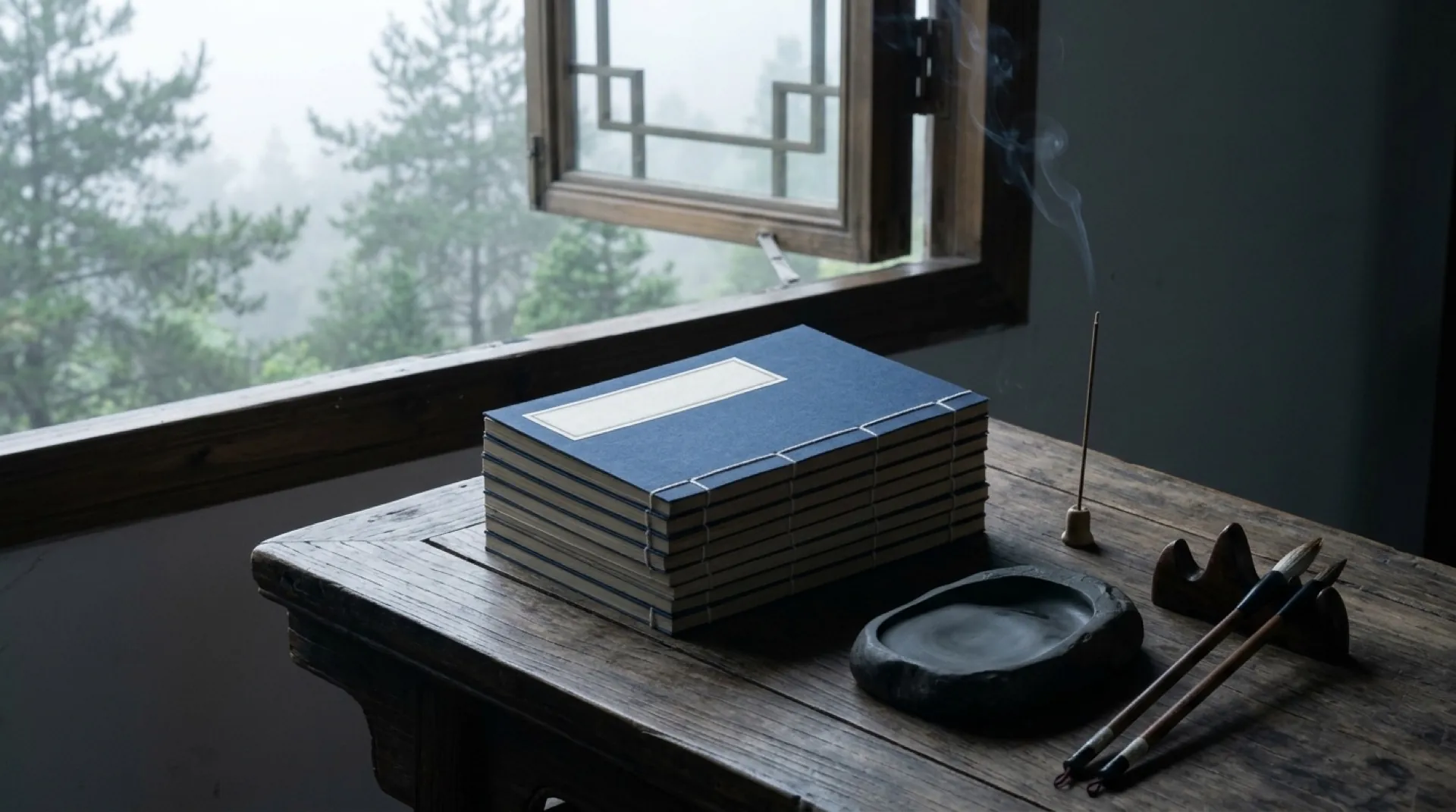
Thread-bound classical books on a wooden scholar’s desk beside an inkstone, brushes, and burning incense, with misty pines outside the window.

When you open a classical Taoist miracle record — whether in the one-juan Xuantian Shangdi Qisheng Lingyi Lu (玄天上帝启圣灵异录) or the eight-juan Xuantian Shangdi Qisheng Lu (玄天上帝启圣录) (often searched under the popular spellings Ling Ying Lu 灵应录 and Qi Sheng Lu 齐圣录) — how should you actually read a passage without falling into credulity on one side or cynicism on the other? On our overview of the two Daozang books, we introduced their contents and dates. Here we walk you through a practical three-layer reading method that you can apply to any stele or miracle notice in the Classical Library.

Layer 1: The Documentary Anchor — Who, When, and Where?

Always begin with what can be verified on a calendar or a map. Before you react to the wondrous event in a passage, write down four plain facts:

  1. Which book is it in? Is it an undated story from the Qisheng Lu (启圣录), or is it a dated inscription/preface preserved in the Lingyi Lu (灵异录)?
  2. What is the exact printed date? For example, in the Lingyi Lu, Xu Shilong’s temple record is dated the second month of Zhiyuan 7 (1270), the imperial title edict is dated Dade 8 (1304), the illustrated-collection prefaces by Zhao Mengfu and Yu Ji are dated 1311–1312, the edicts honouring Zhang Shouqing are dated 1314, and Cheng Jufu’s stele is dated the third month of Yanyou 2 (1315).
  3. Who wrote it and in what capacity? Cheng Jufu, Zhao Mengfu, and Yu Ji were senior scholar-officials at the Yuan court in Dadu (modern Beijing), writing commissioned inscriptions and prefaces.
  4. Which geographic place does the text actually name? Read carefully! In the Lingyi Lu, Xu Shilong’s 1270 records about tortoises and snakes appearing in the Gaoliang River (高梁河) and the building of Zhaoying Palace (昭应宫) describe the Yuan capital area near Dadu — not a stream or palace on Wudang Mountain. By contrast, Cheng Jufu’s 1315 stele explicitly names Wudang’s Nanyan five li from Zixiao Palace.

Just doing Layer 1 saves you from the single most common error in secondary blogs: pasting a capital-city miracle onto a mountain stream where it never belonged.

Layer 2: The Institutional Purpose — Why Was This Written Down?

Once you have the names, dates, and places straight, ask the historian’s question: What job was this text doing for the people who carved it in stone and compiled it into the Canon?

Take the opening of Cheng Jufu’s 1315 stele again: in the spring of 1312 and the spring and summer of 1313, the capital suffered drought; the Wudang Taoist Zhang Shouqing was summoned by edict, prayed, and rain fell. Why does the stele open with those three rain prayers before describing the cliff architecture of Nanyan?

  • For the Yuan court: Recording that Heaven answered the emperor’s summon proved that the dynasty held legitimate moral and ritual authority.
  • For the Wudang monastic community at Nanyan: Preserving the court’s own edicts and scholar-official steles protected the temple’s land, confirmed its imperial plaque (Great Tianyi Zhenqing Wanshou Palace, 1314), and explained to visiting patrons why this remote cliff in Hubei enjoyed imperial protection.

Notice how honest this layer is: you do not have to claim that a stele proves meteorology in order to recognize that it is an authentic 14th-century primary document explaining how Nanyan Palace rose to prominence.

Layer 3: The Contemplative Mirror — What Does It Ask of the Practitioner?

Finally, ask why generations of Taoists kept copying these records alongside meditation manuals like the Qingjing Jing and Yinfu Jing. In traditional Taoist ethics and self-cultivation, the phrase ganying (感应) or lingying (灵应, resonance/response) rests on a simple premise: outer response begins with inner sincerity (诚) and stillness (静).

In the eighth juan of the Qisheng Lu, the miracle tales close with plain moral teachings — keeping one’s word, sparing living creatures, and not using ritual to cover up greed. When Zhang Shouqing was summoned in 1312, the tradition remembered him not as a magician waving a wand, but as a hermit who had spent years in quiet discipline on the cliff at Nanyan. Read at Layer 3, every record asks you: When pressure arrives, have you cultivated enough quiet steadiness to respond without panic?

One-minute practice: apply the three layers

Pick any site card in the Sacred Geography explorer below (or visit our companion study on Qi Sheng Lu and Ling Ying Lu) and test yourself with three short questions: (1) What is the dated document or source? (2) Who wrote it and why? (3) What quality of patience or stillness does this place invite me to practise today?

Seeker’s Q&A · Frequently Asked Questions

What are the three layers for reading a classical Taoist miracle record?

First, establish the documentary anchor (which book, exact date, author, and verified geographic location). Second, examine the institutional purpose (why the court or temple recorded it). Third, reflect on the contemplative lesson (how inner stillness and ethical sincerity ground the tradition).


Does the 1270 Gaoliang River and Zhaoying Palace record in the Lingyi Lu take place on Wudang Mountain?

No. Xu Shilong’s 1270 notices about the Gaoliang River and Zhaoying Palace concern the Yuan capital area (Dadu, modern Beijing), not a stream or temple on Wudang Mountain. Checking Layer 1 prevents confusing capital-area records with Wudang mountain geography.

Who wrote the prefaces and steles preserved in the Xuantian Shangdi Qisheng Lingyi Lu?

They were written by prominent Yuan-dynasty scholar-officials including Xu Shilong (1270), Cheng Jufu (1315 stele for Nanyan’s Great Tianyi Zhenqing Wanshou Palace), Zhao Mengfu, and Yu Ji (1311–1312 prefaces), alongside imperial edicts of 1304, 1314, and 1325.

Sacred geography

Explore the mountain, place by place

Choose a place on the mountain. Read what the record says, then what you can try there, and follow the links to the full articles.

Celestial Summit The highest ground and the end of the climb.

Middle Cliffs The middle slopes, where palaces are built on and against the rock.

Mountain Foot The way in: gate, first abbey, and the water at the foot.

Recorded, but not placed on the drawing

A schematic, not a map: it is not to scale and gives no heights or distances. The three zones are a reading order. Order within a zone is not claimed, and the places are not one continuous footpath: Taiziyan is a spur behind Zixiao, Wulong a western branch, Qiongtai an alternative approach, and Jingle needs a separate visit to Danjiangkou.

Middle Cliffs

Nanyan, the Southern Cliff 南岩

The most dramatic place on the mountain: a palace built along and against a sheer south-facing cliff. The cliff is the landform; Nanyan Palace is what was built on it.

  • Its most important building is a Yuan stone hall carved to imitate timber. The Dragon-Head Incense Beam, about three metres long, was banned by a Qing official, who recorded the ban on a stele. The principal timber hall was lost to fire in the twentieth century. Nearby is the cliff from which Zhenwu is said to have ascended.

Classical record

  • TextWudang Fudi Zongzhen Ji, Liu Daoming, 1291

    First entry in the catalogue of the 36 cliffs. The text gives three names for one formation: Zixiao Rock, Nanyan and Duyang Rock.

  • SteleXuantian shangdi qisheng lingyi lu (玄天上帝启圣灵异录)· 1315

    Cheng Jufu’s stele says the palace at Nanyan was built “making the rock itself the palace” (即巖為宮), five li from the Zixiao Palace. The court gave it the plaque Tianyi Zhenqing Wanshou Palace in 1310 and added “Great” in the tenth month of 1314.

  • Tradition, not documented factXuantian shangdi qisheng lu (玄天上帝启圣录)· 紫霄圆道

    The Qisheng Lu (juan 1, 紫霄圆道) tells of Zhenwu’s attainment at the rock that the 1291 catalogue and the 1315 stele link with Nanyan. It is devotional writing; the stele is a separate document and is not a record of that event.

Practice connection

For centuries pilgrims crept out along the Dragon-Head Incense Beam to set incense at its tip, and the value of the offering lay in the risk. It is now fenced off and you cannot go out on it. Read the practice as history, then offer your incense safely, on firm ground.

Festival date

Zhenwu’s ascension: The ninth day of the ninth lunar month, the other principal date at Wudang (autumn).

Where tradition places his ascent.

Dates are lunar and are not converted to the Gregorian calendar, because a conversion table would be wrong within a year.

The dated documents in the two Daozang books on Zhenwu
  1. No dateXuantian shangdi qisheng lu (玄天上帝启圣录)

    Juan 1 tells of Zhenwu’s birth, his training on Taihe Mountain (the older name of Wudang), his investiture by Heaven and his return to his post in the sky. The later juan are miracle stories. The book has no date and no named author; read it as devotional writing.

  2. 1270Xuantian shangdi qisheng lingyi lu (玄天上帝启圣灵异录)

    Xu Shilong’s record of the Zhenwu temple (second month) and two steles for the Zhaoying Palace (ninth month). The texts do not say which present-day building is meant, so none is named here.

  3. 1304Xuantian shangdi qisheng lingyi lu (玄天上帝启圣灵异录)

    An edict conferring a title on Zhenwu.

  4. 1311–1312Xuantian shangdi qisheng lingyi lu (玄天上帝启圣灵异录)

    Prefaces to an illustrated record of the revelations, among them those of Zhao Mengfu and Yu Ji.

  5. 1314Xuantian shangdi qisheng lingyi lu (玄天上帝启圣灵异录)

    Edicts for Zhenwu, for the Holy Mother and for the Taoist Zhang Shouqing.

  6. 1315Xuantian shangdi qisheng lingyi lu (玄天上帝启圣灵异录)

    Cheng Jufu’s stele (third month) for the Great Tianyi Zhenqing Wanshou Palace. It says a master built a palace at Nanyan “making the rock itself the palace” (即巖為宮), five li from the Zixiao Palace; the court gave it that plaque in 1310 and added “Great” in the tenth month of 1314. It also tells how the Wudang Taoist Zhang Shouqing prayed for rain in the capital: a story told to explain why the court rewarded the mountain.

  7. 1325Xuantian shangdi qisheng lingyi lu (玄天上帝启圣灵异录)

    Two edicts for generals.

