SCRIPTURES · 典籍

Beyond Myth: Why the Miracle Records of Qi Sheng Lu (齐圣录) and Ling Ying Lu (灵应录) Are Historical Archives and Inner Alchemy Maps 超越神话:为何《启圣录》(常作齐圣录)与《灵异录》(常作灵应录)既是历史档案,也是内丹修持地图

How to distinguish the received Zhengtong Daozang titles (Qisheng Lu 启圣录 and Lingyi Lu 灵异录) from popular citations, read their dated Yuan steles as institutional history, and recognise how Wudang practitioners read Zhenwu’s mountain trials as inner cultivation.

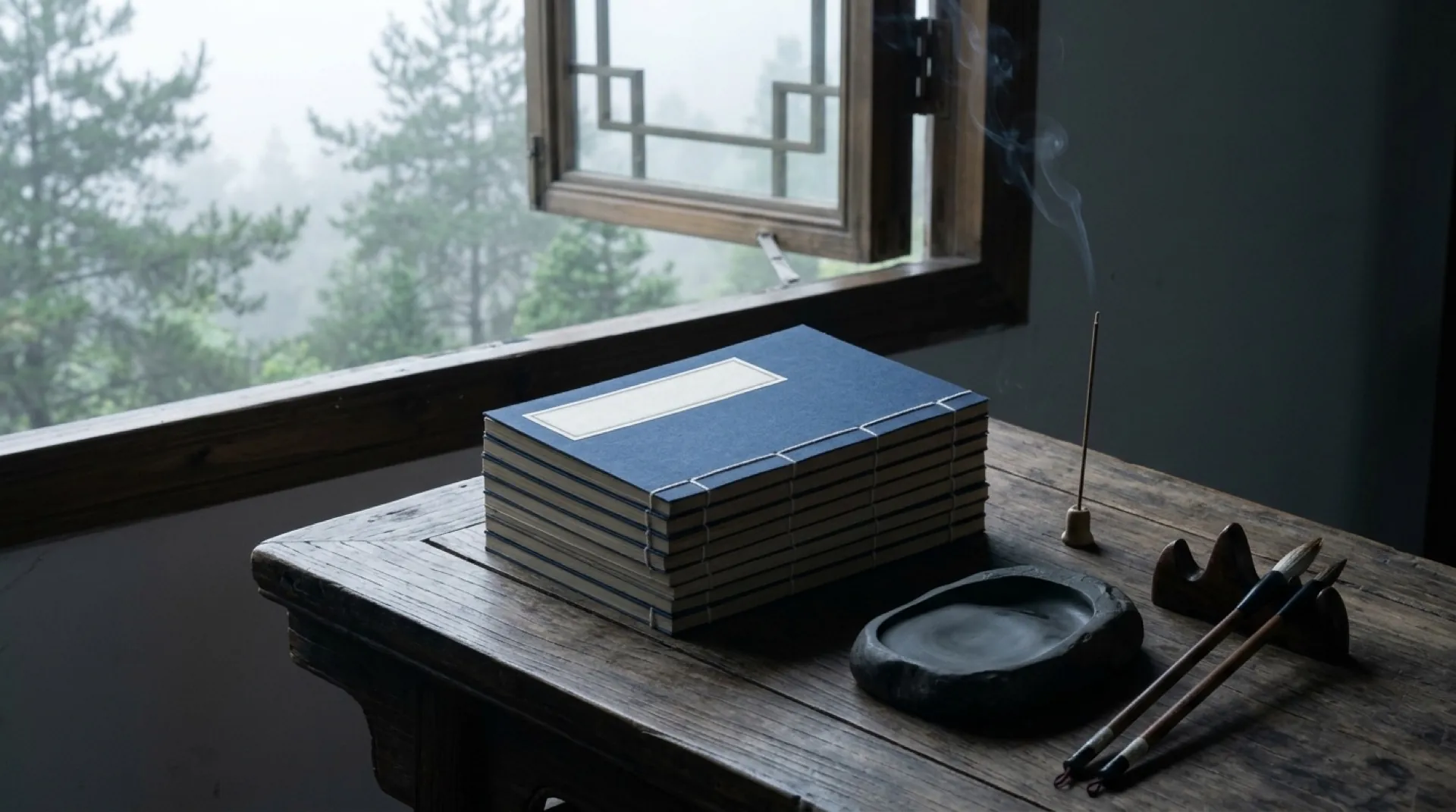
Thread-bound classical books on a wooden scholar’s desk beside an inkstone, brushes, and burning incense, with misty pines outside the window.

When you first hear about Wudang Mountain’s classical miracle collections, you will often see them cited in modern summaries or search queries as the Qi Sheng Lu (齐圣录) and the Ling Ying Lu (灵应录). Before you read a single line, start by anchoring their exact names in the received Taoist Canon (the Zhengtong Daozang): the eight-juan hagiography is titled Xuantian Shangdi Qisheng Lu (玄天上帝启圣录, “Record of the Revelations of the Supreme Emperor of the Dark Heaven”), and the one-juan documentary compilation is titled Xuantian Shangdi Qisheng Lingyi Lu (玄天上帝启圣灵异录, “Record of the Revelations and Wonders”). Seeing why those two books were compiled — and why readers treat them as more than folklore — changes how you walk the mountain and how you sit in quiet practice.

First layer: clearing up the two books and their titles

Beginners often flatten both works into a single “book of legends” or get lost when a modern article writes Qi Sheng Lu (齐圣录, substituting the homophone qi 齐 for qi 启, “revelation”) or Ling Ying Lu (灵应录, borrowing the common phrase lingying 灵应, “numinous response”, in place of lingyi 灵异). Keep their actual shapes clear in your mind:

  • The eight-juan Qisheng Lu (玄天上帝启圣录) sits in the Dongshen section of the Canon (records and biographies class, Daozang tiyao no. 952). Its opening scroll recounts Zhenwu’s royal birth in the Pure Joy Kingdom (Jingle), his departure from courtly life, his decades of solitary cultivation on Taihe Mountain (Wudang), and his celestial investiture; the remaining seven scrolls gather devotional accounts of protection, rainmaking, and moral instruction.
  • The one-juan Lingyi Lu (玄天上帝启圣灵异录) is not a storybook at all. It is an archival dossier preserving dated Yuan-dynasty texts between 1270 and 1325: Xu Shilong’s 1270 temple record, Cheng Jufu’s 1315 stele for the Great Tianyi Zhenqing Wanshou Palace at Nanyan, imperial edicts of 1304, 1314, and 1325, and court prefaces by scholars such as Zhao Mengfu and Yu Ji (1311–1312).

If you want a side-by-side timeline of the dated documents in those two books, study The Two Daozang Books on Zhenwu: the Qisheng lu and the Lingyi lu first.

Second layer: why the Lingyi Lu is a historical archive

When a modern reader sees the word “miracle” (lingyi 灵异 or lingying 灵应), the temptation is either to accept it uncritically or to dismiss the whole text as fiction. A historian — and a careful student of Taoist culture — does neither. Look at what Cheng Jufu’s 1315 stele (《元赐武当山大天一真庆万寿宫碑》) actually records on the ground:

  • Named people and verifiable dates: It names the Wudang Taoist master Zhang Shouqing (张守清), summoned to the Yuan capital during the spring and summer droughts of 1312 and 1313, and records the court plaques granted in 1310 (Tianyi Zhenqing Wanshou Palace) and the tenth month of 1314 (adding Da 大, “Great”).
  • Architectural facts in the cliff face: It describes how Zhang Shouqing’s community built at Nanyan Cliff, five li from Zixiao Palace, “carving into the sheer cliff and making the rock itself the palace” (刊在穷崖,即岩为宫). That four-character phrase is a primary architectural record of how Wudang’s cliff sanctuaries were engineered before the Ming imperial rebuilding.
  • Institutional patronage: The prefaces of 1311–1312 show how literati officials at the Yuan court framed Wudang’s rituals for the emperor’s birthday and seasonal rain prayers. Even where a stele attributes rain to prayer, the document proves when the ritual took place, who sponsored it, and which mountain hall received the imperial plaque.

Third layer: why practitioners read Qisheng Lu Volume 1 as an inner alchemy map

What about the undated hagiography in Volume 1 of the Qisheng Lu? On the surface, it tells a story of a prince leaving his kingdom, crossing a river, enduring cold and hunger on rock ledges, having his resolve tested by the Iron Pestle (铁杵磨针), and finally ascending at Nanyan and the Golden Summit. Within the Wudang contemplative tradition, teachers remind students that outer geography and inner cultivation mirror one another:

  1. Leaving the Pure Joy Kingdom (离净乐国) — turning attention inward: In quiet sitting (zuowang 坐忘 and shouyi 守一), the “palace of habits and distractions” is what you step out of each time you sit down and let the breath settle.
  2. Grinding the iron bar into a needle (铁杵磨针) — refining qi and intention: At Taizipo (Prince Slope), the story warns against impatience. In internal arts (neigong) and classical Cantong Qi / Wuzhen Pian study, coarse effort (the heavy iron bar) must be gradually softened into fine, steady attention (the needle) through daily repetition, never through forced breathing.
  3. Dwelling in the cliffs and ascending the summit (居岩升顶) — stillness stabilizing spirit: Zhenwu’s years in the rock recesses (the 36 Cliffs) before ascending Tianzhu Peak reflect the progression from anchoring the lower centre (Guarding the One) to clear inward observation (neiguan 内观).

What to notice — and what beginners get wrong

Two habits trip up new readers. First, do not treat symbolic cultivation language as a secret recipe for physical stunts or breath-holding; as our Small Heavenly Circuit guide explains, forcing sensation through the body causes tension rather than clarity. Second, never invent historical dates for devotional stories in the Qisheng Lu, and never treat the dated Yuan steles in the Lingyi Lu as mere fairy tales. When you keep the archival layer and the contemplative layer distinct, both become useful.

To try today: Read our companion guide on the three-layer method for decoding a classical miracle record, then open the Sacred Geography explorer below and compare a site’s dated stele record with its practice note.

Seeker’s Q&A · Frequently Asked Questions

Why do some sources write Qi Sheng Lu (齐圣录) and Ling Ying Lu (灵应录) instead of Qisheng Lu (启圣录) and Lingyi Lu (灵异录)?

In the received Zhengtong Daozang (Dongshen section, records and biographies class), the exact titles are Xuantian Shangdi Qisheng Lu (玄天上帝启圣录, 8 juan) and Xuantian Shangdi Qisheng Lingyi Lu (玄天上帝启圣灵异录, 1 juan). Qi (齐) is a common homophone transcription error for Qi (启, revelation), and Lingying (灵应, numinous response) is a frequent prose term substituted for Lingyi (灵异, wonders).


Which of the two Zhenwu books contains dated historical inscriptions from Wudang Mountain?

The one-juan Xuantian Shangdi Qisheng Lingyi Lu preserves dated Yuan-dynasty documents from 1270 to 1325, including Cheng Jufu’s 1315 stele for the Great Tianyi Zhenqing Wanshou Palace at Nanyan, imperial edicts of 1304, 1314, and 1325, and prefaces from 1311–1312.

How does Wudang tradition connect Zhenwu’s mountain cultivation story to inner alchemy (neidan) practice?

Teachers read the narrative stages symbolically: leaving the kingdom represents turning attention away from distraction (zuowang), grinding the iron bar into a needle represents steady daily refinement of breath and intention without force, and dwelling in the cliffs before ascending the summit represents grounding stillness before clear inner observation (neiguan).

Sacred geography

Explore the mountain, place by place

Choose a place on the mountain. Read what the record says, then what you can try there, and follow the links to the full articles.

Celestial Summit The highest ground and the end of the climb.

Middle Cliffs The middle slopes, where palaces are built on and against the rock.

Mountain Foot The way in: gate, first abbey, and the water at the foot.

Recorded, but not placed on the drawing

A schematic, not a map: it is not to scale and gives no heights or distances. The three zones are a reading order. Order within a zone is not claimed, and the places are not one continuous footpath: Taiziyan is a spur behind Zixiao, Wulong a western branch, Qiongtai an alternative approach, and Jingle needs a separate visit to Danjiangkou.

Middle Cliffs

Nanyan, the Southern Cliff 南岩

The most dramatic place on the mountain: a palace built along and against a sheer south-facing cliff. The cliff is the landform; Nanyan Palace is what was built on it.

  • Its most important building is a Yuan stone hall carved to imitate timber. The Dragon-Head Incense Beam, about three metres long, was banned by a Qing official, who recorded the ban on a stele. The principal timber hall was lost to fire in the twentieth century. Nearby is the cliff from which Zhenwu is said to have ascended.

Classical record

  • TextWudang Fudi Zongzhen Ji, Liu Daoming, 1291

    First entry in the catalogue of the 36 cliffs. The text gives three names for one formation: Zixiao Rock, Nanyan and Duyang Rock.

  • SteleXuantian shangdi qisheng lingyi lu (玄天上帝启圣灵异录)· 1315

    Cheng Jufu’s stele says the palace at Nanyan was built “making the rock itself the palace” (即巖為宮), five li from the Zixiao Palace. The court gave it the plaque Tianyi Zhenqing Wanshou Palace in 1310 and added “Great” in the tenth month of 1314.

  • Tradition, not documented factXuantian shangdi qisheng lu (玄天上帝启圣录)· 紫霄圆道

    The Qisheng Lu (juan 1, 紫霄圆道) tells of Zhenwu’s attainment at the rock that the 1291 catalogue and the 1315 stele link with Nanyan. It is devotional writing; the stele is a separate document and is not a record of that event.

Practice connection

For centuries pilgrims crept out along the Dragon-Head Incense Beam to set incense at its tip, and the value of the offering lay in the risk. It is now fenced off and you cannot go out on it. Read the practice as history, then offer your incense safely, on firm ground.

Festival date

Zhenwu’s ascension: The ninth day of the ninth lunar month, the other principal date at Wudang (autumn).

Where tradition places his ascent.

Dates are lunar and are not converted to the Gregorian calendar, because a conversion table would be wrong within a year.

The dated documents in the two Daozang books on Zhenwu
  1. No dateXuantian shangdi qisheng lu (玄天上帝启圣录)

    Juan 1 tells of Zhenwu’s birth, his training on Taihe Mountain (the older name of Wudang), his investiture by Heaven and his return to his post in the sky. The later juan are miracle stories. The book has no date and no named author; read it as devotional writing.

  2. 1270Xuantian shangdi qisheng lingyi lu (玄天上帝启圣灵异录)

    Xu Shilong’s record of the Zhenwu temple (second month) and two steles for the Zhaoying Palace (ninth month). The texts do not say which present-day building is meant, so none is named here.

  3. 1304Xuantian shangdi qisheng lingyi lu (玄天上帝启圣灵异录)

    An edict conferring a title on Zhenwu.

  4. 1311–1312Xuantian shangdi qisheng lingyi lu (玄天上帝启圣灵异录)

    Prefaces to an illustrated record of the revelations, among them those of Zhao Mengfu and Yu Ji.

  5. 1314Xuantian shangdi qisheng lingyi lu (玄天上帝启圣灵异录)

    Edicts for Zhenwu, for the Holy Mother and for the Taoist Zhang Shouqing.

  6. 1315Xuantian shangdi qisheng lingyi lu (玄天上帝启圣灵异录)

    Cheng Jufu’s stele (third month) for the Great Tianyi Zhenqing Wanshou Palace. It says a master built a palace at Nanyan “making the rock itself the palace” (即巖為宮), five li from the Zixiao Palace; the court gave it that plaque in 1310 and added “Great” in the tenth month of 1314. It also tells how the Wudang Taoist Zhang Shouqing prayed for rain in the capital: a story told to explain why the court rewarded the mountain.

  7. 1325Xuantian shangdi qisheng lingyi lu (玄天上帝启圣灵异录)

    Two edicts for generals.

