The Two Daozang Books on Zhenwu: the Qisheng lu and the Lingyi lu

道藏里的两部真武书:《启圣录》与《灵异录》

Two books in the Taoist Canon (the Zhengtong Daozang) are the main surviving written sources for the worship of Zhenwu in the Song and Yuan dynasties. They are easy to confuse, and they do different jobs. This page teaches you to tell them apart, to read what each is good for, and to keep legend and record separate.

Ancient moss-covered stone steps and a weathered blank stone stele plinth beneath old cypress and pine trees pierced by morning sunbeams in mountain mist.

The two books at a glance

  • Xuantian shangdi qisheng lu (玄天上帝啟聖錄, “Record of the Revelations of the Supreme Emperor of the Dark Heaven”): eight juan, with no author named. Both the Wikisource text and the Daoist Culture Centre Database place it in the Dongshen section of the Canon, in the class of records and biographies. The Database suggests, from its contents, a Wudang Taoist of the Yuan period.
  • Xuantian shangdi qisheng lingyi lu (玄天上帝啟聖靈異錄, “Record of the Revelations and Wonders”): one juan, attributed on Wikisource to Xu Shilong and others of the Yuan. Its authorship is uncertain, and it is better described as a collection of documents than as a book with one author.

A common mistake is to treat them as one text or to call them “the Wudang scripture”. They are two books about the same god, and only the second is a bundle of dated documents.

What the Qisheng lu contains

Its first juan tells of Zhenwu’s birth, his training on Taihe Mountain (Wudang), his investiture by Heaven and his return to his post in the sky. The later juan are miracle stories: imperial recognition and rituals under the Tang and Song, help in war and drought, talismans and exorcisms, healing, childbirth, and a closing section that includes teaching against the killing of animals. The Database numbers this book 952 in the Daozang tiyao (the catalogue of the Canon); other catalogues number it differently, so this page gives no other number.

Treat it as devotional writing. It tells you what believers wanted to be true and what the temple told its visitors; it does not give you an event you can date.

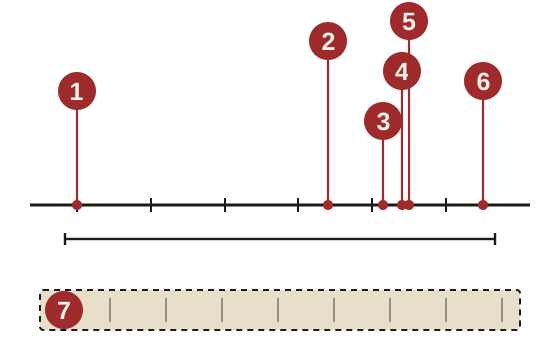
Ink and cinnabar time line from 1270 to 1325 with six numbered documents, and below it an undated bar divided into eight sections

The documents kept in the Lingyi lu, on a time line, and the Qisheng lu, which has no date. Positions follow the years printed in the texts.

  1. 1270: Xu Shilong’s record of the Zhenwu temple and the steles for the Zhaoying Palace.
  2. 1304: the edict conferring a title on Zhenwu.
  3. 1311 and 1312: the prefaces to the illustrated record (Zhao Mengfu and Yu Ji among the authors).
  4. 1314: edicts for Zhenwu, for the Holy Mother and for the Taoist Zhang Shouqing.
  5. 1315: Cheng Jufu’s stele for the Great Tianyi Zhenqing Wanshou Palace.
  6. 1325: two edicts for generals.
  7. The Qisheng lu, eight juan, with no date or named author.

What the Lingyi lu keeps: dated documents

The second book is where you can stand on firmer ground. Its table of contents, as printed in the Canon text, lists documents with their dates: a record of the Zhenwu temple by the scholar Xu Shilong (the second month of 1270) and two steles for the Zhaoying Palace (the ninth month of 1270); Cheng Jufu’s stele for the Great Tianyi Zhenqing Wanshou Palace on Wudang (the third month of 1315); imperial edicts of 1304, 1314 and 1325; and a group of prefaces, from 1311 and 1312, to an illustrated record of the revelations. Among the prefaces are those of Zhao Mengfu and Yu Ji.

These are the court’s and the scholars’ own words, preserved by the Wudang Taoists who wanted them on record. That gives them weight, and it also means they are an advertisement.

Reading a stele: the opening of Cheng Jufu’s text

Here is how the 1315 stele begins, from the Wikisource text of the Canon:

皇慶元年春三月,京師不雨,遍走群望不雨,詔武當道士張守清,檮而雨。明年春不雨,禱而雨。夏又不雨,又禱又雨。

“In the first year of Huangqing (1312), in the third month of spring, there was no rain in the capital. Prayers at every shrine brought none. An edict summoned the Wudang Taoist Zhang Shouqing; he prayed, and it rained. The next spring there was no rain; he prayed, and it rained. In summer again no rain; again he prayed, and again it rained.” (The first prayer there is written with a variant character.) Notice what the story is for: it shows a Wudang Taoist answering the court’s need, and so explains why the court rewarded the mountain. The same pattern is why the edicts of 1314 name Zhang Shouqing.

What this page does not claim

I have not read the Chijian Dayue Taihe shan zhi, so nothing here depends on its edict about the Golden Hall. I give no HY or DZ catalogue number for either book, because the numbers differ by system and I have not checked them in the concordance. Cheng Jufu’s text is specific about one place, and I rely only on what it says: after the hermit Lu Dayou, a master built a palace at Nanyan, “making the rock itself the palace” (即巖為宮), five li from the Zixiao Palace; the court gave it the plaque “Tianyi Zhenqing Wanshou Palace” in 1310 and added “Great” to the plaque in the tenth month of 1314. So the palace of the stele is the palace at Nanyan. For other places the texts name, I do not say which present-day building is meant.

To try: choose one document from the list above and ask who wrote it, for whom, and what they wanted the reader to do. Then compare it with a miracle story from the Qisheng lu. The difference in purpose is the lesson.

Further on the site

Sacred geography

Explore the mountain, place by place

Choose a place on the mountain. Read what the record says, then what you can try there, and follow the links to the full articles.

Celestial Summit The highest ground and the end of the climb.

Middle Cliffs The middle slopes, where palaces are built on and against the rock.

Mountain Foot The way in: gate, first abbey, and the water at the foot.

Recorded, but not placed on the drawing

A schematic, not a map: it is not to scale and gives no heights or distances. The three zones are a reading order. Order within a zone is not claimed, and the places are not one continuous footpath: Taiziyan is a spur behind Zixiao, Wulong a western branch, Qiongtai an alternative approach, and Jingle needs a separate visit to Danjiangkou.

Middle Cliffs

Nanyan, the Southern Cliff 南岩

The most dramatic place on the mountain: a palace built along and against a sheer south-facing cliff. The cliff is the landform; Nanyan Palace is what was built on it.

  • Its most important building is a Yuan stone hall carved to imitate timber. The Dragon-Head Incense Beam, about three metres long, was banned by a Qing official, who recorded the ban on a stele. The principal timber hall was lost to fire in the twentieth century. Nearby is the cliff from which Zhenwu is said to have ascended.

Classical record

  • TextWudang Fudi Zongzhen Ji, Liu Daoming, 1291

    First entry in the catalogue of the 36 cliffs. The text gives three names for one formation: Zixiao Rock, Nanyan and Duyang Rock.

  • SteleXuantian shangdi qisheng lingyi lu (玄天上帝启圣灵异录)· 1315

    Cheng Jufu’s stele says the palace at Nanyan was built “making the rock itself the palace” (即巖為宮), five li from the Zixiao Palace. The court gave it the plaque Tianyi Zhenqing Wanshou Palace in 1310 and added “Great” in the tenth month of 1314.

  • Tradition, not documented factXuantian shangdi qisheng lu (玄天上帝启圣录)· 紫霄圆道

    The Qisheng Lu (juan 1, 紫霄圆道) tells of Zhenwu’s attainment at the rock that the 1291 catalogue and the 1315 stele link with Nanyan. It is devotional writing; the stele is a separate document and is not a record of that event.

Practice connection

For centuries pilgrims crept out along the Dragon-Head Incense Beam to set incense at its tip, and the value of the offering lay in the risk. It is now fenced off and you cannot go out on it. Read the practice as history, then offer your incense safely, on firm ground.

Festival date

Zhenwu’s ascension: The ninth day of the ninth lunar month, the other principal date at Wudang (autumn).

Where tradition places his ascent.

Dates are lunar and are not converted to the Gregorian calendar, because a conversion table would be wrong within a year.


The dated documents in the two Daozang books on Zhenwu
  1. No dateXuantian shangdi qisheng lu (玄天上帝启圣录)

    Juan 1 tells of Zhenwu’s birth, his training on Taihe Mountain (the older name of Wudang), his investiture by Heaven and his return to his post in the sky. The later juan are miracle stories. The book has no date and no named author; read it as devotional writing.

  2. 1270Xuantian shangdi qisheng lingyi lu (玄天上帝启圣灵异录)

    Xu Shilong’s record of the Zhenwu temple (second month) and two steles for the Zhaoying Palace (ninth month). The texts do not say which present-day building is meant, so none is named here.

  3. 1304Xuantian shangdi qisheng lingyi lu (玄天上帝启圣灵异录)

    An edict conferring a title on Zhenwu.

  4. 1311–1312Xuantian shangdi qisheng lingyi lu (玄天上帝启圣灵异录)

    Prefaces to an illustrated record of the revelations, among them those of Zhao Mengfu and Yu Ji.

  5. 1314Xuantian shangdi qisheng lingyi lu (玄天上帝启圣灵异录)

    Edicts for Zhenwu, for the Holy Mother and for the Taoist Zhang Shouqing.

  6. 1315Xuantian shangdi qisheng lingyi lu (玄天上帝启圣灵异录)

    Cheng Jufu’s stele (third month) for the Great Tianyi Zhenqing Wanshou Palace. It says a master built a palace at Nanyan “making the rock itself the palace” (即巖為宮), five li from the Zixiao Palace; the court gave it that plaque in 1310 and added “Great” in the tenth month of 1314. It also tells how the Wudang Taoist Zhang Shouqing prayed for rain in the capital: a story told to explain why the court rewarded the mountain.

  7. 1325Xuantian shangdi qisheng lingyi lu (玄天上帝启圣灵异录)

    Two edicts for generals.
