The Four Treasures of the Study: Choosing and Using Calligraphy Materials
文房四宝:认识、选择与使用笔墨纸砚
Brush, ink, paper and inkstone are traditionally known as the Four Treasures of the Study. Together they connect the movement of the hand with the marks left on a surface. Learning their behaviour is part of learning to write, not a separate contest in buying expensive objects.
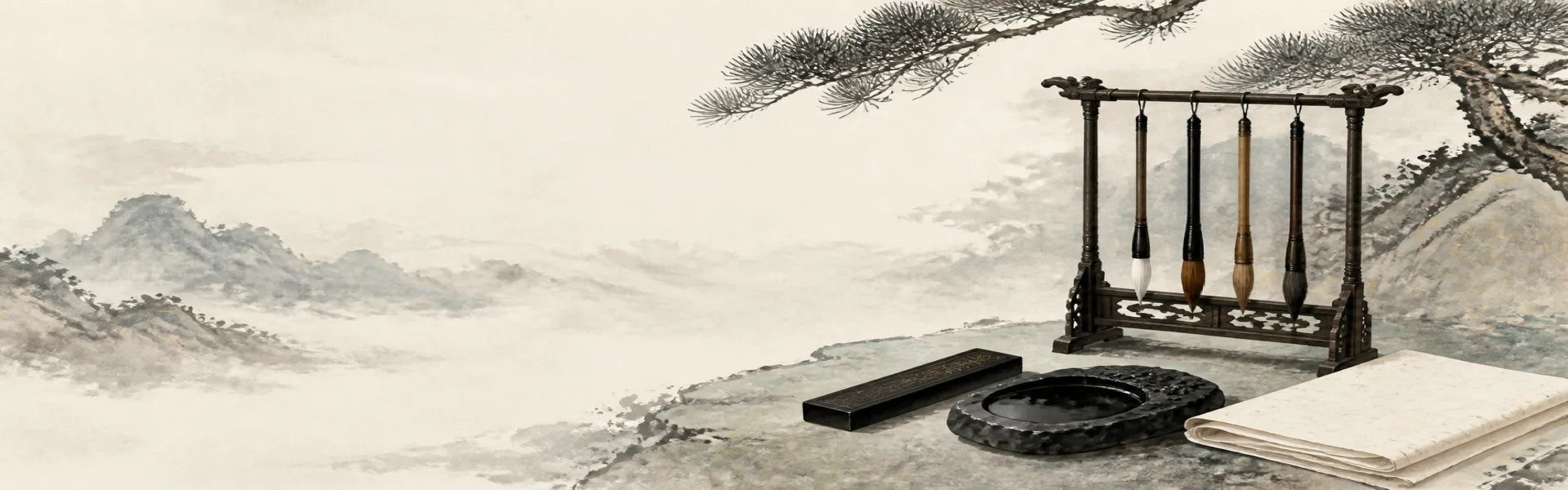
Begin with a small, workable set and a clear exercise. If a stroke spreads, drags or breaks, consider the materials as well as the movement. A useful question is not simply whether a tool is good, but whether it suits this paper, this scale and this task.
The brush: choose for the task
A flexible brush can change the width and character of a line as its contact with the paper changes. The practical starting point is to match its size and response to what you intend to write. Ask a teacher to demonstrate with a comparable brush rather than relying on a label such as beginner or professional.
Consider the length of the exposed tip, how readily it gathers after a stroke and how it feels with ink. Hair names and decorative handles do not settle those questions by themselves. There is no single brush type that every beginner must use or one size that fits every script.
Ink: a material to test, not a hierarchy
Traditional inksticks are made with soot and glue. Grinding a stick with water on an inkstone produces liquid ink. Prepared liquid ink offers another way to set up a writing session; it should not be dismissed as suitable only for work that does not matter.
Follow the product's intended use and instructions. Test a small amount on the paper you will actually use, noting how it flows and looks when dry. Avoid judging all bottled inks as thin or all ground inks as superior. Different formulations and different combinations deserve separate observations.
Paper: ask how it behaves
Xuan paper is not a single uniform surface. Papers differ in fibre composition, thickness and treatment. In broad terms, shengxuan is unsized, while shuxuan is sized to reduce water absorption. These names help frame a comparison but do not predict every stroke or prescribe one exclusive script style.
Keep a small sample of each practice paper with its label. Compare the edges of a stroke, the amount of spread and the feel under the brush. Do not assume that everything sold as rice paper has the same ingredients, or that age alone guarantees better handling.
The inkstone: grinding and holding ink
An inkstone provides a working surface for grinding solid ink and a place to hold the liquid. For study, distinguish that function from the object's carving, inscriptions or collecting history. A highly decorated piece and a plain working stone invite different kinds of attention.
If you are using prepared liquid ink, a suitable stable dish can hold a small portion without pretending to be a grinding stone. Keep the working area clean and follow the maker's care instructions. A valuable or historic inkstone should not become a practice surface merely because its original purpose was functional.
What else belongs on the desk?
Arrange a support beneath the paper appropriate to your exercise, a brush rest, water for cleaning and somewhere to put wet sheets. Paperweights may help keep a loose sheet in place. Leave enough room for your hand and the page; a crowded display is not necessarily a usable workspace.
Seals are common in finished calligraphy and may identify artists or collectors. They are not an entry requirement for learning. Do not copy a master's seal onto your own practice sheet in a way that misrepresents authorship. Study inscriptions and seals as parts of a particular work, not as compulsory decorations.
Start modestly and ask precise questions
For an initial lesson, ask what brush size and paper the teacher uses, and whether materials are supplied. If buying your own, begin with small quantities of compatible practice materials and a stable ink container. You need not purchase an antique, a full gift box or supplies for a year's work before trying them.
A decorated set is not automatically unusable, just as an expensive tool is not automatically suitable. Ask for the contents, dimensions, intended use and care information. Where animal-derived materials matter to your choices, request the actual composition rather than inferring it from a product name.
Change one thing at a time
To compare two papers, use the same brush, ink and short exercise on each. Then, on one paper, compare two manageable ink loads. Label the trials and let them dry before drawing conclusions. This is an informal study exercise, not a laboratory measurement of paper quality.
Describe the result narrowly: this combination spread more, or this line became dry sooner. Your movement is also a variable, so a single attempt cannot explain everything. Repetition and a teacher's observation can help separate a material mismatch from a technique that needs attention.
Care for working tools after use
Follow the maker's guidance when opening a new brush, including how to soften any protective sizing. Do not force a stiff tip apart. After using ordinary water-based calligraphy ink, clean the brush as directed, gently restore its shape and let it dry with the hairs uncrushed and air able to circulate.
Clean the working dish or inkstone appropriately rather than allowing residues to accumulate. Avoid improvised abrasives or solvents, especially on decorated or old objects. Store paper clean and dry, away from spills. These are habits for everyday equipment, not instructions for restoring an antique.
Tools can also be historical objects
Museum collections show that writing equipment can carry carving, inscriptions and a history of ownership. The Metropolitan Museum of Art's Inkstone with Bamboo Design, object 1981.120.1a–c, for example, brings together a decorated stone and a fitted wooden case. Its catalogue discusses questions raised by its inscriptions.
That kind of object deserves study on its own terms. Do not use a collector's piece to infer what every learner needs, and do not treat a carved date as automatic proof of manufacture. Separate material, function, decoration and attribution when reading a collection label.
Use the materials to support learning
Keep a brief record of combinations that suit your current work. When changing tools, allow room to learn their response without assuming that every difficulty is failure or that a new purchase will solve it. Materials influence the result, but they do not replace observation and practice.
Explore our five-script guide to relate tools to different kinds of writing. The guide to calligraphy and Taoist cultivation offers an optional attentive study exercise. Return to the calligraphy overview to plan your next lesson or reading path.