Daoist Petitions and Memorials: Writing to the Celestial Administration
道教章表:写给天庭的仪式文书
A Daoist petition or memorial is more than “religious calligraphy.” It is a document prepared for a named ritual purpose, addressed within a celestial order and activated through recitation, sealing, presentation and transmission. Paper, wording, officiant, altar and sequence belong together. Removing one sheet from that network may preserve an attractive object while obscuring what work it was meant to do.
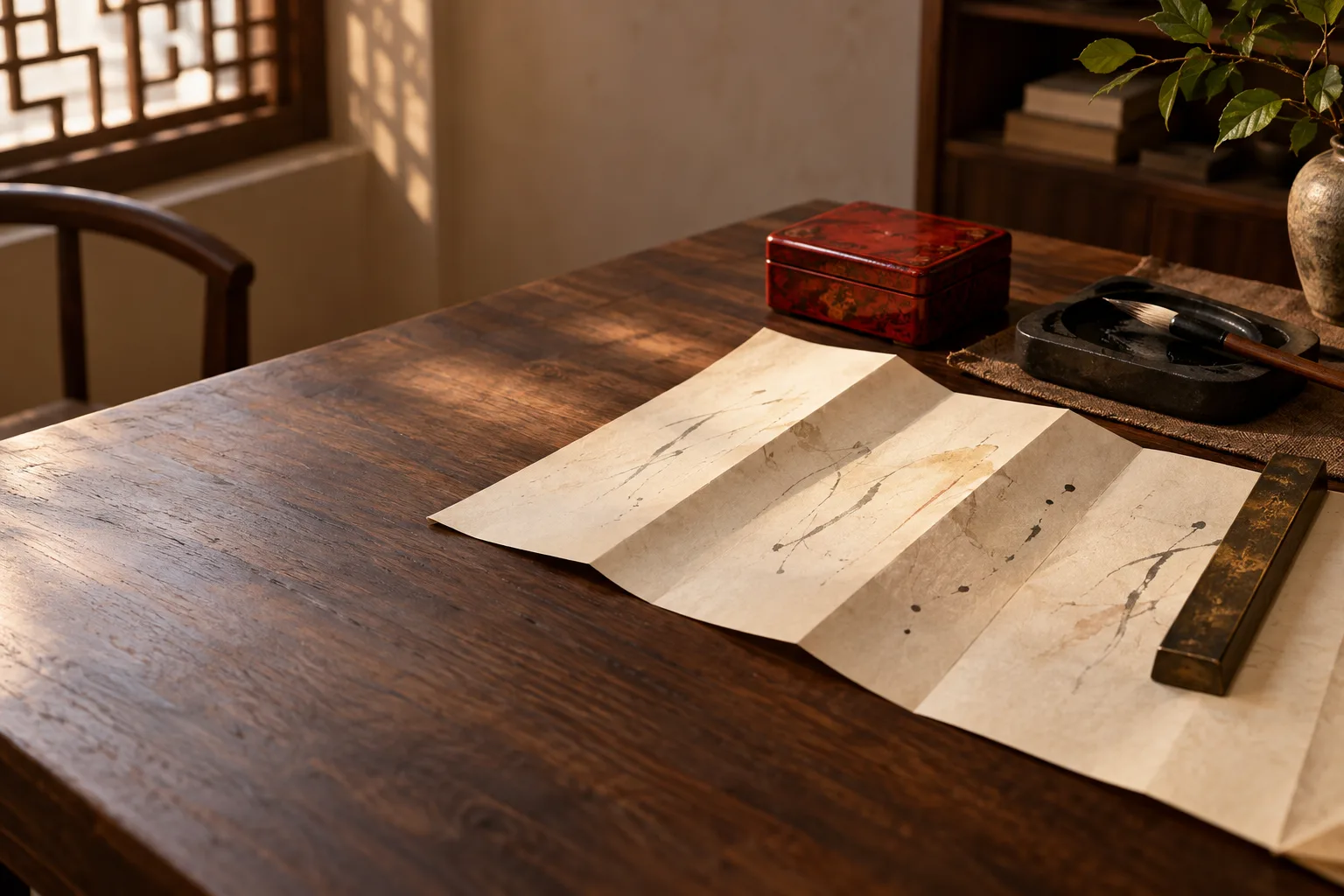
This guide extends the site’s Daoist festivals and rituals gateway and its pages on jiao offerings, zhai purification, ritual seals, talismans, ritual robes and the Daoist pantheon. It explains how to recognize documentary practice without teaching a rite, copying restricted formulas or pretending that every tradition uses one fixed form.
A ritual document has a sender, an addressee and a purpose
Petition and memorial are useful umbrellas, not one universal genre
English “petition” and “memorial” can translate several Chinese document names, including zhang (章), biao (表), zou (奏) and shu (疏). Their meanings shifted across periods, liturgical collections and communities. A document may announce an intention, request aid, report completion, express thanks or identify sponsors and beneficiaries. It should first be named from its own title or reliable ritual context.
Do not turn the vocabulary into a timeless rank chart. The same graph can appear in state administration, literature and religion, while two Daoist manuals may group forms differently. Responsible translation can retain the Chinese term beside a cautious English or French gloss, especially when the exact institutional nuance remains uncertain.
The celestial addressee is part of the document’s identity
A document is not simply sent “to heaven.” The recipient might be one of the Three Pure Ones, the Jade Emperor, the Three Officials or a particular bureau and its officers. The addressee helps determine salutation, route, status and purpose, just as a terrestrial memorial depended on the office that could receive it.
The Southern Song compendium Daomen dingzhi, or Established Regulations of the Daoist Community, is arranged by document category and ritual procedure. Its ten fascicles preserve formats for memorials, petitions, dispatches and communications to different celestial authorities. It is a witness to one historical effort at ordering practice, not a template for every place and century.
Patron, beneficiary and officiant occupy different positions
The person or community commissioning a rite may not be the person named as its beneficiary, and neither is necessarily the priest who prepares and presents the document. Historical memorials can speak for rulers, families, local communities, the deceased or a wider realm. Those relationships reveal who could mobilize ritual expertise and whose needs were placed before the gods.
Franciscus Verellen’s study of green memorials in the Tang–Five Dynasties transition shows how prayers commissioned by rulers and regional elites record both ritual innovation and political anxiety. That evidence should not be generalized into the claim that Daoist petitions always served elites: it demonstrates how one document genre changed with its historical patrons.
Official language shaped a sacred documentary world
Celestial administration was modeled through familiar institutions
Daoist liturgy often imagines communication with divine courts through the language of offices, ranks, registers, messengers, seals and properly routed documents. The comparison with government administration made authority and procedure legible. It also explains why an apparently small detail—an addressee, title, date, seal or list of names—could matter to the document’s place in a larger order.
This does not mean that religion merely copied the state. Celestial institutions developed their own cosmologies, scriptures, divine personnel and ritual histories, while earthly bureaucracy also changed over time. “Celestial administration” is most useful as a documented historical model, not proof that every god corresponds neatly to one ministry.
Format is part of meaning
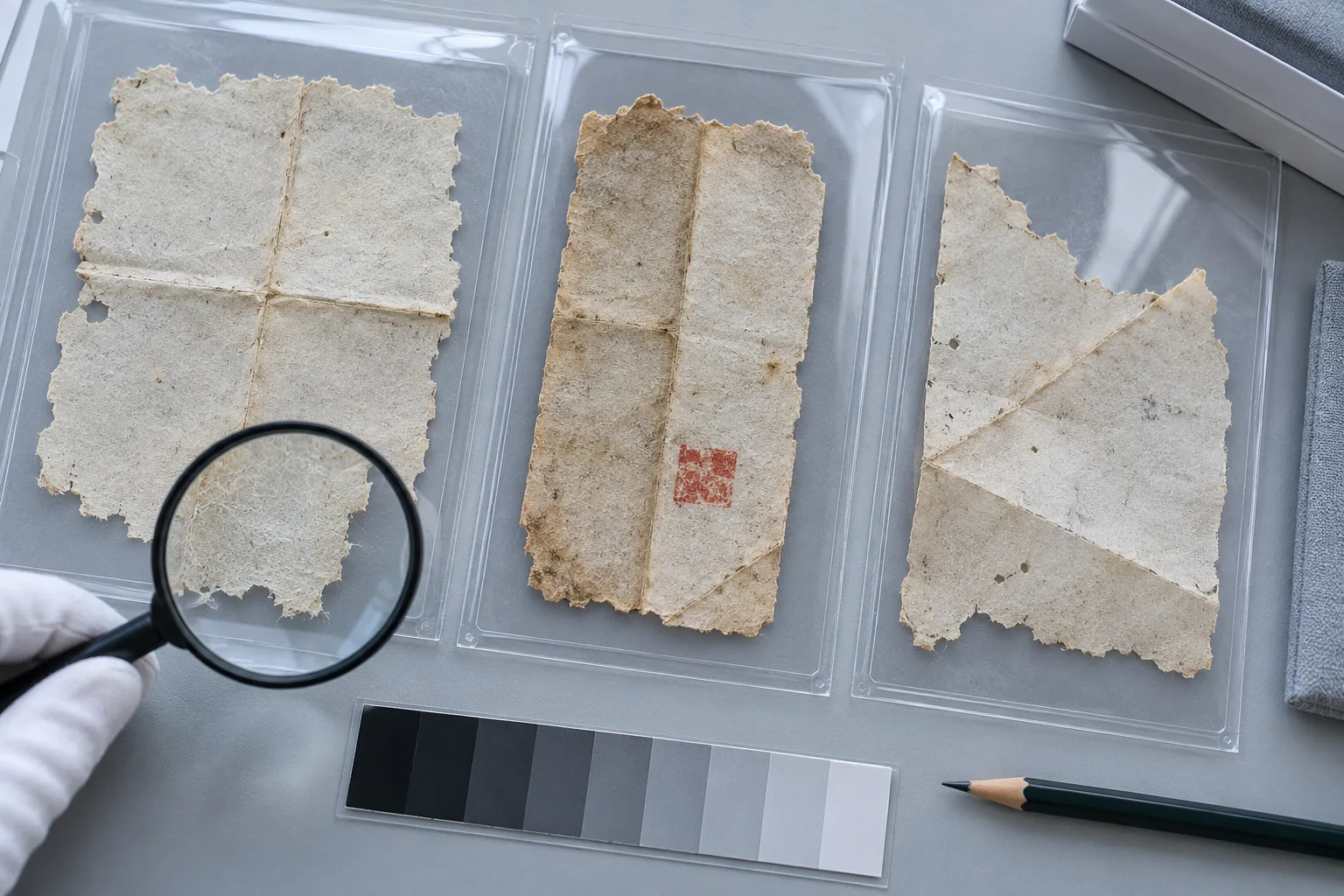
Headings, honorifics, opening declarations, names, dates, lists, closing formulas, folds and seals can distinguish the work of one document from another. A preserved sheet may also show corrections, water damage, burning, burial, mounting or later collection. These features are evidence before they are symbols.
A red impression is therefore not enough to identify a petition, just as formal handwriting is not enough to date one. Read the document with the site’s guide to Daoist ritual seals: matrix, impression, wording, position, officiant and provenance need to be considered together.
Images can stage an audience without documenting every action
The Art Institute of Chicago’s Qing priest’s robe presents a celestial assembly on the officiant’s back and explains ritual as an audience modeled on court reception. Such an image helps viewers understand why petitioning involved rank, approach and authorized speech. It does not supply a transcript of a particular service.
The same caution applies to paintings of divine officials at desks. The Art Institute’s Southern Song painting of the Official of Heaven connects the scene to petitions associated with the Three Officials and their differing modes of transmission. It is strong evidence for a represented ritual imagination; it is not permission to reconstruct a universal recipe from one picture.
The document becomes effective within performance
Writing and recitation join material and spoken form
A petition may be drafted, copied, checked, folded, sealed, announced or recited. These actions make the document audible and situate it among incense, movement, music, vestments and altar space. The page is not a script that simply waits to be read; its handling can be part of the liturgical event.
The site’s pages on ritual music and ritual robes show why a photograph cannot capture the whole process. Sound marks transitions, clothing locates an officiant in sacred space, and the document’s presentation unfolds in time.
Transmission can alter or consume the material sheet
Some documents were burned so that smoke and transformation carried them onward; others in particular contexts could be buried, immersed, deposited or retained. These procedures were not interchangeable. A scorched edge or water stain cannot by itself identify an addressee or prove the original sequence.
Use changes what survives. A document that completed its purpose may disappear, whereas unused models, copied manuals, later transcripts and collected fragments remain. The archive is therefore uneven: absence of an original sheet does not prove absence of the practice, while a surviving model does not prove it was used in the way a later label proposes.
Copy, model and performed document must be separated
The Metropolitan Museum’s Canonization Scroll of Li Zhong is an especially instructive case. The scroll depicts a celestial court and preserves a petition asking that Li Zhong be recognized within the pantheon. The petition is dated 1157, yet the painting and text are probably Ming copies; appended colophons dated 1641 establish a later limit for the surviving object.
That layered dating is a model for careful reading. The date named inside a text, the date of the surviving copy, the date of an attached colophon and the date it entered a collection are separate facts. Collapsing them turns transmission history into false certainty.
Read petitions as evidence without turning them into instructions
Use a six-step documentary method
- Name the witness. Record catalogue title, Chinese genre term, collection or manual, object number, edition and visible date.
- Identify the parties. Separate officiant, patron, beneficiary, named addressee and any messenger or celestial office.
- Map the page. Describe headings, columns, folds, seals, names, dates, corrections and damage before interpreting them.
- Locate the action. Ask whether the witness is a model, copy, performed document, painting, manual description or later transcript.
- Separate the dates. Keep internal date, material production, copying, colophon, catalogue and acquisition histories distinct.
- State the limit. Mark unreadable words, uncertain genres, restricted procedures and claims that belong to religious interpretation rather than material proof.
This method can be used with a museum object, digitized manual or published photograph without exposing private ritual knowledge. It favours description and provenance over visual guesswork, and it makes disagreements between catalogues or scholars visible rather than silently choosing the most dramatic label.
Do not confuse petitions, talismans, registers and scriptures
A petition addresses and reports; a talisman may authorize, summon, protect or transform within a specific ritual system; a register can record transmitted names, offices or permissions; a scripture has its own revealed, recited and canonical roles. One sheet or manual may bring several categories together, but the terms are not synonyms.
The site’s guide to Daoist talismans explains why visible strokes cannot be decoded from appearance alone. The same boundary applies here: copying a public photograph does not reproduce the authority, training or liturgical conditions of the document.
At Wudang, begin with provenance rather than atmosphere
A paper found near Wudang is not automatically Ming, imperial, Quanzhen, Zhengyi or connected to Zhang Sanfeng. Those identifications require dates, titles, temple records, transmission history or other recoverable evidence. Respect for Wudang history means resisting the urge to let a famous mountain supply provenance that the object itself lacks.
For further study, read the Daomen dingzhi overview beside Verellen’s history of green memorials, the Metropolitan Museum scroll and the Art Institute’s ritual images. Together they show a long documentary culture shaped by changing genres, patrons, copies and performances. The enduring lesson is not that heaven worked like one unchanging office, but that Daoist communities repeatedly made relationships with the sacred tangible through disciplined acts of writing, address and presentation.