Daoist Ritual Seals: Impression, Authority and the Work of Documents
道教法印:印痕、权威与仪式文书
A Daoist ritual seal is small enough to sit in one hand, yet its meaning extends far beyond the carved block. The matrix, the impression, the document, the officiant and the transmitted method belong together. Removed from that network, a red square may still be visually striking, but it no longer tells us what action was being authorized or by whom.
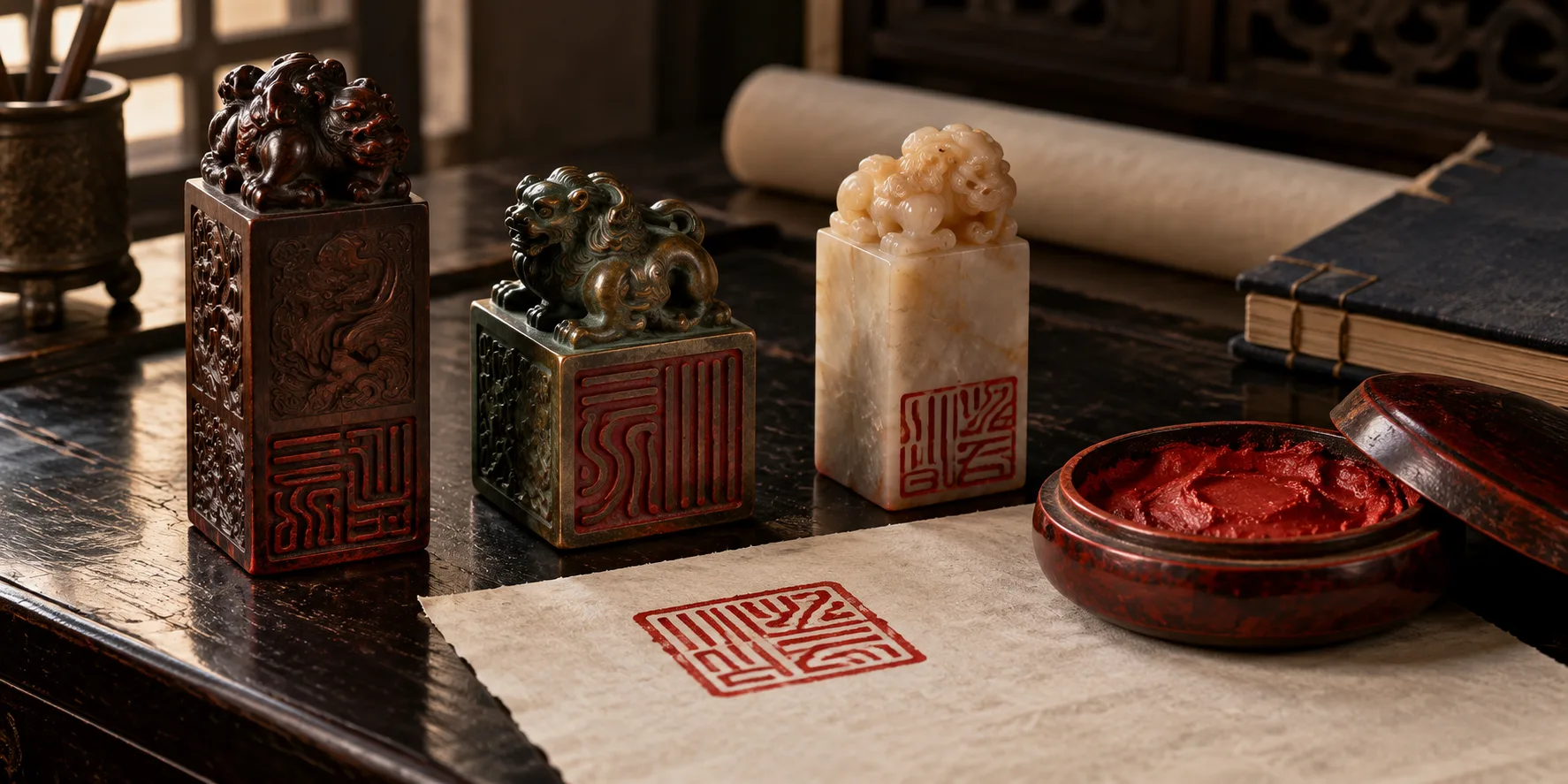
This guide treats ritual seals as material culture and documentary practice. It does not reproduce operative designs or offer instructions for ritual use. Instead, it explains how to distinguish a fayin (法印), or ritual seal, from the personal and studio seals familiar from Chinese painting and calligraphy, and how to read surviving objects without turning every mysterious mark into evidence of a single timeless tradition.
A seal is both an object and an event
The matrix is made to produce an impression
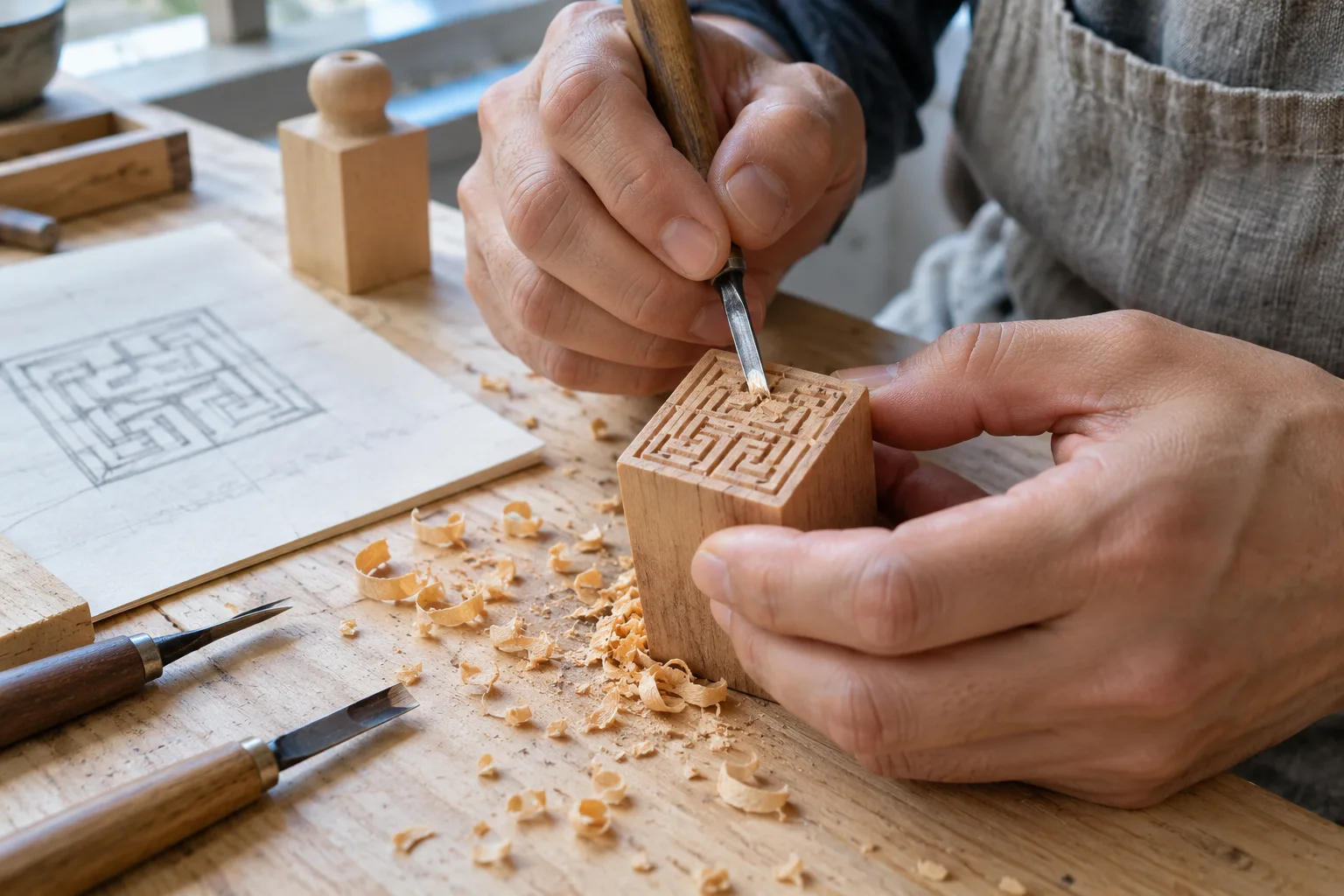
A seal has at least two lives. The first is the carved matrix, made from materials such as wood, metal or stone. The second is the impression left when that matrix meets prepared pigment and a receptive surface. Carving normally anticipates reversal: what is cut into the face appears in the opposite orientation when printed. That simple transfer explains why photographs of a seal base and photographs of its impression answer different questions.
Ritual seals are not the same as artists’ seals
Chinese painters, calligraphers, collectors and studios used seals to identify makers, owners and acts of appreciation. The site’s guide to Chinese seals and seal carving introduces that broad visual world. A Daoist ritual seal may also identify an office or authority, but it participates in liturgy, petitions, talismanic documents or transmitted ritual methods. Similar materials and seal-script habits do not make the functions interchangeable.
Not every square red mark is a ritual seal
Shape and colour alone are weak evidence. A careful identification needs the wording or design, the document on which it appears, its placement, the object’s provenance and comparison with dated examples or ritual manuals. Even a clearly religious image may belong to a temple souvenir, a later devotional print or a modern reconstruction rather than to an officiant’s working seal.
Why an impression can signify authority
Sealing borrowed the language of administration
In imperial China, seals authenticated offices and documents. Daoist ritual drew on that familiar documentary language while directing it toward a sacred bureaucracy. The analogy matters: a seal does not merely decorate a page; it presents an act as issued under a named authority. Shih-shan Susan Huang’s study “Daoist Seals: Part 1: Activation and Fashioning” traces how physical manufacture, textual models and ritual preparation made the seal more than a neutral stamp.
The seal belongs to a sequence, not an automatic formula
A seal impression may appear on a petition, talismanic sheet, certificate or other ritual paper, depending on lineage and rite. Its force, in the tradition’s own terms, comes from the authorized person, the correct seal, the appropriate document and the prescribed action. Copying the visible design therefore does not reproduce the transmitted office or the ceremony that made its use meaningful.
Object records keep belief and evidence distinct
The National Museum of Taiwan History catalogues a square seal of the Supreme Lord Lao and identifies ritual seals as important Daoist implements bearing divine names or talismanic writing. Such a museum record tells us what an object is, what it is made from and how it has been classified. It does not by itself reconstruct every rite in which that particular matrix was used.
Material, carving and custody all leave evidence
There was no single universal material
Surviving seals and textual descriptions include wood, metal, stone and other materials. Material choice may relate to period, availability, ritual prescription or later replacement. It should not be decoded through a single chart in which every substance has one fixed cosmic meaning. Wear, corrosion, tool marks and repairs often tell a more dependable story about manufacture and use.
The carved face is a compact image-text
Some impressions use recognizable seal-script characters; others incorporate diagrams, talismanic strokes or forms presented as celestial writing. Huang describes this quality as “imagetext”: the design works through the joined force of writing and image. A viewer should resist two opposite mistakes—assuming every line is ordinary text waiting to be read, or treating every unreadable line as proof of supernatural origin.
Custody can matter as much as carving
A working seal is transmitted, stored and used within a community. Its box, wrapping, accompanying manual, owner’s note or documented temple history may establish more than the bare matrix can. Conversely, an attractive seal bought without provenance may be old, newly carved or assembled from published patterns. Honest cataloguing keeps those possibilities open.
Seal, talisman and register are related but distinct
A seal is not a talisman
A fu (符) is a talismanic written or drawn form; a yin (印) is a seal or its impression. They can appear on the same ritual paper, but one word should not replace the other. The distinction is useful precisely because Daoist documents can combine handwriting, diagrams, stamped impressions, names, dates and spoken actions.
A seal is not an ordination register
A lu (箓) records transmitted status, offices, divine personnel or ritual authorization in ways that vary across history and lineage. Receiving registers belongs to the institutional question explored in Taoist ordination and lineage. A ritual seal may express or enact authority in documents, but possession of a loose seal cannot by itself prove ordination.
Specific traditions must remain specific
Early Celestial Master practices, medieval Lingbao texts, later thunder-rite compilations, modern Zhengyi lineages and Quanzhen institutions did not all use identical seals in identical ways. The scholarly study of seal-bearing bodhisattvas and religious sealing shows that sealing practices also circulated between Daoist, Buddhist and wider Chinese ritual worlds. Resemblance can reveal contact, not automatic ownership by one tradition.
How to read a ritual seal responsibly
Ask five questions before naming the object
- Matrix: what material, carving method and signs of use are visible?
- Impression: is the design legible, diagrammatic, talismanic or partly damaged?
- Document: what kind of paper carries it, and where is the mark placed?
- Transmission: is there a recorded maker, officiant, temple, lineage or date?
- Comparison: does the identification rest on a dated object, a ritual manual or only visual similarity?
Respect is part of good documentation
Some contemporary communities regard particular designs, manuals and procedures as restricted transmission. Cultural study does not require publishing every operative detail. Recording material, dimensions, visible condition and public provenance can preserve knowledge while respecting boundaries set by living practitioners.
At Wudang, do not let place substitute for provenance
A seal seen near Wudang is not automatically Ming, imperial, Quanzhen or connected with Zhenwu. Those claims need inscriptional, archival or custodial evidence. Visitors can apply the same discipline used for Wudang stone inscriptions: separate what the object visibly records from what local memory, later labels and modern display add to it.
Continue with Jiao offerings to see how documents and authorized roles enter a larger communal rite, or with temple worship, offerings and vows for the public-facing practices a visitor is more likely to encounter.