QIGONG & DAOYIN · 气功与导引

Natural Abdominal Breathing (Shun Fushi Huxi) in Wudang Qigong: Settling the Breath to the Dantian Safely 武当气功与导引中的“顺腹式呼吸”:气沉丹田、细匀深长与初学者呼吸忌宜

Reading Tao Te Ching Chapters 6 and 10, Zhuangzi’s “breathing from the heels,” and Tao Hongjing’s Yangxing Yanming Lu on why calm, unforced breathing always comes before advanced methods.

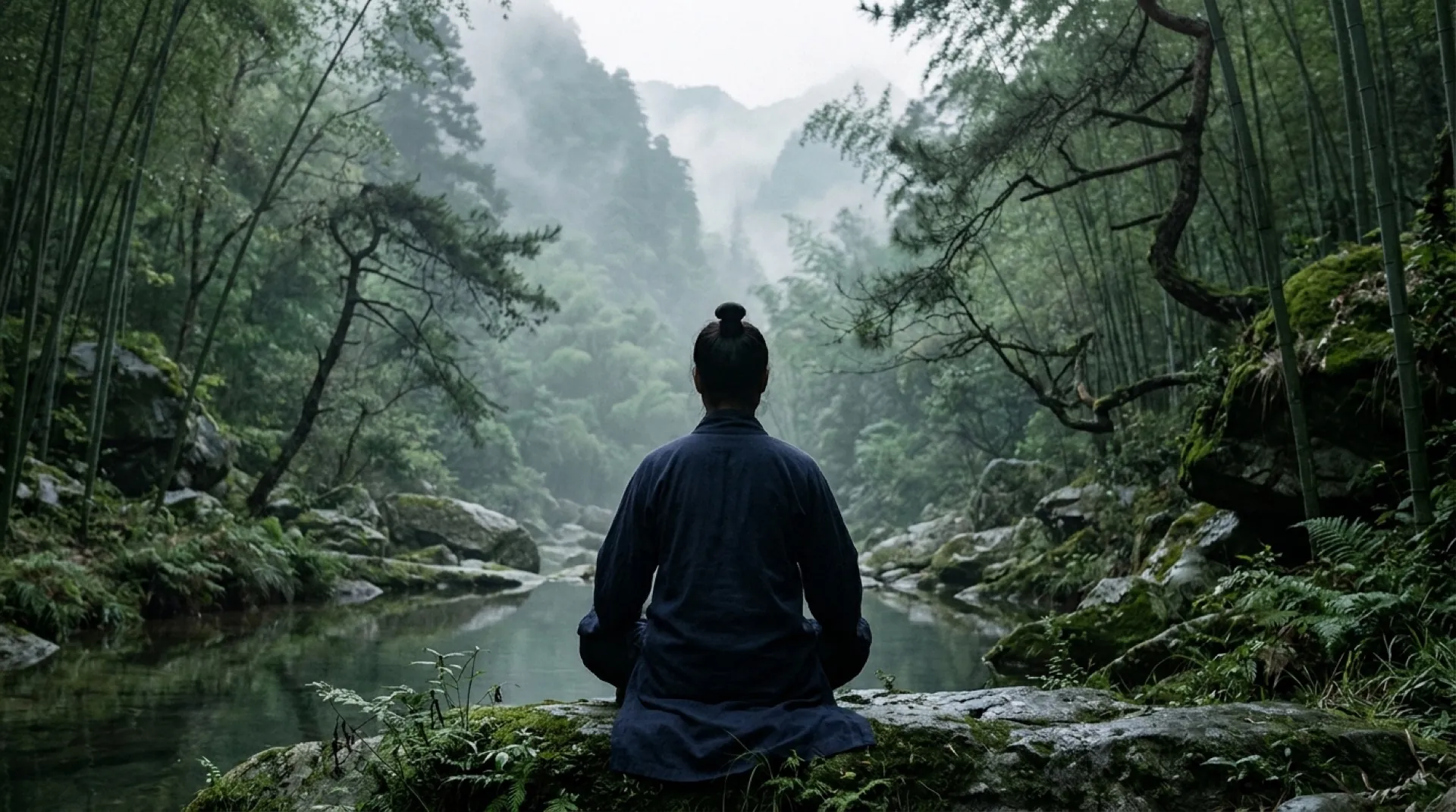
A figure in a dark robe with hair in a topknot, seen from behind, seated cross-legged on a mossy rock beside a still pool in a misty bamboo ravine.

Almost every newcomer to Wudang Qigong or Taijiquan hears the phrase “let the qi sink to the Dantian” (气沉丹田) during their very first week. Unfortunately, many beginners misunderstand this instruction and try to push their stomach out like a drum or hold their breath until their face turns red. In authentic Wudang pedagogy, “sinking the breath” never means forceful muscular straining. It begins with the simplest, safest rhythm in the human body: Natural Abdominal Breathing (顺腹式呼吸, Shun Fushi Huxi).

1. What the Classics Say: “Breathing Like an Infant” and “Breathing from the Heels”

Three classical passages define how Taoist cultivation views the breath:

  • Tao Te Ching (Dao De Jing) Chapter 6 & Chapter 10: Laozi asks, “In concentrating the breath and attaining suppleness, can you be like a newborn infant?” (专气致柔,能婴儿乎) and describes the vital spirit as “continuous, as if barely existing; use it, and it never runs dry” (绵绵若存,用之不勤). Watch a sleeping infant: the upper chest and shoulders stay quiet while the soft lower abdomen rises gently on inhalation and settles on exhalation.
  • Zhuangzi Chapter 6 (Dazongshi 《大宗师》): Zhuangzi writes: “The True Person breathes from the heels; the multitude breathe from the throat” (真人之息以踵,众人之息以喉). When we are anxious or hurried, breathing becomes shallow and trapped in the upper chest and throat; when posture and mind settle (Wuji and Taiji), the diaphragm descends freely and the breath feels as though it roots all the way to the soles of the feet.
  • Tao Hongjing’s Yangxing Yanming Lu (《养性延命录·服气疗病篇》): The early medieval Daoyin manual notes that healthy breath cultivation must be so quiet that “a fine feather placed at the nostrils does not stir” (鸿毛著鼻而不动), warning against rough, audible gasping or forceful chest compression.

2. How Natural Abdominal Breathing Works—and Why Beginners Avoid Forced “Reverse Breathing”

In Chinese internal arts, teachers distinguish between two patterns of abdominal movement:

  1. Natural (Orthodox) Abdominal Breathing (顺腹式呼吸 · The Foundation for Everyone): As you inhale quietly through the nose, the diaphragm descends and the lower abdomen expands softly and naturally outward; as you exhale, the diaphragm rises and the lower abdomen relaxes gently inward toward the spine. This is the rhythm used across Zhan Zhuang, Baduanjin, Liuzijue, and beginner Wudang Tai Chi.
  2. Why Beginners Should Not Force Reverse Abdominal Breathing (逆腹式呼吸) or Hold the Breath (憋气): Some advanced martial or inner-alchemy treatises mention drawing the lower abdomen slightly inward on inhalation. However, if a beginner imitates this without years of relaxed ribcage and pelvic-floor opening (Song), it often creates unnecessary upper-chest tension and restlessness—the very deviations warned against on our Small Heavenly Circuit (Xiao Zhoutian) safety page.

3. The Four Classical Qualities of Breath: Fine, Even, Deep, and Long (细、匀、深、长)

Rather than counting seconds on a stopwatch, Wudang tuning of the breath (调息, tiaoxi) refines four gentle qualities over time:

  • Fine (细 · Quiet and Unforced): Breathe through the nose so softly that even you cannot hear the air passing through your nostrils, keeping the tip of the tongue resting lightly against the upper palate.
  • Even (匀 · Smooth Without Jerks): Avoid sudden gasps or pauses; let inhalation turn into exhalation like a pendulum or ocean tide.
  • Deep (深 · Settling Below the Ribs): Release tight belts and let the ribs and waist soften so the breath naturally reaches the lower abdomen (Dantian, see Guarding the One · Shouyi).
  • Long (长 · Never Exhausting the Lungs): Let the breath lengthen gradually over weeks of practice, always stopping at a comfortable, unforced fullness so you never feel air-hungry (Knowing When to Stop).

4. A Safe 5-Minute Daily Breath Practice Between Wudang Mountain and Singapore

Whether you sit on a stone terrace near Wudang Mountain’s UNESCO World Heritage ancient Taoist temples or unwind at home after classes at our Singapore centre, you can practise five minutes of Shun Fushi Huxi before sleep or before your morning Qigong set:

  1. Sit upright on the front third of a chair or stand in Wuji posture, resting both palms lightly over your lower abdomen below the navel.
  2. Exhale gently through the nose first, letting your shoulders drop and your palms feel the abdomen soften inward.
  3. Allow the next nasal inhalation to arrive by itself, feeling the lower abdomen warm and round softly into your palms without lifting your collarbones.
  4. Continue for fifteen to twenty unhurried breaths, then sit quietly for thirty seconds (explore all beginner pathways on Start Here or join our Singapore Qigong workshop).

Safety note: If you ever feel lightheaded, tight in the chest, or short of breath, stop trying to control your breathing immediately and return to your ordinary automatic breath. Traditional Qigong breathing is a relaxation and wellness practice and does not replace medical care.

Seeker’s Q&A · Frequently Asked Questions

What does “letting the qi sink to the Dantian” (气沉丹田) actually feel like for a beginner?

It feels like your shoulders, chest, and ribs softening downward while your lower abdomen warms and expands gently during a quiet nasal inhalation—never like holding your breath or forcefully pushing your stomach muscles outward.


Should a beginner practise Natural Abdominal Breathing (顺腹式呼吸) or Reverse Abdominal Breathing (逆腹式呼吸)?

Beginners should strictly practise Natural Abdominal Breathing (where the lower abdomen gently expands on inhalation and relaxes inward on exhalation) or simple natural breathing. Forced Reverse Breathing without years of foundational relaxation can cause chest tightness and dizziness.

What did Zhuangzi mean by “The True Person breathes from the heels” (真人之息以踵)?

Zhuangzi contrasts anxious, shallow throat-breathing with the deep, settled breathing of a calm practitioner whose mind, posture, and diaphragm are so relaxed that each breath feels connected all the way down through the legs to the heels.
