TRADITIONAL WEAPONS · 武当器械

Wrapping and Coiling (Guojian & Chanjian) in Wudang Straight Sword (Taijijian): Circular Blade Redirection, Waist-Wrist Unity, and Safe Solo Drills 武当太极剑“裹剑”与“缠剑”详解:剑走圆弧、以腰带腕的柔化圈剑身法

Master the signature circular blade methods of Wudang Taijijian—how large-cone Wrapping (Guojian) and small-cone Coiling (Chanjian) turn the straight sword into a flowing extension of the waist and breath.

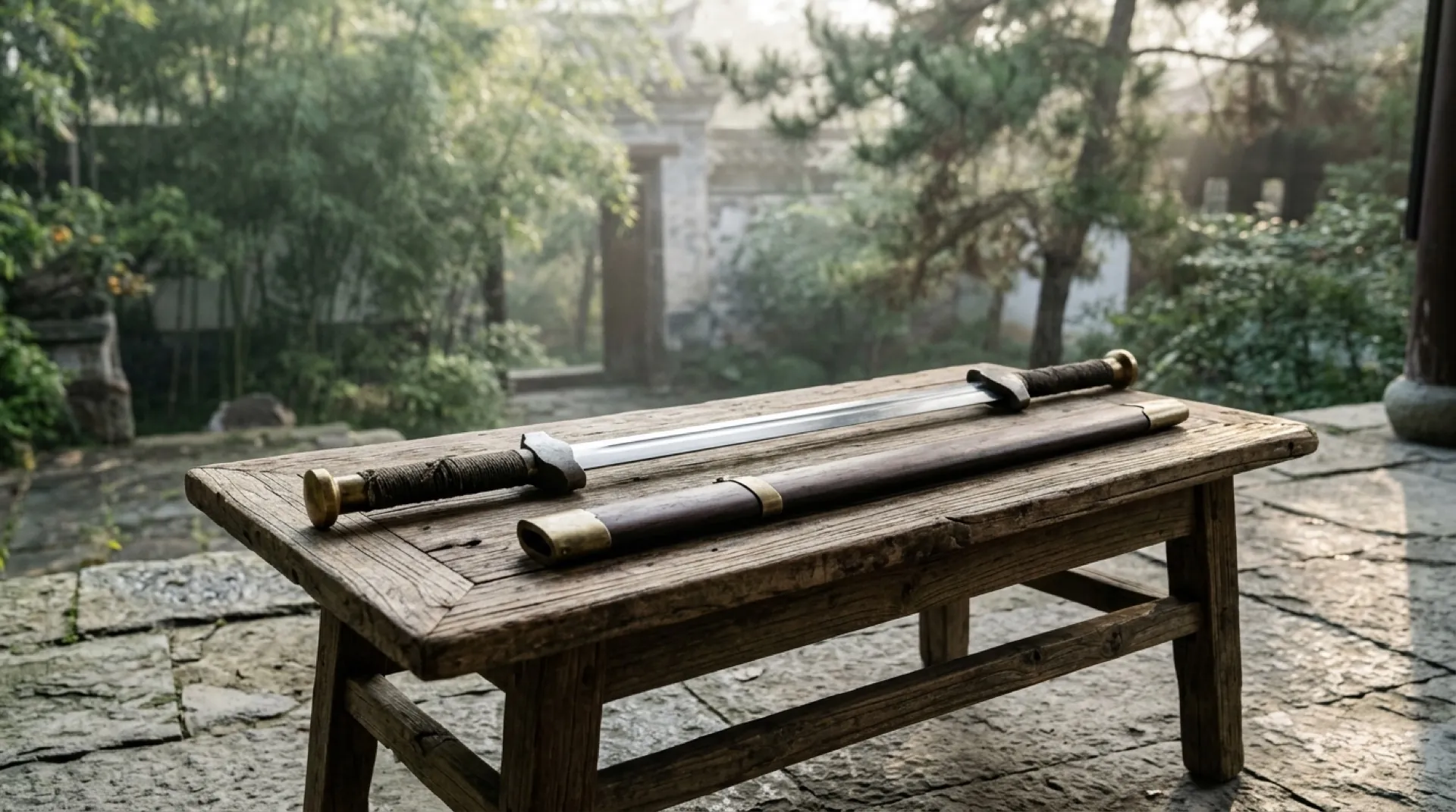
A Chinese straight sword (jian) lying drawn beside its scabbard on a weathered wooden table in a stone-paved courtyard, with pines and a gateway in the mist behind.

1. Why Circular Wrapping and Coiling Define Wudang Straight Sword

As introduced in our Wudang Taiji Jian Fundamentals guide and our study of the Thirteen Sword Methods (Shisanzhi), the traditional Chinese double-edged straight sword (jian 剑) is never wielded as a heavy chopping cleaver. Classical sword manuals summarize its spirit in four words: “The sword walks in lightness and suppleness” (jian zou qingling 剑走轻灵). Rather than colliding edge-to-edge with a heavier weapon, a Wudang swordsman uses continuous circular cones to deflect, envelop, and redirect force.

The two foundational circular methods that connect every thrust (Ci), point (Dian), and interception (Lan, Gua, Liao, Mo) are Wrapping the Sword (Guojian 裹剑) and Coiling the Sword (Chanjian 缠剑).

2. Distinguishing Guojian (Large-Arc Wrapping) from Chanjian (Small-Cone Coiling)

Although both techniques trace conical circles with the sword tip while the wrist serves as the apex, traditional Wudang sword pedagogy distinguishes their radius, plane, and tactical intent clearly:

  • Wrapping the Sword (Guojian 裹剑 — Broad Protective Envelope): In Guojian, the waist and shoulder girdle rotate together with the forearm so that the blade sweeps a generous vertical or diagonal circle around the front and side of the torso—like wrapping a silk cloak around the body—before seamlessly rolling into a forward thrust or upward sweep (Liao). It divides into Inward Wrapping (Zhengguo 正裹 / Neiguo), where the sword tip arcs downward, inward toward the centerline, and up on the inside, and Outward Wrapping (Fanguo 反裹 / Waiguo), where the tip arcs downward and up along the outside flank.
  • Coiling the Sword (Chanjian 缠剑 — Tight Tip-Led Spiral Cone): In Chanjian, the elbow remains quietly sunk while the supple wrist and fingers guide the front third of the blade (jianfeng 剑锋) in a compact, tight cone (typically 20–35 cm in diameter at the tip) to adhere to and spiral around an incoming shaft or wrist, directly expressing silk-reeling energy (Chansijin) through the hilt.
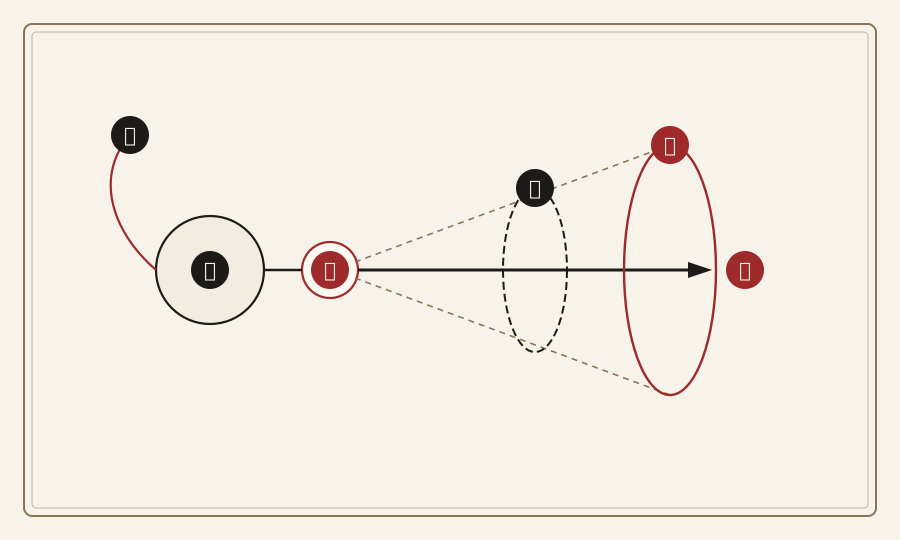
Classical numbers-only diagram of Wudang Taijijian Guojian (wrapping) and Chanjian (coiling) showing the waist fulcrum (①), supple wrist apex (②), broad outer Guojian envelope (③), tight inner Chanjian cone (④), sword tip focus (⑤), and counter-balancing left sword-fingers (⑥).

Wudang Taijijian Guojian & Chanjian (numbers-only SVG key): Conical blade geometry uniting the waist axis, supple wrist fulcrum, and sword tip.

  1. ① Waist & Dantian Axis: Every circular blade arc originates from a turn of the waist rather than isolated arm waving.
  2. ② Supple Wrist Apex (Huoba Grip): A relaxed, breathing grip where thumb, index, and ring fingers rotate the hilt smoothly without locking the wrist.
  3. ③ Broad Wrapping Arc (Guojian): Larger protective circle sweeping past the torso to clear the centerline before extending.
  4. ④ Compact Coiling Cone (Chanjian): Tight spiral cone traced by the front third of the blade to adhere and redirect along a tangent.
  5. ⑤ Sword Tip Extension (Jianfeng): Intention reaches all the way to the tip along the central axis after the circle completes.
  6. ⑥ Counter-Balancing Sword-Fingers (Jianzhi): The left hand mirrors and balances the right sword arm across the spine.

3. Three Keys to Clean Sword Circles: Live Grip, Waist Lead, and Sword-Finger Balance

When beginners practice Guojian or Chanjian on Wudang Mountain or in Singapore, the most common error is gripping the handle like a hammer and cranking the wrist until the forearm stiffens. Observe three structural principles from the Six Harmonies (Liuhe):

  1. Keep a “Live Grip” (Huoba 活把): Hold the hilt primarily between the thumb and index finger while the middle, ring, and little fingers open and close softly like a fan; this lets the pommel pivot freely inside the palm during transitions between palm-up (Yangjian) and palm-down (Yinjian).
  2. Turn the Waist Before the Wrist: As in Taijiquan Zhedie (folding), let the hip crease and waist initiate the inward or outward curve so the shoulder stays dropped (Chenjian Zhuizhou).
  3. Coordinate the Left Sword-Fingers (Jianzhi 剑指): Never let the left hand hang dead at your side; as the sword wraps inward, the left sword-fingers arc softly overhead or behind to counterbalance the spine.

4. Beginner 5-Minute Wooden-Sword Figure-Eight Wrapping Drill & Safety Notes

Using a smooth wooden training sword (or even a light ruler or empty sword-fingers in a clear room with at least two meters of open space in every direction), stand in a comfortable bow stance and practice slow figure-eight wrapping (Zuoyou Guojian 左右裹剑) for five minutes:

Shift weight slightly back as you turn the waist left, letting the sword tip dip down and wrap inward along your left flank with the palm turning upward; then shift weight forward as you extend a calm level thrust; next, fold the waist right and let the tip wrap downward and up along your right side. Keep the breath smooth and unhurried. Safety note: always check ceiling height and surrounding clearance before swinging any training weapon, use an unsharpened wooden practice sword, and pause immediately if you feel wrist or elbow strain.

Seeker’s Q&A · Frequently Asked Questions

What is the difference between Guojian (Wrapping) and Chanjian (Coiling) in Wudang Taijijian?

Guojian (Wrapping) uses the waist, shoulder, and wrist together to sweep a broad protective circle around the torso before thrusting or slicing, whereas Chanjian (Coiling) keeps the elbow sunk and uses the supple wrist to trace a tight, compact cone at the sword tip.


