WUDANG TAIJIQUAN · 武当太极拳

Silk-Reeling Energy (Chansijin) in Wudang Taijiquan: Spiral Mechanics, Joint Safety and How the Waist Turns Straight Lines into Circles 武当太极拳“缠丝劲”详解:螺旋开合、顺逆缠转换与护膝松肩要领

Why internal martial arts move in three-dimensional spirals rather than flat straight lines—and how to train inward and outward coiling without twisting your knees.

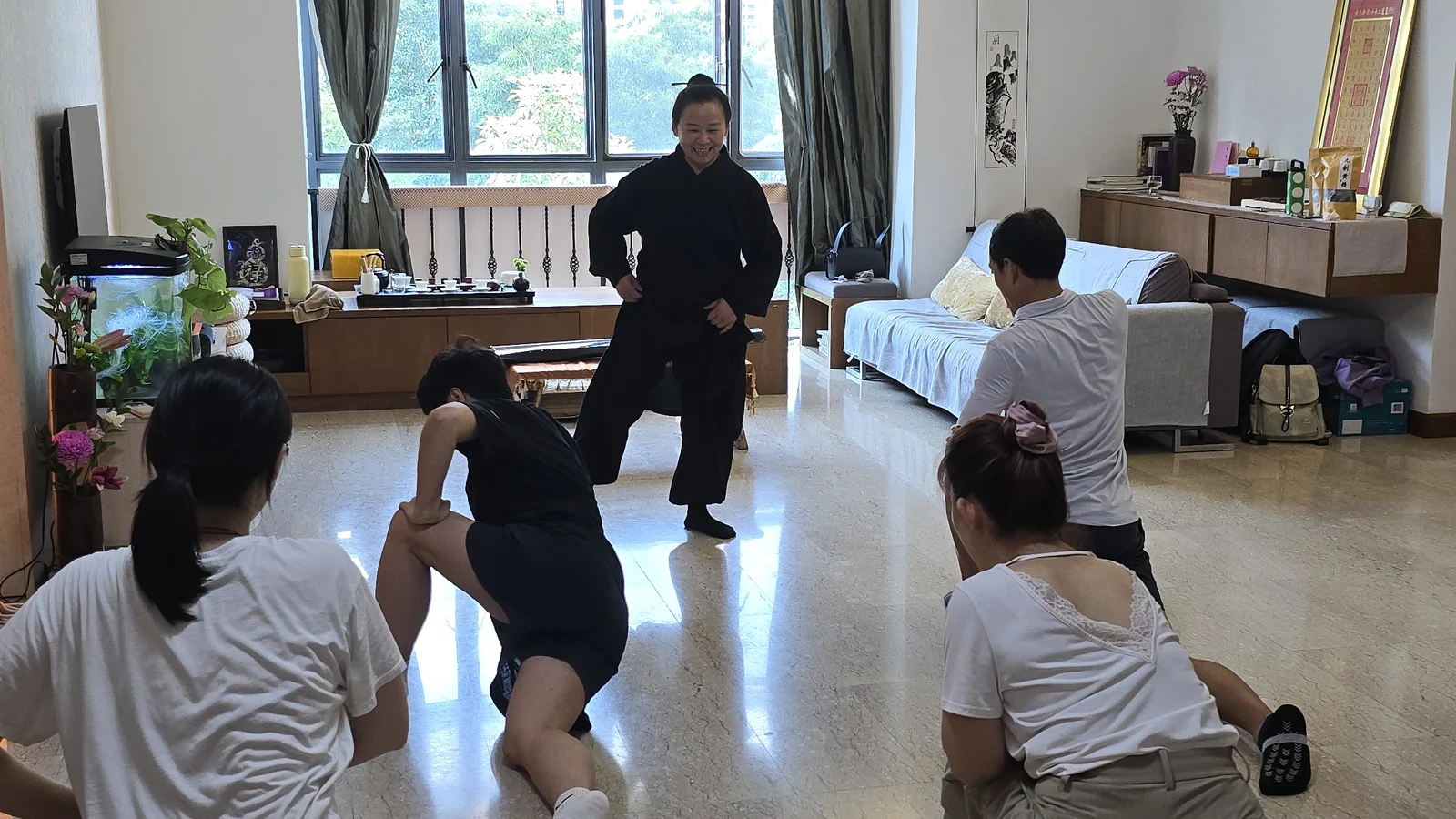
A Wudang taijiquan lesson in a sunlit room: students seen from behind kneel into deep lunges to open the hips while a teacher in black Taoist-style clothing stands in a wide stance, smiling, with an ink-painting scroll on the wall behind.

If you watch a beginner imitate Wudang Taijiquan from a video, their arms usually travel in flat horizontal or vertical lines—like a piston pushing forward and pulling back. Yet when you watch a seasoned practitioner perform the same posture, the wrists, elbows, waist, and legs turn subtly along three-dimensional curves, like water swirling around a smooth river stone (The Softness of Water). In traditional internal martial arts, this continuous helical pathway is called Silk-Reeling Energy (缠丝劲, Chansijin).

1. Why “Drawing Silk from a Cocoon”? The Classical Metaphor

In traditional Chinese sericulture, a worker draws a single delicate filament of silk out of warm water from a silkworm cocoon. Two rules govern the work: if you yank the thread in a sudden straight jerk, it snaps (断劲, broken force); if you slacken and stop turning the reel, the thread tangles (瘪劲, collapsed force). Instead, you must draw the thread with a steady, even, gently rotating spiral.

Wang Zongyue’s Taijiquan Treatise (《太极拳论》) describes this exact structural quality: “Stand like a level balance scale; move briskly like a turning carriage wheel (立如平准,活如车轮)… seek the straight within the curved; store first and only then issue (曲中求直,蓄而后发).” When every limb rotates lightly around its own axis while revolving around the central waist axis (Wuji and Taiji), incoming linear force slides off the tangent rather than colliding with your bones.

2. How the Spiral Travels: Rooted Feet, Folding Kua, and Shun / Ni Coiling

Beginners often think Silk-Reeling means twisting their wrists in decorative figure-eights. In authentic Wudang mechanics (The Six Harmonies), the hand is the very last link in the chain:

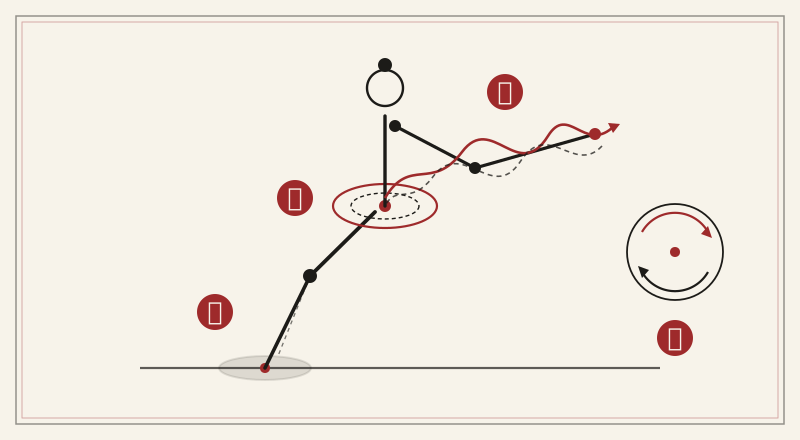
Classical ink-and-cinnabar diagram of Silk-Reeling Energy (Chansijin) showing rooted feet and aligned knees, the hip-waist wheel, helical ribbon transmission through the sunk shoulder and elbow, and Shun/Ni forearm rotation

How Chansijin (缠丝劲) travels from the ground through the waist wheel to the fingertips without twisting the knee joint.

  1. Rooted Foot & Aligned Knee (足根稳固 · 膝随脚尖): the foot presses the ground while the knee bends strictly in the direction of the toes—never twisting sideways
  2. The Hip-Crease (Kua) & Waist Wheel (腰胯主宰 · 活如车轮): folding one hip socket and turning the waist initiates the spiral in the torso
  3. Helical Ribbon Through Shoulder & Elbow (沉肩坠肘 · 螺旋传导): the sunk shoulder and heavy elbow pass the spiral smoothly along the arm (Song and Rooting Jin)
  4. Inward & Outward Coiling at the Forearm (顺缠与逆缠 · 力达梢节): supinating/gathering (Shun Chan 顺缠) and pronating/unfurling (Ni Chan 逆缠) arrive cleanly at the wrist and fingers
  • Coiling with the Grain (顺缠, Shun Chan): Typically led by the little-finger edge turning inward and upward as the palm turns toward the chest and the elbow stays sunk—associated with gathering, yielding (Lu 捋), and buoyant ward-off (Peng 掤) in Push Hands (Tuishou).
  • Coiling Against/Outward (逆缠, Ni Chan): Typically led by the thumb side rotating inward and downward as the palm opens outward from the centre—associated with extending and settling (An 按), echoing Chapter 36 of the Tao Te Ching (Dao De Jing) (“what is to be gathered must first be expanded; what is to be extended must first be gathered”).

3. The Golden Rule of Joint Safety: Turn from the Hip Socket (Kua), Never Twist the Knee

The single most important anatomical rule in all of Taijiquan is simple: the hip joint is a ball-and-socket joint built to rotate; the knee joint is a hinge joint built to bend and straighten.

When a teacher says “spiral from the legs,” they mean letting the pelvis turn inside the deep hip crease (kua 胯) while your kneecap stays pointed toward your second and third toes. If your foot is planted flat on the floor and you force your knee to twist inward to fake a spiral, the meniscus bears torque it was never designed for. Always release the heel or pivot on the ball of the unweighted foot before turning past the hip’s comfortable range.

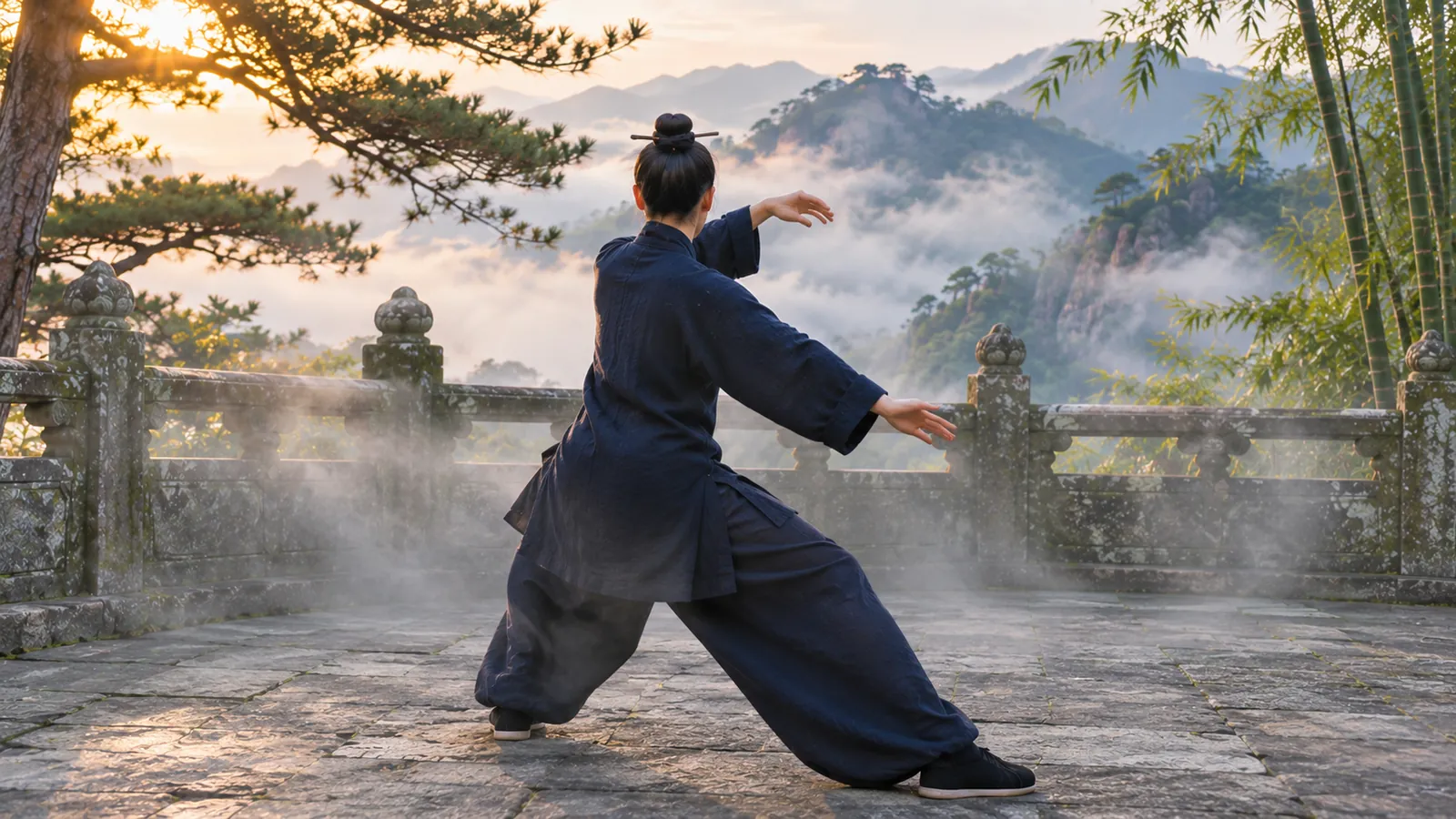
A practitioner in dark indigo Taoist robes seen from behind on a misty grey stone mountain terrace performing a flowing Wudang Tai Chi Cloud Hands (Yunshou) spiral movement.

Silk-Reeling Energy (Chansijin) in Cloud Hands: waist rotation and sunk elbows guide the arms along continuous three-dimensional spirals.

4. A 5-Minute “Cloud Hands” (云手) Spiral Drill Between Wudang Mountain and Singapore

Whether you train on the stone courtyards near Wudang Mountain’s UNESCO World Heritage ancient Taoist temples or practice in our Singapore classes, the classic movement “Wave Hands Like Clouds” (云手, Yunshou) is the clearest laboratory for Chansijin:

  1. Stand in a comfortable shoulder-width horse/bow stance after two minutes of Zhan Zhuang and calm Natural Abdominal Breathing.
  2. Shift weight 70/30 into the left leg and fold the left hip crease (kua); let the waist turn left as the left hand rises across the face (palm turning gently inward in Shun Chan) while the right hand scoops softly past the lower abdomen.
  3. At the left edge of the turn, let the left palm turn outward (Ni Chan) as the right hand rises from the waist to guard the centreline, then glide smoothly to the right.
  4. Practise ten slow cycles, checking that your elbows never float higher than your shoulders (explore our full beginner path on Start Here or join the Tai Chi Retreat Camp in Singapore).

Safety note: Keep every spiral smooth, small, and pain-free; traditional internal martial arts are a cultural movement discipline and do not replace medical advice or physical therapy.

Seeker’s Q&A · Frequently Asked Questions

Why is spiral force in Tai Chi called “Silk-Reeling Energy” (Chansijin 缠丝劲)?

Because drawing raw silk thread from a cocoon requires a continuous, even, gently rotating spiral: yanking straight breaks the thread, while stopping slackens and tangles it. Similarly, Tai Chi movement links waist, shoulder, elbow, and wrist in an unbroken three-dimensional curve.


How do you practise Chansijin without hurting or twisting your knees?

All rotational folding in the lower body must happen in the ball-and-socket hip joint (the kua 胯), while the kneecap stays strictly aligned with the toes. Never plant the foot flat and twist the knee sideways.

Which solo Tai Chi movement is best for a beginner to feel Silk-Reeling Energy?

“Wave Hands Like Clouds” (Yunshou 云手) is the classic foundational drill: as weight shifts calmly from leg to leg and the waist turns, each arm alternates smoothly between inward gathering (Shun Chan) and outward unfurling (Ni Chan).
