Movable Type in Chinese Book History: Clay, Wood, Metal and Reuse
中国古籍活字印刷导读:泥活字、木活字、金属活字与复用
Movable type is a system, not a single object
Separate characters can be composed, printed and used again
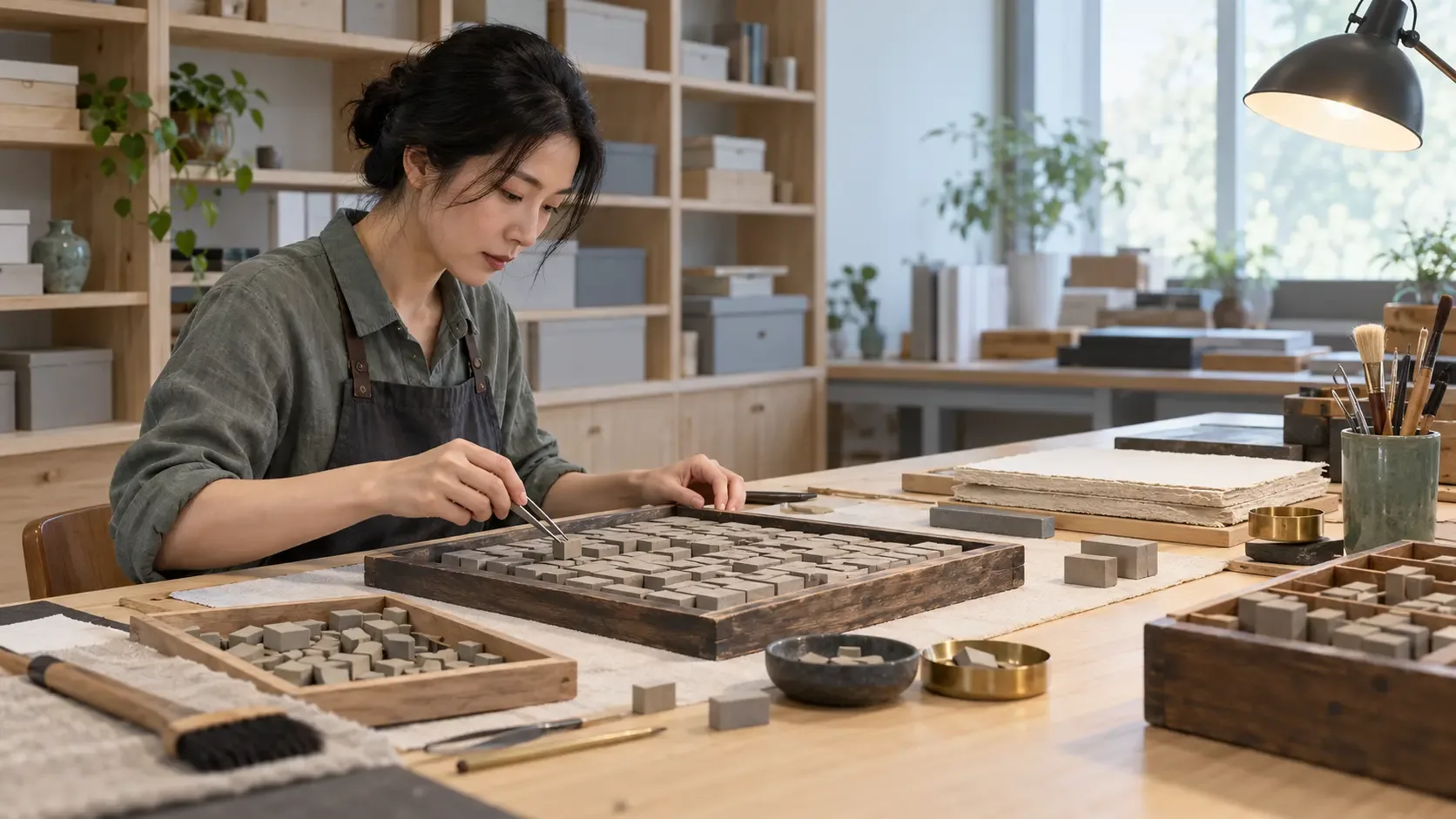
In movable-type printing, each reusable type carries one character. Types are selected, arranged within a frame, levelled, inked and printed; after the run, the forme is dismantled and the pieces return to storage. This differs from woodblock printing, where a whole page is carved together. The distinction is technical, but it also changes labour: movable type shifts effort from recutting every page toward making, sorting, composing and redistributing a large font.
Material names do not describe the entire workflow
Clay, wood and metal identify the substance of the type, not a complete production method. A printer also needed duplicate common characters, a classification system, cases or trays, a stable forme, compatible ink and paper, and workers able to find and replace pieces efficiently. The Library of Congress overview of Asian printing situates movable type beside older woodblock traditions rather than as an isolated invention.
Shen Kuo’s account records Bi Sheng’s clay type
The secure claim is a Song-period description
In the Mengxi bitan, Shen Kuo records that during the Qingli reign period (1041–1048) a commoner named Bi Sheng made movable type. The Chinese Text Project text and a scholarly Harvard translation of Shen Kuo describe raised characters made from sticky clay and hardened by fire. Almost nothing else about Bi Sheng is securely known, so the passage should not be expanded into an invented biography, workshop or lineage.
Two formes, duplicate characters and rhyme-group storage mattered
Shen’s description is operational: one iron board could be printed while another was being composed; frequently repeated characters had many duplicates; unused types were labelled by rhyme and stored in wooden compartments; rare characters could be made as needed. The account says the method was inconvenient for only a few copies but efficient for hundreds or thousands. That is a claim about a particular workflow, not proof that clay type immediately became the usual way to print books.
Wang Zhen redesigned storage and composition with wood
The Nongshu turns a technique into a documented sequence
Around the turn of the fourteenth century, Wang Zhen’s Nongshu included a detailed method for making and printing with wooden movable type. It describes writing model characters, carving them in boards, sawing and trimming individual pieces to a common height, arranging them by rhyme, composing a page in a frame, levelling low or tilted pieces, inking and taking the impression. The value of the source lies in its connected procedure, not in a simple ‘wood replaced clay’ story.
Revolving type tables addressed retrieval
Wang’s famous revolving tables organized thousands of types so that a seated compositor could bring the required sector within reach. His text claims that roughly thirty thousand pieces were prepared and that one hundred copies of a county gazetteer were printed after composition. These statements come from Wang’s own account; because the named gazetteer does not survive, they should be cited as documented claims rather than treated as a fully inspectable surviving print run.
Metal type added another material tradition
Chinese metal type is best studied through surviving books
Ming printers also used metal movable type. A 1515 Yiwen leiju record at the Library of Congress identifies an edition printed by Hua Jian of Wuxi with copper movable type and preserves its publication evidence. Such catalogued books let researchers compare page structure, impression and named production with a specific object. They are firmer evidence than a general claim that metal automatically produced sharper, faster or cheaper printing.
East Asian histories should not collapse into a race for first place
Clay type in Song China, later Chinese wooden and metal systems, Korean metal-type traditions, and European press printing developed in different institutions and material economies. Similar words can hide different casting, composition, inking and impression methods. Comparison is valuable when it explains these differences; it becomes misleading when every tradition is reduced to a single ladder leading toward a modern machine.
A font was an inventory that had to be managed
Common characters required duplicates; rare ones created delays
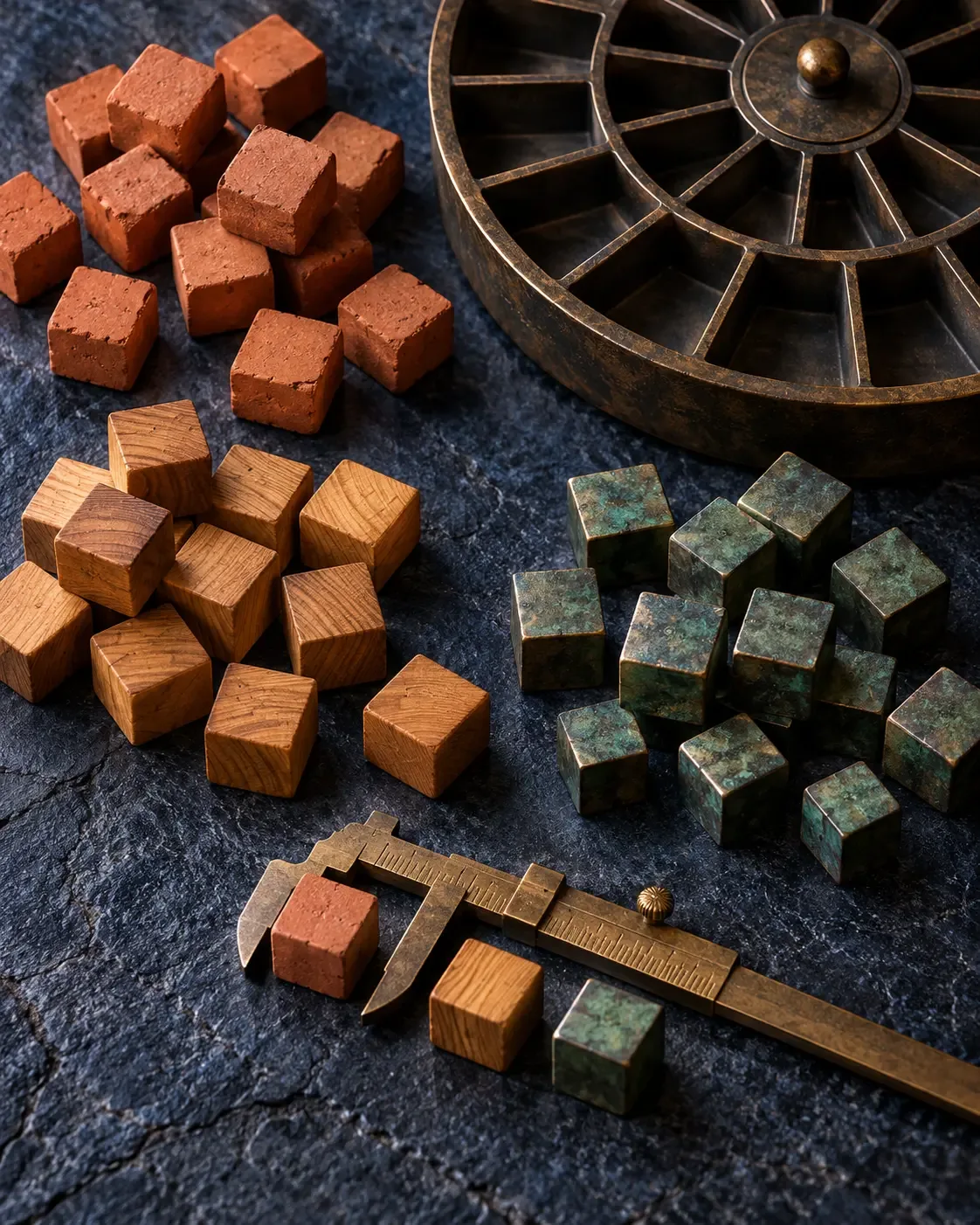
A Chinese text may repeat grammatical particles many times on one page while also requiring uncommon personal, place or technical characters. A working font therefore needed many copies of frequent graphs and a policy for missing ones. Storage by rhyme, category or numbered position made a large inventory searchable. Composition speed depended not only on the number of types but also on the catalogue in the workers’ hands and the consistency of each piece’s height.
Dismantling completed the cycle
After printing, workers had to clean the forme, release the pieces, inspect damage and return each type to its assigned place. Reuse was therefore not automatic: it was earned by accurate redistribution and maintenance. The Qing court’s Wuyingdian Juzhenban chengshi records a highly organized wooden-type programme with illustrated stages for preparing, storing, composing and printing characters. Read it as a tested institutional manual, while remembering its courtly claims and eighteenth-century setting.
Why movable type did not simply replace woodblocks
A carved block preserved a complete page
Once a woodblock page was cut, it could be stored and printed again without recomposing every character. It also held complex layouts, commentary in smaller type and image-text combinations together. The guide to illustrated Chinese books shows why images and text often shared a carved surface, while the guide to Chinese book-page architecture explains frames, columns and centre folds as page-level structures.
Economics depended on title, scale and intended reuse
Movable type saved recutting when the same pieces served many changing texts, but it required a costly font, sorting, composition and correction. Woodblocks demanded page-by-page carving yet could be economical for a stable title expected to be reprinted. Peter Kornicki’s comparative discussion of East Asian printing technologies warns against assuming typography was inherently more advanced or commercially superior. The practical question was which labour and capital pattern suited a particular project.
How to recognize a movable-type impression responsibly
Look for clusters of evidence, not one uneven character
Possible clues include slight variation in character alignment, spacing or inking; repeated damage in the same type; substituted or rotated pieces; and a page design consistent with composition from separate units. Yet paper movement, worn blocks, repairs and uneven hand printing can create similar effects. Compare many pages and, where possible, another copy. The guides to paper evidence and textual collation help keep material and textual observations separate.
Publication statements and catalogues must agree with the object
A colophon may say ‘movable type’, name a font or record a printing office, but wording can be copied, altered or misunderstood. Read the statement through the guide to printer’s marks and publishing claims, then test it against the whole book. Bibliographical records, copy history and page evidence should converge. When they do not, describe the conflict rather than choosing the most impressive attribution.
Reuse continued as a living craft—and a reading method
Wooden movable type survives in particular community settings
UNESCO’s account of wooden movable-type printing in Rui’an describes a living practice linked to compiling and printing clan genealogies: characters are engraved, composed into a type-page, printed by hand and reused after dismantling. This contemporary safeguarding record does not prove that every step is unchanged from Wang Zhen’s time. It does show how a reusable font can belong to family training, community memory and a specific genre.
Ask eight questions before naming the process
Ask: 1) what does the book or catalogue claim; 2) which material is named; 3) how were types made and levelled; 4) how was the font stored and retrieved; 5) who composed, corrected and printed; 6) what page features support the attribution; 7) what woodblock or repair process could mimic them; and 8) which edition, impression and copy are actually being described? Continue with the guides to Chinese bibliographies and bookshops and book markets to keep technical evidence connected to catalogues and circulation.