Illustrated Chinese Books: How Woodblock Images Shaped the Page
中国古籍插图导读:木刻图像怎样塑造书页
An illustrated book is a designed sequence
Image and text could share the same printed field
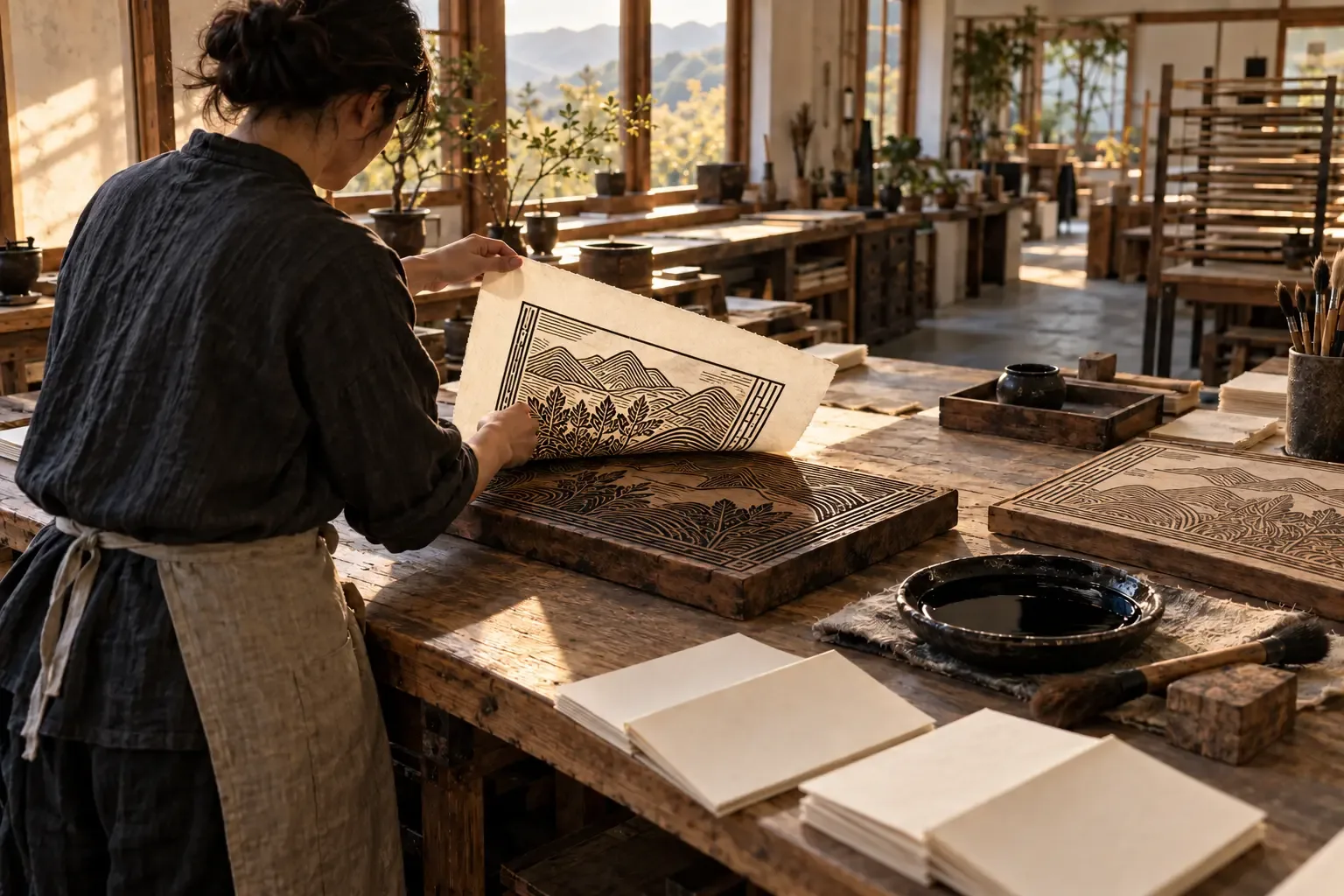
In a woodblock book, a page was not assembled from movable lines with a picture dropped into an empty space. Text, border and image could be cut into the same block, so their proportions and intervals were planned together. Anne Burkus-Chasson’s study of text and tu on the block-printed page shows why an image should be read as part of page architecture, not as decoration added after the writing. Folding and binding then turned those impressions into openings and sequences; the companion guide to thread-bound books explains that material framework.
Position changed what a picture did
A frontispiece could announce subject and prestige; an image above text could stage an episode before the reader reached its words; a full-page scene could interrupt pace; a repeated portrait could organize reference. The same design therefore performed differently when moved, recut or paired with a new caption. Titles, prefaces and other framing texts also directed the encounter, so the illustrated leaf belongs to a larger editorial programme rather than an isolated history of art.
Production distributed authorship across several hands
Designer, cutter and printer solved different problems
An image might begin as a drawing, but it had to become a printable network of raised lines. A block cutter translated brush effects into cuttable contours; a printer controlled inking, pressure and alignment; editors and publishers chose format, placement and expense. The essays in Printing and Book Culture in Late Imperial China place such choices inside specialized publishing centres and changing audiences. The finished page is therefore evidence of coordination, not the unmediated hand of one painter.
A named contributor did not necessarily identify every maker
Surviving editions sometimes name a painter, compiler, publisher or cutter, yet attribution can shift between impressions and copies. A prominent name may advertise authority while assistants and workshop labour disappear. Yuming He’s study of Ming woodblock-printed books treats books as designed, produced and marketed objects; it cautions readers to distinguish a title-page claim from the complete chain of work. The same caution applies to books as commodities in bookshops and book markets.
Page layouts organized narrative and attention
Above, below, facing and full-page were reading choices
Illustrated fiction could divide the page into registers, place a scene beside its passage or gather several moments into one image. Robert Hegel’s study of illustrated fiction in late imperial China reconstructs how physical books shaped assumptions about reading from the sixteenth through nineteenth centuries. Layout did not merely summarize content: it selected characters, fixed a viewpoint, suggested timing and invited comparison between episodes.
Captions and sequences created movement
A caption could anchor a picture to one line while the composition evoked other poems, places or emotional cues. Recent research on late-Ming illustrated plays describes how figure-in-landscape scenes and poetic references altered reading across genres. Readers should therefore follow an image forward and backward through the book. Like selection and order in poetry anthologies, sequence constructs an argument even when no explicit commentary announces it.
Illustration crossed genres and purposes
Stories, plays and biographies made persons visible
Narrative pictures could identify roles, condense an action or turn a famous episode into a memorable scene. Yet clothing, architecture and gesture often belonged to the visual conventions of the edition’s own moment, not to a documentary reconstruction of the story’s setting. A printed character is evidence of how publishers offered a text to readers. It is not automatically a portrait of a historical person or a transparent record of everyday life.
Manuals, gazetteers and reference books pictured knowledge
Images also organized plants, tools, terrain, ritual objects, techniques and famous places. The Library of Congress record for Ming shan tu identifies an important woodblock-printed landscape work within the tradition of illustrated gazetteers. Such pages may classify or teach, but they still select scale, viewpoint and exemplary form. Compare them with the excerpting logic of classified books: both turn a larger world into an ordered, portable page.
Pictures participated in the book market
Illustration could promise usefulness, pleasure or distinction
Publishers used pictures to clarify, attract and differentiate. A dense reference image, a sequence of dramatic scenes and a refined colour leaf addressed different expectations. The Metropolitan Museum’s survey of the printed image in China emphasizes the stylistic diversity and technical range of printed works across dynastic and modern settings. Illustration mattered commercially, but ‘illustrated’ did not name one audience, price or standard of finish.
Cost and quality did not form a simple luxury–popular divide
More blocks, careful cutting, colour registration and fine paper could increase cost, yet monochrome could be exacting and colour could be uneven. A cheap impression might preserve an influential design; a prestigious edition might copy earlier imagery; a heavily used manual could survive less neatly than a little-read luxury set. Condition and rarity therefore should not be confused with original cultural importance, and one surviving copy cannot stand for an entire print run.
Colour printing depended on registration and repeated work
Each colour could require a separately aligned block
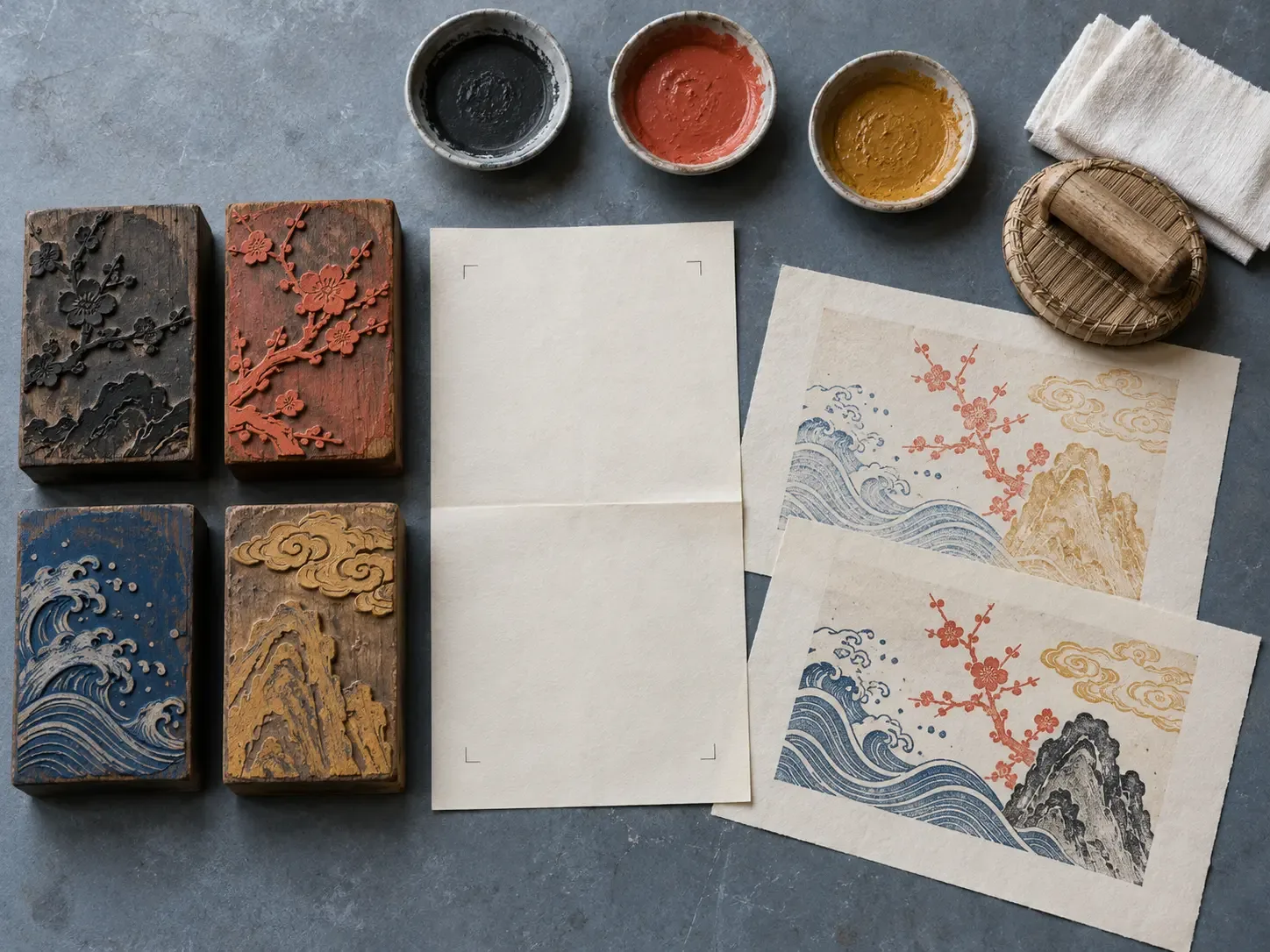
In multiblock printing, the picture emerged through successive impressions rather than one painted surface. The Huntington’s guide to the Ten Bamboo Studio Manual explains douban printing as the use of several blocks, one for each colour. Alignment, moisture, pigment and pressure all mattered. Slight offsets or changes between impressions are thus evidence of process, not simply defects to be mentally erased.
A celebrated colour manual is a case, not the norm
The Ten Bamboo Studio demonstrates extraordinary coordination of design, cutting and printing, but its sophistication should not be projected onto every illustrated book. Most pages were monochrome, and even named works exist in later recuts, reprints and incomplete sets. A museum leaf may display colour technology brilliantly while concealing how a bound sequence, facing page and repeated handling shaped the original reading experience.
Blocks, designs and books acquired afterlives
Reprinting could preserve and transform an image
Woodblocks could be stored, repaired, sold or recut; designs could be copied into another edition or translated into a different scale. A later image may therefore resemble an earlier one without sharing its block, printer or purpose. Compare borders, line breaks, missing details, reversed forms and the relation to nearby text. Variation can reveal a transmission history, just as editions and ownership marks help trace the books preserved in private libraries.
Detached leaves change the evidence
Collectors and museums often preserve individual leaves because they are visually compelling. Detachment makes colour, cutting and composition easy to study, but removes sewing order, preceding text, facing images and signs of use. A painting manual leaf is not identical to a painting album leaf: the guide to Chinese painting albums explains a different object, viewing rhythm and history. Always identify whether the object is a leaf, fascicle, bound set, recut edition or later reproduction.
Read an illustrated page through object, sequence and comparison
Begin with the witness before interpreting the scene
Record the book’s title, edition, date claim, publisher or studio, material format and present completeness. Then locate the image within the opening: what lies above, below, before and after it? Compare caption, adjacent prose and repeated motifs without assuming that one merely translates the other. When a page uses mountains and water, the guide to reading shanshui can sharpen visual attention, but a carved book image still has its own constraints of scale and reproduction.
Eight questions keep interpretation accountable
Ask: 1) what physical witness survives; 2) where does the image sit; 3) how do words and image divide the page; 4) which roles are named; 5) what did cutting and printing permit; 6) is colour registered from several blocks; 7) what changed across editions; and 8) what claim does the evidence not support? This method connects the illustrated book to the wider histories of literature, painting and material reading gathered under Chinese Poetry and Literature without reducing one field to another.