After the First Printing: How Chinese Woodblocks Were Stored, Repaired and Reused
初印之后:中国雕版的储藏、递修、重刻与后印
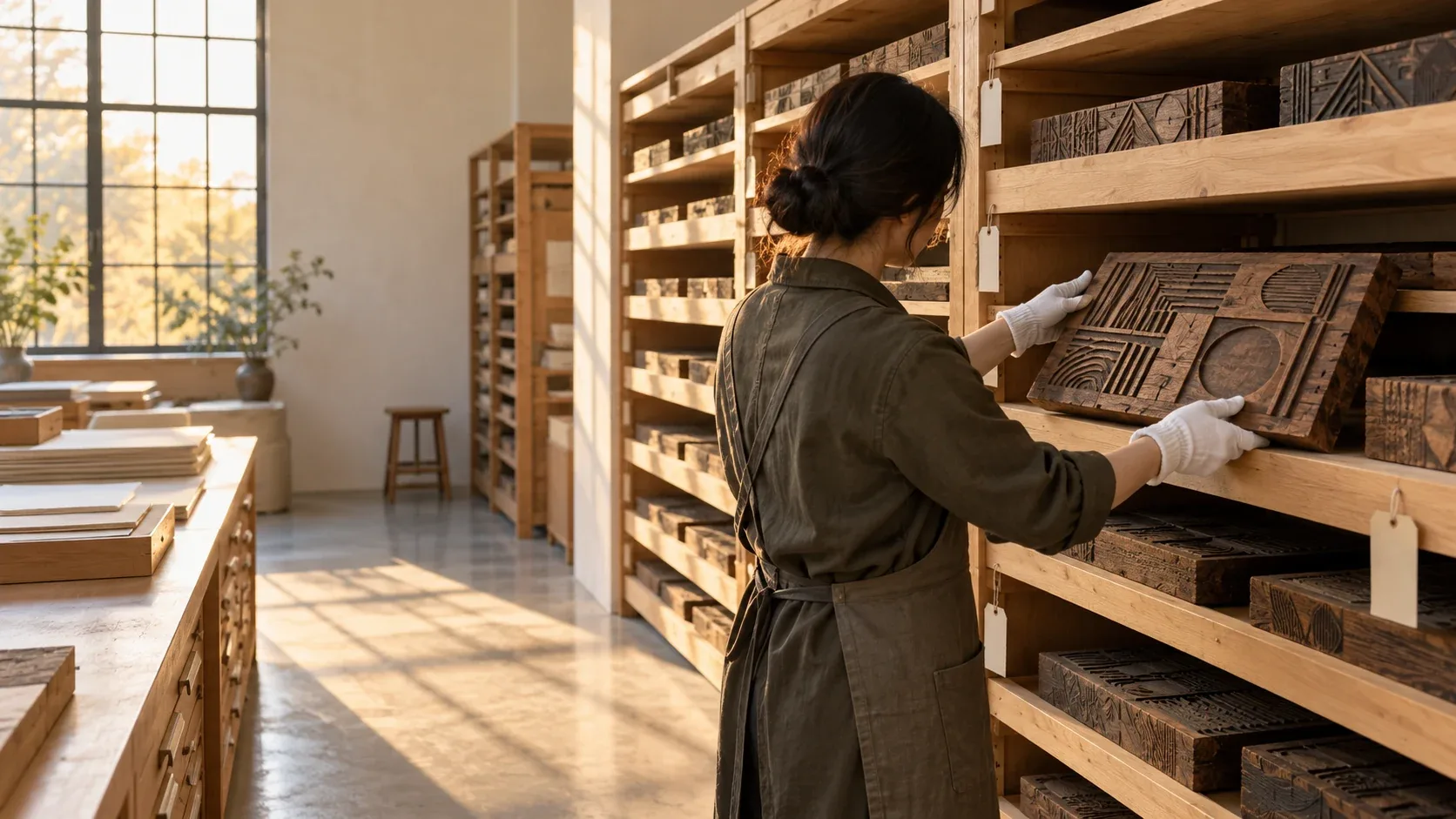
A woodblock had a life after its first print run
Cutting, edition, impression and copy are not the same thing
A block was carved once but could be printed many times. Bibliographers therefore separate the act of cutting a set of blocks from a particular printing campaign and from an individual surviving volume. One cutting may support early and later impressions; repairs can create distinguishable states; extensive replacement or a full recutting may justify a different edition under a catalogue’s rules. The CEAL Chinese rare-book cataloguing guide is useful precisely because it distinguishes original cutting, re-cutting and facsimile recutting rather than treating every similar-looking page as one event.
The first printing was a beginning, not the end
The companion guide to writing, carving, inking and taking impressions follows a page through production. What happened next was equally material: blocks could be cleaned, arranged, stored, lent, sold, repaired, partly replaced or lost. The National Palace Museum’s Song-book exhibition describes blocks as repositories that were repaired and reused across centuries, while the surviving copies register their ageing.
Numbering and custody made reuse possible
A reusable set had to remain identifiable
A large work might require hundreds or thousands of block faces. Titles, fascicle and leaf numbers, abbreviated labels, centre-fold information and storage order helped workers bring the correct pieces back to the printing table. Exact labelling systems varied by place, date and institution, so a visible mark should be transcribed before it is interpreted. Compare it with the guide to frames, columns, fish-tails and centre folds, where leaf order is often encoded on the printed page itself.
A claim of ‘stored blocks’ is evidence, not a complete chain of title
Printer’s statements sometimes say that blocks were kept by a house, academy, monastery or lineage. Such wording can be valuable, but it may describe publication authority, current custody or a commercial claim rather than every earlier owner. Read it with the guide to paiji, kanji and publishing statements. Custody becomes firmer when the wording agrees with dated impressions, catalogues, seals and documented transfers.
Storage preserved an asset but also exposed it to loss
Dry, orderly storage reduced work at the next printing
Cleaning ink and paper fibres from the relief, keeping blocks together and limiting damp or distortion made later printing more practical. We should not project one modern archival layout onto every historical workshop: court offices, monasteries, academies, commercial firms and households had different buildings and resources. Peter Kornicki’s comparative history of East Asian printing is a reminder to connect technology with institutions, labour and cost rather than assume a single timeless workshop.
Survival was never guaranteed
Wood could crack, warp, burn, rot or suffer insects; sets could be scattered during political change, business failure, household division or transport. A missing block might remove only one leaf yet interrupt an otherwise serviceable set. Once the blocks disappeared, printed copies carried the text forward—a point emphasized by the National Palace Museum. The absence of surviving blocks does not prove that a work had only one impression.
Repair created a layered printing surface
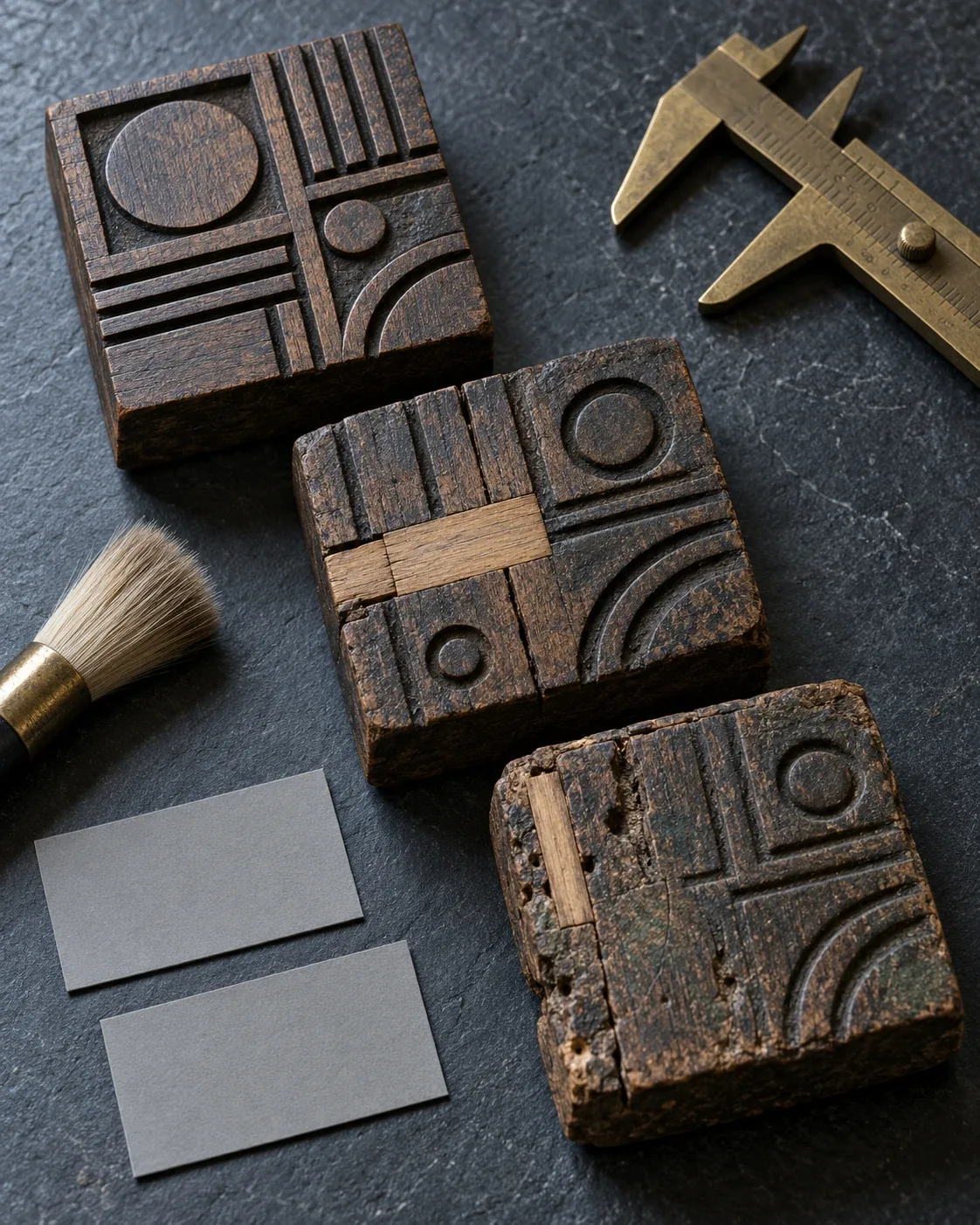
Small plugs and larger replacements answered different damage
A broken stroke might be restored with a fitted plug carved in situ; a badly damaged passage could be cut out and replaced; a missing leaf block might have to be made anew from an earlier impression or another copy. The historical case study of the Yongle Southern Canon documents organised fundraising and work to repair or recut worn blocks. It shows what is possible in one well-recorded project, not a universal procedure for every book: research on repair of the canon’s blocks.
Successive repair is what 递修本 records
Chinese bibliography uses 递修本 for books printed from blocks repaired successively over time. The official rare-book grading guidance reproduced by the Hubei Ancient Books Preservation Center gives examples such as Song blocks repaired in Yuan and Ming periods. Such a volume can contain old and newer cutting together. Mixed letter forms or uneven wear should therefore prompt comparison, not an instant claim that the whole book was freshly recut.
Re-cutting could imitate an earlier page
A replacement block may copy layout as well as words
When an old block was missing or unusable, a worker could copy an earlier printed leaf onto new wood. A close recutting may preserve frame size, columns and even damaged-looking details, yet introduce different knife habits, spacing or errors. Cataloguers distinguish re-cut editions and facsimile recuttings because resemblance alone does not establish identity. This is where the page’s architecture and the guide to collating variant textual witnesses must be read together.
A set can be materially hybrid
Not every renewal replaced an entire work. Old blocks, repaired blocks and newly cut substitutes could be printed in the same volume. A single copy may even combine leaves from different impressions after later rebinding or supplementation. The answer is rarely found in one spectacular page: record recurring cracks, repaired strokes, frame dimensions, paper changes and textual variants across the sequence.
Blocks could move between custodians
Transfer, sale and institutional change altered the imprint
Blocks were labour-intensive assets. They could pass with a business, be acquired by another publisher, move into an academy or monastery, or be reused after a change of name. A later custodian might alter a title leaf, colophon or publishing statement while leaving most text blocks untouched. The guide to Chinese bookshops and book markets places such objects within commercial routes rather than treating the printed book as immobile.
Ownership of a copy is not ownership of the blocks
A red collector’s seal follows one physical volume; a ‘blocks stored here’ statement concerns the production resource. These histories can meet but should not be collapsed. Use the guide to book-ownership seals and provenance for the copy’s later journey, then test block custody separately against publication statements and institutional records.
Later impressions are identified by comparison
Wear is a pattern, not a date stamp
Broken frame lines, lost strokes, widening cracks, plugs and replacement passages can establish relative sequence when the same features are compared across copies. But a weak line can also come from dry ink, poor contact, thin paper or abrasion. The National Library of China’s discussion of version identification stresses detailed comparison of block breaks and character forms, and shows how a repaired area can introduce an error: case-based guidance on comparing impressions.
Paper and ink corroborate; they do not decide alone
Later paper can show that a copy was not printed at the initial cutting, but old stock, later repairs and mixed leaves complicate the picture. Read the guide to fibres, sizing, repairs and limits of dating before turning colour or texture into a year. A sound description combines block-state evidence, paper, ink, binding, textual variants, provenance and catalogue history.
Describe what the evidence can actually support
Use edition, impression, state and copy deliberately
An edition concerns a production identity; an impression is a particular run from blocks; a state records a meaningful alteration; a copy is the surviving object in hand. Practices vary among catalogues, especially when repairs accumulate, so quote the institution’s terminology and explain the observed features. The National Library of China’s presentation of Ten Lectures on Rare-Book Editions explicitly separates first and later impressions, repair, replacement, addition, transfer and the problem of reprinting versus recutting.
A responsible reading ends with a testable record
Note which leaves were compared, where a crack or plug recurs, whether replacement cutting changes the text, and which copy supplied the evidence. Link that record to the guide on Chinese bibliographies and catalogues and to the Library of Congress Chinese Rare Book Collection for concrete catalogue examples. The useful conclusion is not ‘old-looking’, but a qualified account another reader can check.