Book-Ownership Seals in China: Reading Provenance in Red
中国古籍藏书印导读:怎样从朱印追索递藏
A red impression records an event
The mark on paper is not the seal matrix
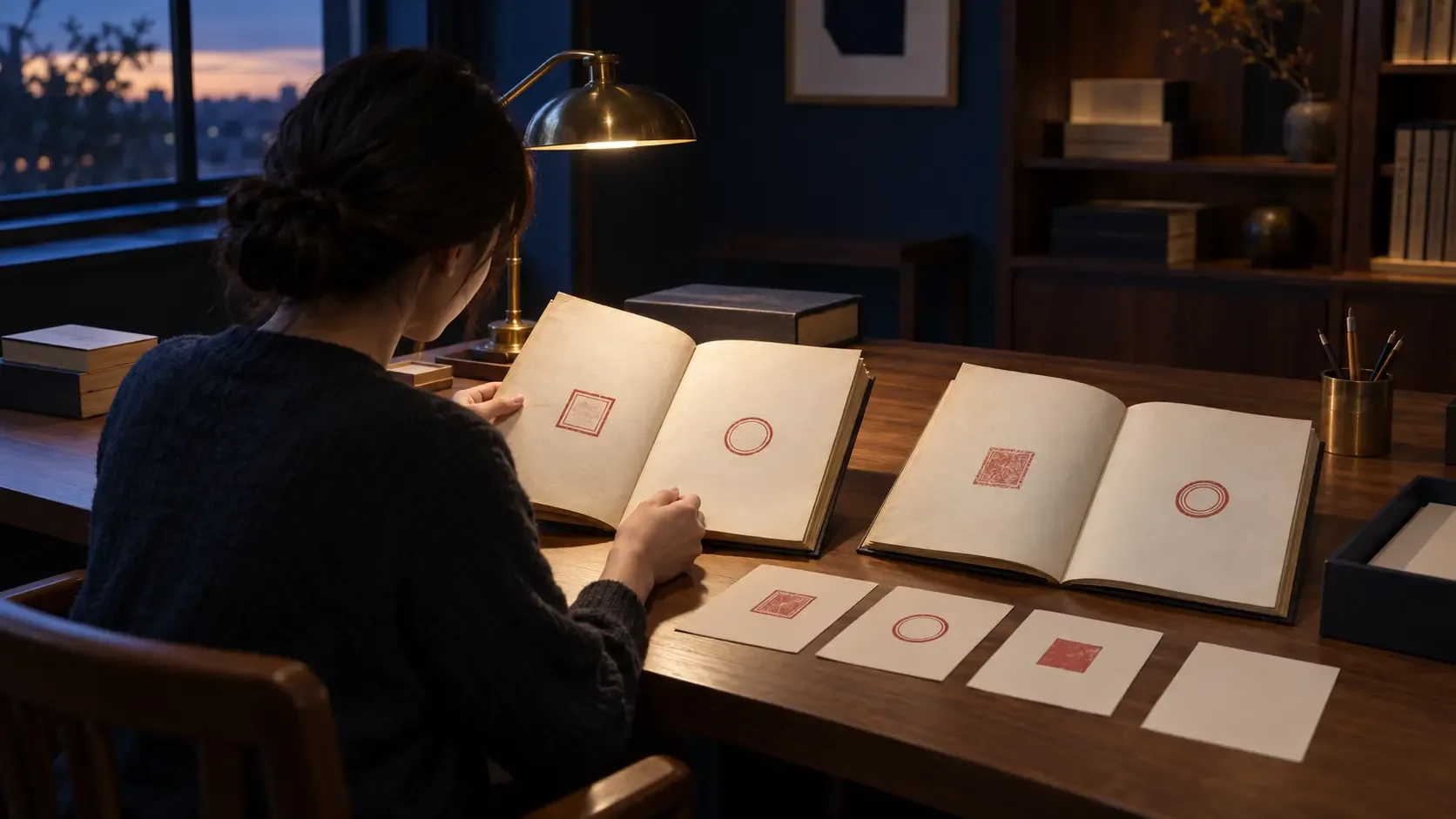
A collector’s seal, or cangshuyin 藏书印, reaches us most often as a red impression on one particular copy. The carved matrix was cut in reverse; ink or paste, pressure, paper and the person stamping it produced the visible mark. Begin with the impression as a material event, then consult the site’s guide to Chinese seals and seal carving for script, matrix and relief or intaglio technique.
A stamp is evidence of a claim, not automatic proof
An impression can show that a matrix was applied to a leaf, but it does not by itself prove legal ownership, the date of stamping or the identity of the hand that stamped it. Max Jakob Fölster’s scholarly introduction to Chinese book collectors’ seals treats seal catalogues and large groups of impressions as research tools. A responsible reading separates observation, identification and historical inference.
Names, studios and institutions made different claims
Read the wording before assigning an owner
Seal texts may give a personal name, style name, studio, library, office or formula of possession and appreciation. The Academia Sinica exhibition on connoisseurship and collection seals shows how names, titles, posts, poems and even pictorial forms appear together; it also notes commercial proprietorship stamps. Transcribe what is legible, note what is uncertain and avoid turning every studio name into a securely identified person.
Private and institutional marks can share a page
A book can carry a private collector’s mark, a shop or lending stamp, an imperial-library impression and a modern repository stamp. Their coexistence does not make them contemporaneous. Research on book seals at Tsinghua University Library demonstrates how institutional marks can reflect changing classification and use. Compare wording and placement with catalogues and accession history before ordering them.
Placement, repetition and colour are evidence
Record the leaf before interpreting the seal
Note cover, title leaf, first text leaf, chapter opening, final leaf and any repaired or replaced paper. Also record orientation, dimensions, colour, border, damaged areas and overlap with print or handwriting. Folding, rebinding and trimming can move or divide a mark, so the guide to Chinese thread-bound books helps keep each impression attached to the structure of the actual volume.
Repetition can reveal a stamping routine
The same seal may recur at the beginning of every volume, appear only once on a title leaf or be paired with another mark. Such patterns can support an attribution or expose a missing volume, but absence is not proof that a collector never handled the book. The CSMC case study of collectors and seals shows multiple impressions participating in the eventful life of a manuscript; comparison across the whole set matters more than an isolated image.
One copy may contain several lives
Sequence is reconstructed, not simply read left to right
Overlapping impressions can sometimes establish which mark came later, but most seals do not touch. Position, wear, pigment and style may suggest a sequence, yet each inference needs support from inscriptions, dated catalogues, sale records or library files. Read prefaces and colophons alongside seals because a dated statement can clarify a transfer while still requiring critical evaluation.
Ownership, custody and access are not identical
A person may have owned, borrowed, examined, catalogued or sold a book; an institution may have received it without stamping every volume. The guide to Chinese private libraries follows collecting, dispersal and institutional afterlives. Use ‘associated with’, ‘recorded in’ or ‘stamped by’ when the stronger word ‘owned’ exceeds the evidence.
Seals can travel, be recut or mislead
A familiar design may come from a later matrix
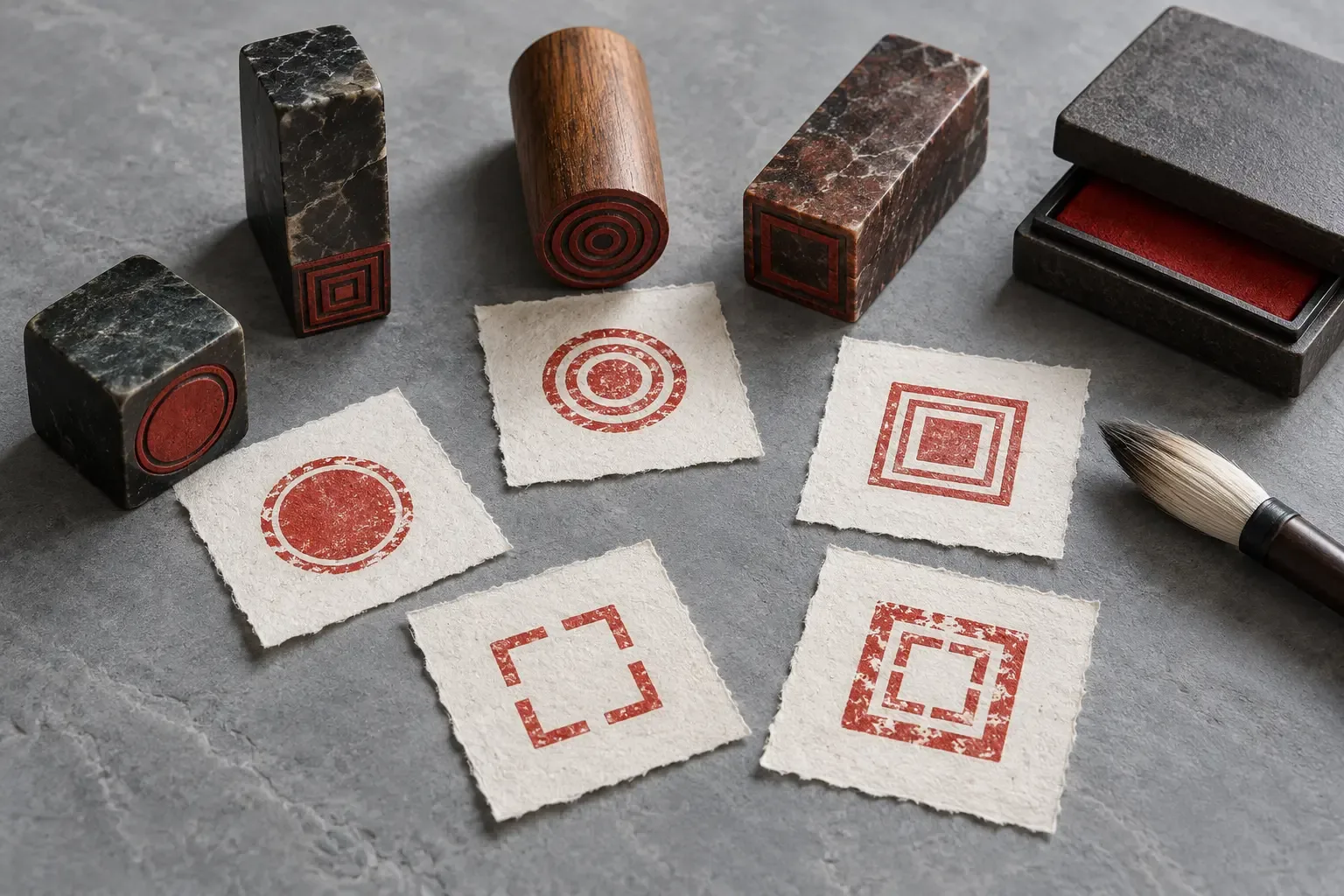
Matrices can be lost, copied or recut, and a later impression can imitate an older collector’s mark. Pigment that looks fresh is not an independent date, while a blurred or worn impression is not necessarily ancient. Compare measurements, character forms, border breaks and recurring damage with securely documented impressions; never authenticate from resemblance alone.
Leaves and impressions can change context
A stamped leaf may be transferred during repair, inserted from another copy or preserved after the rest of a book was replaced. A dealer’s note or later mount can also reframe the evidence. The history of Chinese bookshops and book markets helps explain how books were repaired, regrouped, sold and dispersed. Provenance belongs to the present object only after its material continuity has been tested.
Build a provenance argument by corroboration
Match the impression to independent records
A strong attribution combines a readable seal text with a seal catalogue, collector biography, library catalogue, dated colophon, inventory or correspondence. The Fu Ssu-Nien Library’s digital database of seals records owners, inscriptions, engravers and locations across thousands of entries. A database match is a lead: confirm dimensions, variants and the particular copy rather than copying a name from a thumbnail.
Keep the title, edition and copy distinct
A catalogue can prove that a title was once listed without proving that the surviving copy is the same one. Edition, volume count, format, defects, annotations and seal pattern create the fuller identification. The site’s guide to Chinese bibliographies explains how entries classify works, while seals and other copy-specific features test continuity between an entry and an object.
Cataloguing preserves evidence for other readers
Describe impressions in searchable fields
Record the transcribed text, normalized name when justified, dimensions, shape, colour, border type, relief or intaglio appearance, location by volume and leaf, and confidence level. Mao Ruijiang’s article on provenance marks and their cataloguing argues for treating such marks as important evidence in special collections. Link the record to images without letting OCR substitute for human transcription.
Digital images help, but the object remains decisive
Large digital collections let researchers compare remote copies. The Library of Congress Chinese Rare Book Digital Collection and Princeton’s account of cataloguing Chinese rare books show the value of collection-level description and sustained cataloguing. Yet colour balance, scale and cropped gutters may distort an impression; note the image identifier and request physical examination when sequence or paper structure is central.
Read an ownership seal with eight questions
First describe what is physically present
Ask: 1) where is the impression; 2) what are its size, shape, colour and border; 3) what text or image is securely legible; and 4) does it overlap print, repair, handwriting or another seal? Record uncertain graphs rather than silently completing them, and compare every volume before deciding that the pattern is consistent.
Then state the limits of the provenance claim
Ask: 5) which matrix or owner is proposed, and from what comparison; 6) when could stamping have occurred; 7) what independent record corroborates the link; and 8) what alternative remains? Continue with the guide to marginalia in Chinese books for handwritten evidence. The best provenance account makes uncertainty visible rather than converting every red square into an unbroken chain of ownership.