Poems in Pieces: How Quotation and Excerpt Preserved Chinese Poetry
诗句怎样在引用中流传?摘引、辑佚与失落语境
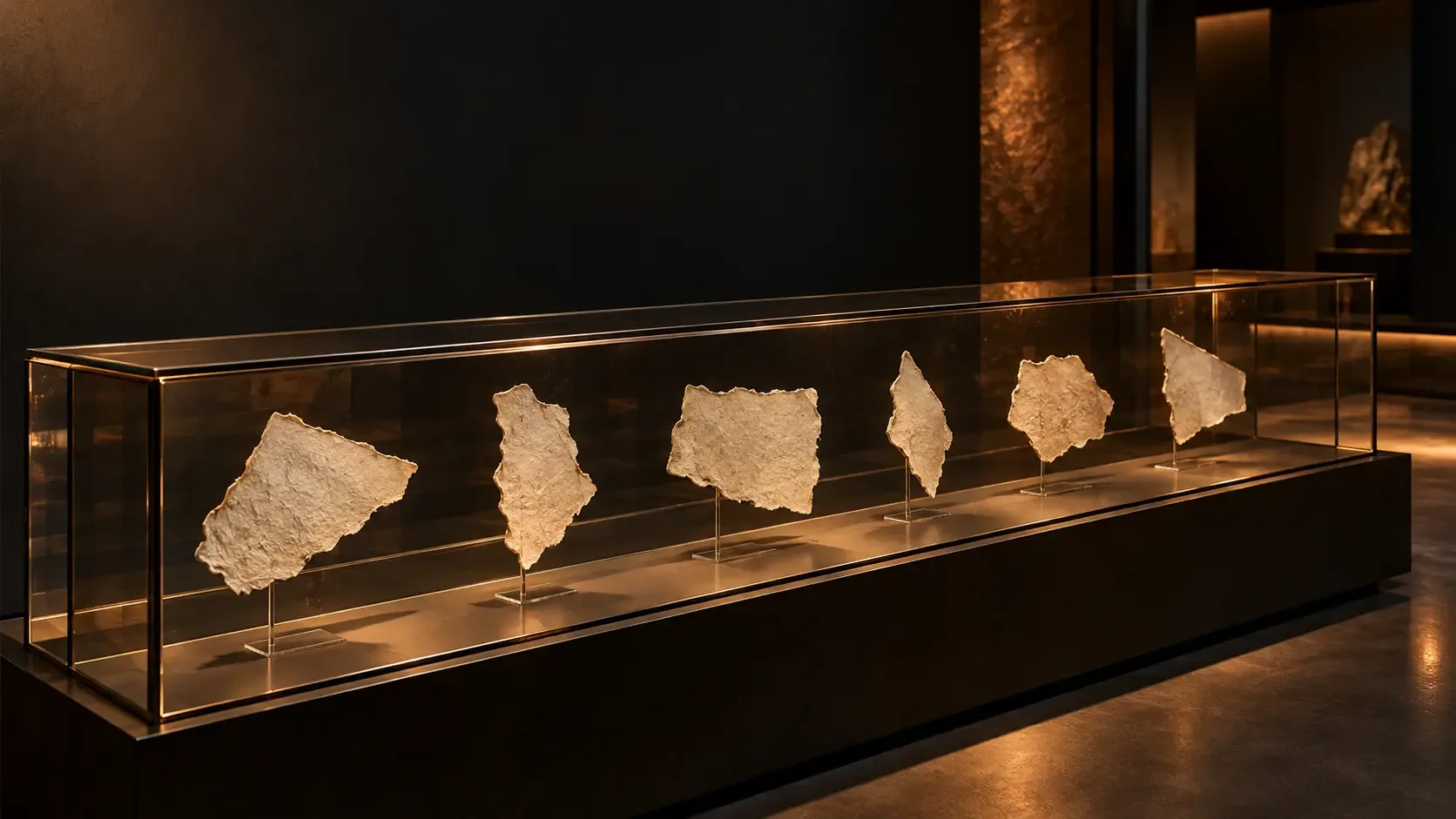
A quotation is a witness, not the whole poem
Survival can be only a line long
Much Chinese poetry survives in complete-looking anthologies or collected works, but other poems reach us only as a line, a couplet, or a title embedded in another book. Martin Kern’s study of early quotation and the poem ‘Xi shuai’ stresses that early received texts rarely quote complete poems and often repeat especially memorable lines. A quotation can therefore be old and important without preserving the poem’s original extent, order, occasion or wording.
The first question is what the host text needed
Histories may cite verse as evidence, philosophical works may use it as an authoritative saying, and commentators may quote it to gloss a word. Each host has its own purpose. Before treating the excerpt as a miniature edition, ask who quotes it, what argument surrounds it, whether the title or author is explicit, and where the quoted words begin and end. The guide to Chinese commentaries and subcommentaries helps keep the quoting layer distinct from the older text it explains.
Where fragments travel
Histories, notebooks and commentaries preserve different contexts
A historical biography may attach a verse to an event; a commentary may preserve only the phrase needed for an annotation; a miscellany may remember a story and a few lines together. The page on Chinese brush notes and miscellanies explains why short-form collections are valuable but heterogeneous. Their excerpts should be cited with the surrounding entry, not detached as though every source performed the same archival task.
Institutions of reading made quotation durable
The Oxford Handbook’s account of institutions of literary culture describes commentaries and reference works as active settings of literary preservation. Li Shan’s commentary to the Wen xuan, for example, draws on a wide range of earlier writing. Such a quotation may be the best surviving trace of a lost work, yet it remains evidence selected for a later reader’s immediate need.
Classified books preserve by rearranging
A leishu breaks books into reusable units
Chinese classified books group excerpts under subjects, phrases or categories so that readers can retrieve information without consulting every source in full. The survey of encyclopedias and epitomes in literary learning distinguishes excerpt compilation from works that summarize or paraphrase. Both can transmit lost material, but neither promises to reproduce the source’s original sequence or complete argument.
Classification creates a new neighborhood
Once a poetic line is placed beside other passages on seasons, birds, mountains or ritual, its new neighbors shape how it is read. The quotation may preserve a source title or author, or only a short label. The guide to Chinese leishu and excerpt culture covers these compilations as a knowledge system; here the narrower issue is how their selection and headings affect the reconstruction of poetry.
Signature lines can outlive poem boundaries
Memorable lines attract repeated quotation
Frequently quoted lines may become representative of a poem or author, while quieter passages disappear. Repetition proves that a phrase circulated; it does not by itself show that every later source copied a complete poem, or that all witnesses had the same boundaries. Stephen Owen’s study of the making of early classical Chinese poetry shows why titles, groupings and textual identities in early poetry must be treated as historical formations rather than timeless containers.
A match can connect units of unequal size
One source may present four lines as a whole poem, another embed two of them in a longer piece, and a third cite a single phrase without a title. Editors must record these different units before deciding how they relate. The page on Chinese textual collation explains how to compare wording across witnesses; it does not authorize silently expanding a short quotation into the full shape of a later text.

Titles, bylines and contexts can shift independently
A quotation label is evidence of description
A source may introduce a passage as ‘an old poem’, name a writer, cite a collection, or give no label at all. Those differences matter. A title or byline attached to a quotation may preserve early information, but it can also reflect the quoting book’s own classification. The guide to attribution, anonymity and disputed authorship sets out how to report such claims without turning a received label into automatic proof.
Lost context limits historical storytelling
A line cited beside a biography may look like a record of the person’s speech, yet the host text may be illustrating character, supplying a moral example or repeating an older anecdote. When the original work is lost, we cannot assume that the later narrative preserves its first occasion. Responsible wording says what the surviving source does, then marks any inference about speaker, date or event as an inference.
Reconstruction is documented assembly
Jiyi gathers dispersed remains
Scholars and editors have long collected quotations of lost books from encyclopedias, commentaries, histories and anthologies. Glen Dudbridge’s discussion of libraries, catalogues and lost writings warns that surviving literature often reaches us through edited collections that compromise original integrity. A reconstruction is most useful when every fragment names its witness, location, wording and degree of uncertainty.
A recovered dossier is not silently a recovered book
Fragments may overlap, contradict one another or derive from the same intermediate source. Their order may be unknown; a heading can be editorial; a supposed gap may never have belonged to a single poem. The history of collecting, editing and transmitting Chinese literature includes later attempts to rebuild lost works from encyclopedias and anthologies—and the risk of interpolation. A responsible edition makes the scaffolding visible.
A named case shows both value and limits
Li Qingzhao’s lost collections survive through later gathering
The Library of Congress study of Li Qingzhao’s writings and editions notes that her literary and ci collections were lost and that surviving works were gathered through quotations, anthologies and later compilations. This does not make the recovered poems unreal; it makes their documentary paths part of what an edition must explain.
A collected corpus has more than one historical layer
An author’s modern collected works may combine pieces preserved in early witnesses, later anthologies, quotations and scholarly recovery. The page on Chinese individual collected works explains how authorial, family and later editorial activity differ. Readers should ask not only ‘is this poem in the collection?’ but ‘through which source did this item enter it?’
Use an evidence ladder, including digital tools
Parallel-text search finds candidates, not conclusions
Computational comparison can locate repeated strings across large corpora. The study of unsupervised text-reuse detection in early Chinese literature shows its promise for finding quotations and parallels, including material in classified books. But a match does not by itself establish direction of borrowing, a common lost source, poem boundaries or authorship. Orthographic variation, formulaic language and editorial normalization still require philological judgment.
Record the witness before completing the poem
For each excerpt, note the host work, passage, date range, label, quoted boundaries, variants and relation to other witnesses. Consult anthologies for selection history and traditional bibliographies for what catalogues say once existed. Then use language that matches the evidence: ‘quoted as’, ‘preserved in’, ‘reconstructed from’, or ‘possibly from’—never an unmarked completion of what the source no longer supplies.