Poems on the Wall: Public Writing, Place and Survival in China
墙上的诗怎样流传?中国题壁诗的公共书写、地点与传承
A poem written into a place
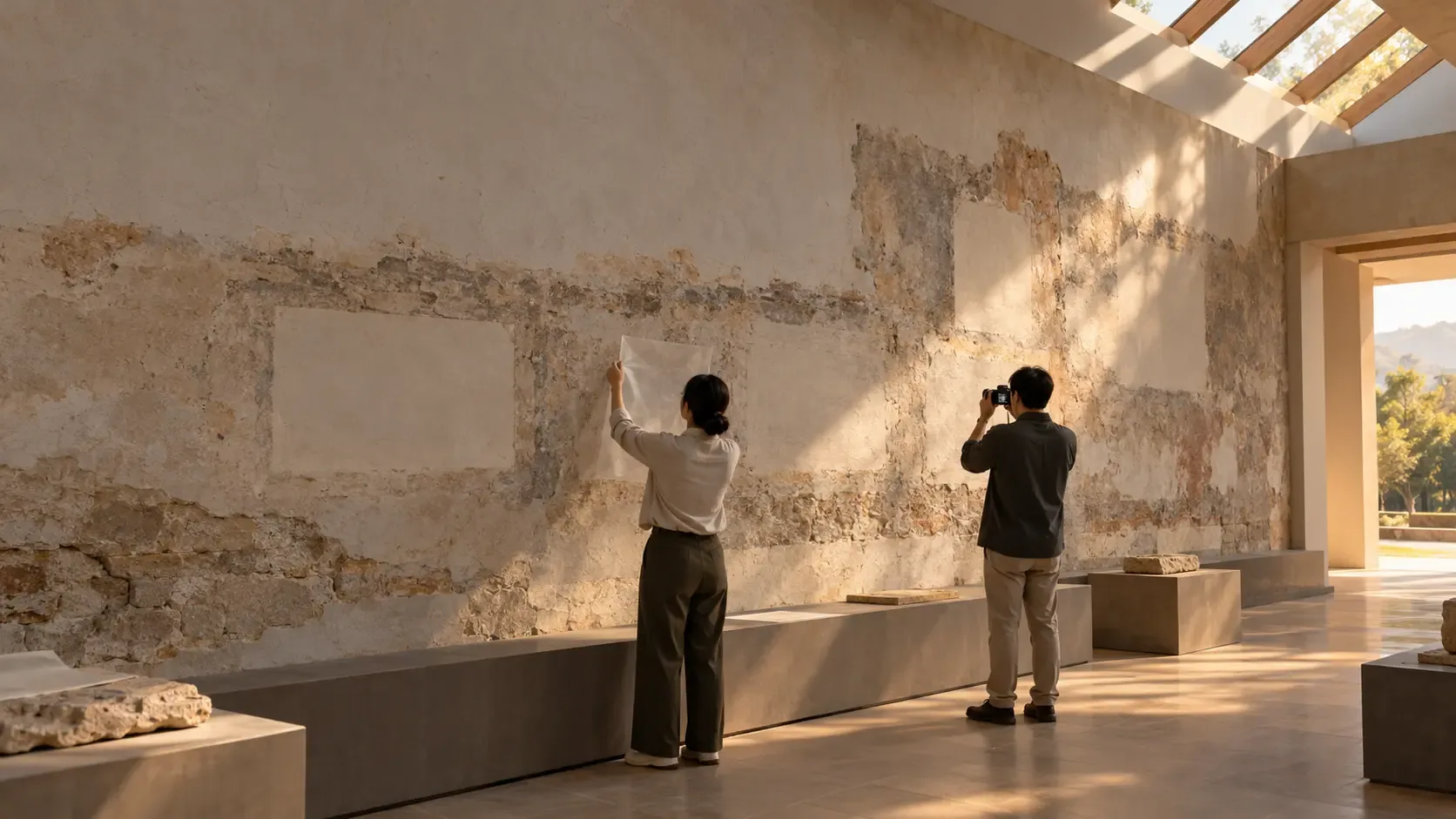
The wall was a public surface, not a bound page
The Chinese term tibishi (题壁诗) literally points to poetry inscribed or written on a wall. The category is less a single poetic form than a situation of publication: words become visible where other people pass. Glen Dudbridge’s study of verses on walls and their afterlives in notebook literature follows writing at temples, monasteries, bridges, entertainment venues and especially official hostels. A wall poem could be encountered without owning a book, but its audience depended on access to the site and on the survival of the surface.
‘Wall’ names a practice with material differences
A brush-written poem on plaster, an inked text on a wooden panel and words cut into stone do not weather, circulate or invite response in the same way. Some sources use wall-writing language broadly; modern readers should still identify the actual support whenever possible. Wall poetry also differs from the architecturally paired format explained in the guide to Chinese paired couplets. This article concentrates on poetry exposed at a place and later transmitted through copying. It should not be confused with permanently carved Wudang stone inscriptions and steles, where cutting, monumentality and official commemoration create a different documentary history.
Where wall poems appeared
Inns and relay stations joined movement to reading
Official hostels, courier stations and commercial inns placed writing beside roads and administrative routes. Cong Zhang’s study of inn-wall writing during the Song treats the wall as a medium for communication, collaboration and community rather than a neutral backdrop. A traveler could see earlier words, answer them, copy them, or leave another poem for an unknown later reader. The building became both lodging and a locally accumulating record, even though its contents could vanish when walls were replastered or rebuilt.
Temples, pavilions and crossings formed other reading sites
Wall poetry also appeared at Buddhist and Daoist establishments, scenic pavilions, bridges and road structures. Research on Tang- and Song-period wall writing and monastery culture distinguishes religious expression from the travel and occasional writing of visiting literati, while also showing that the same site could support both. A poem on a temple wall is therefore not automatically a liturgical text, just as a scenic inscription is not automatically a reliable description of every detail now associated with the site.
Passing readers made a social text
A wall could prompt an answer
A public poem might receive a matching-rhyme response, a comment, a correction or a new poem written nearby. Tan Xinhong’s account of wall communication in Song ci emphasizes that pavilions, post stations, religious sites and bridges gave writing wider and longer visibility than a private sheet, though less durability than a book or carved stone. The resulting cluster was not necessarily planned as one work: it might grow through separate visits by readers who knew one another only through the surface.
Response belonged to the culture of poetic exchange
Writing back could acknowledge a predecessor, compete in skill, share a mood or mark participation in a remembered occasion. The social logic overlaps with gift poems, responses and occasion writing, but the wall changes the audience: the recipient may be absent, unnamed or not yet arrived. That openness can create a community across time, yet it also means that later copies may separate a response from the poem, position and sequence that first made it intelligible.
Place and occasion shaped meaning
The route, building and view were part of the poem’s first context
A verse at an inn could register delay, departure or official travel; one at a pavilion might address a view; one at a religious site might stage reflection or memory. A modern edition that prints only the words flattens this spatial context. Read the poem alongside Chinese travel writing and landscape memory, local geography and the building’s history—but do not reverse the evidence by assuming that every later travel narrative saw the original writing on the original wall.
A title or preface may be later than the event it describes
Wall poems often survive inside later anecdotes, biographies or collections. A copied heading such as ‘written at a certain station’ may preserve valuable information, but it can also summarize an older story or an editor’s inference. The study of relay-station poetry and response traditions shows how a poem and the narrative attached to it can travel together. Responsible reading distinguishes the surviving host’s claim from direct evidence of who stood where, when, and why.
The wall was visible because it was vulnerable
Weather, smoke, whitewash and rebuilding erased texts
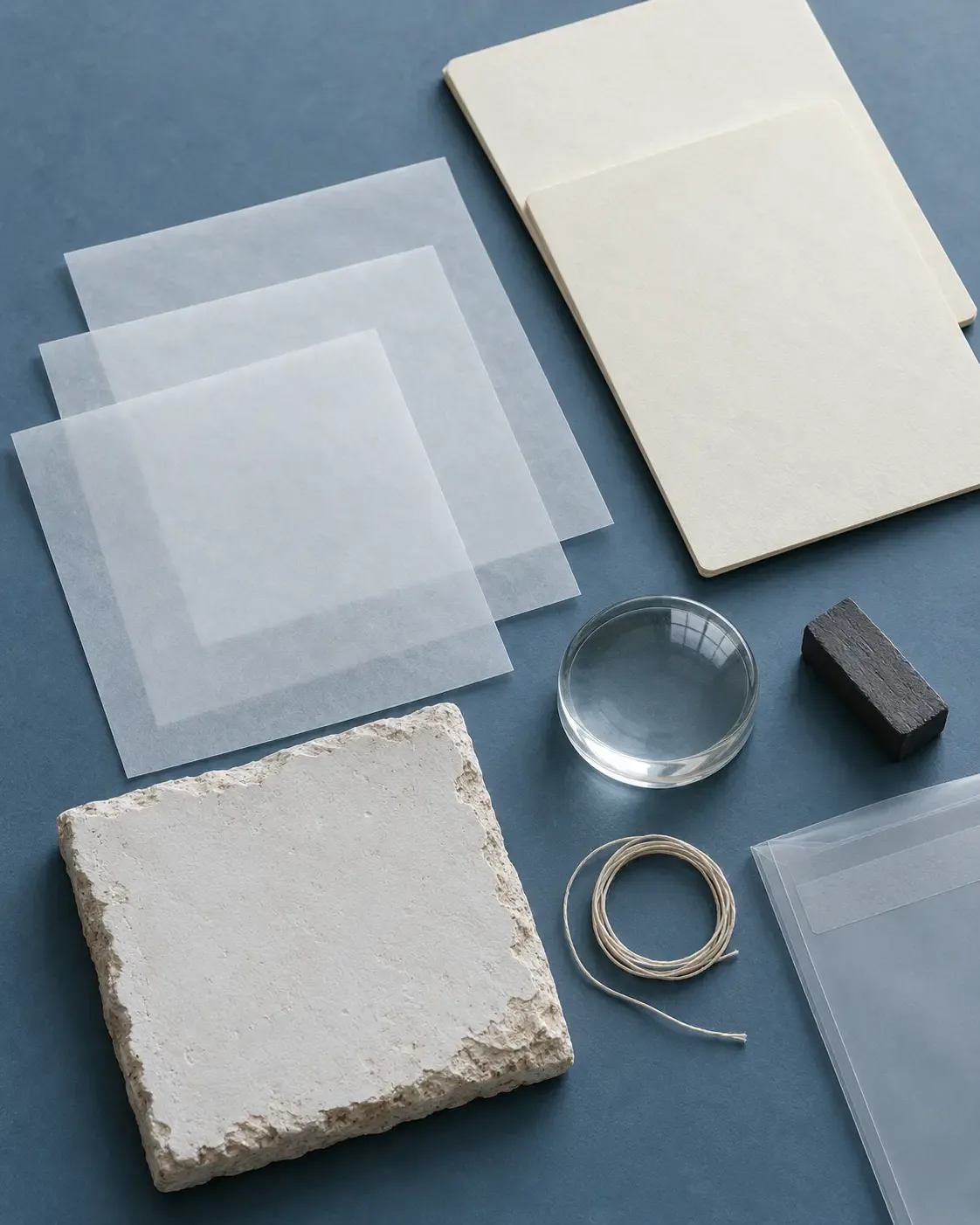
Ink on plaster could fade, be covered, rubbed away or disappear with a building. The same public exposure that made a poem legible to travelers subjected it to handling and repair. It is therefore misleading to imagine an unchanged literary wall lasting for centuries. Even when a site name remains, a later reader may know the poem from paper rather than from the architecture; absence from the wall today says little by itself about whether a reported inscription once existed.
Carving and rubbing require a separate evidentiary path
A text deliberately cut into rock or a stele can outlast brushwork, and an ink impression can transmit the carved surface. The guide to Chinese ink rubbings explains the contact process, reversed tonal image and dependence on the carved object. A printed transcription of a wall poem is not a rubbing, and a later stone copy is not the same physical witness as the lost brush-written original. Labeling the medium prevents different objects from collapsing into a single imagined artifact.
From wall to notebook, collection and print
Copying rescued words while changing their setting
A traveler might transcribe a wall poem into a notebook; a miscellany compiler might preserve it with an anecdote; a collected edition might later attribute it to an author. Dudbridge shows that wall verses could reach a broad later readership precisely because notebook literature and print detached them from their fragile first surfaces. The page on Chinese biji and miscellanies helps identify the mixed short-form hosts through which such writing often survives.
Survival is selective, not transparent
The copier may preserve memorable lines but omit neighboring poems, spatial arrangement, handwriting, corrections or damage. A later collection can normalize characters, add punctuation, assign a title or join pieces that the wall kept apart. Once the architectural witness is gone, agreement among paper copies may still derive from one lost transcription. The guide to quotation, excerpts and poetic fragments explains why a preserved passage is a witness to transmission, not automatic proof of a complete and unchanged original.
Authorship can be both compelling and uncertain
Women’s wall poems reveal circulation and the danger of easy biography
Ming- and Qing-period stories of women travelers’ wall poems attracted copying, answering and later publication. Weijing Lu’s re-examination of Yunzhen’s ‘Letter to My Husband’ shows how a celebrated wall poem can sit between literary mystery and historical reconstruction: attribution, date, narrative setting and authenticity require separate evaluation. The circulation of a text is historically real even when the biography supplied by a later source cannot be accepted without qualification.
A byline on paper may not reproduce a signature on plaster
Later compilers could attach an author’s name from memory, local tradition or stylistic judgment. Conversely, an anonymous copy may descend from a wall once signed. Studies of named corpora, including work on wall poems attributed to Xin Qiji, show that ‘wall poem’ can encompass varied settings and documentary routes. Use the methods in attribution, anonymity and disputed authorship: record who makes the attribution, in which witness, and how early that witness is.
Build an evidence ladder—and protect the place
Begin with the material witness, then name every intermediary
A surviving surface with documented context offers different evidence from a photograph, rubbing, manuscript transcription, printed anthology or modern retelling. Research on Qing-period travel poems written on the walls of the Mogao Caves shows that some wall texts remain physically inspectable and can identify visitors and routes. Even there, date, hand, location and conservation history should be recorded; elsewhere, say plainly when the wall is lost and the earliest witness is a later copy.
Reading history does not authorize new writing on heritage
Historical wall poetry belongs to past practices and surviving evidence, not to a license for visitors to add marks today. Do not touch, wet, trace, chalk or ink an old surface, and do not climb or move objects for a photograph. Follow the site’s conservation rules; use authorized images and transcriptions; record repository, shelfmark, edition, page and access date. The careful reader preserves the distinction among original surface, later copy and modern interpretation—and leaves the cultural place unchanged.