Reading Chinese Tea Classics: Authorship, Editions and the Limits of a ‘Recipe’
如何阅读中国茶书:作者、版本与“配方”式解读的边界
Chinese tea books are often quoted as if they were timeless recipes. They are more interesting—and more useful—when read as historical arguments. A title, author, intended reader, literary form, surviving edition and material tea world all shape what a passage can tell us. This guide offers a practical way to read Lu Yu’s Cha Jing, Cai Xiang’s Cha Lu and later tea writings without flattening their differences.
1. “Tea classic” names a library, not one kind of book
Jing, lu, pu and tu carry different expectations
Jing 经 can mark a work presented as a classic; lu 录 a record; pu 谱 a register or treatise; and tu 图 a diagram or illustrated account. These labels do not create rigid modern genres, but they warn us not to read every work in the same way. The Institute for the History of Natural Sciences’ survey of writings after the Cha Jing lists records, supplements, illustrated works and local studies—evidence of a changing textual field rather than one continuous manual.
A famous title is not the whole history of tea
Lu Yu’s work became foundational, yet it represents a particular Tang synthesis. Later authors explicitly added places, techniques and tastes they thought it omitted. No single tea book records every grower, household, market, border region or way of drinking. Begin with our history of Chinese tea culture, then treat each text as one situated window.
2. The Cha Jing is both instruction and compilation
Its architecture joins plants, tools, making, drinking and memory
The annotated Cha Jing transcription moves through origins, production tools, manufacture, utensils, boiling, drinking, earlier stories, producing regions, abbreviated procedures and a final diagrammatic summary. That structure creates a world around tea. A modern reader should not extract one sentence about water or leaf and ignore the book’s connections among material, place, equipment and conduct.
Quotation is part of the evidence
Its historical section gathers poems, geographical records, medical writings and anecdotes; some cited works are lost, disputed or survive only through later transmission. A quotation therefore tells us at least two things: what the earlier line says and what Lu Yu chose to preserve. It does not automatically prove that every claim was universally accepted or directly observed. Compare its cake-tea world with our guide to compressed tea.
3. Author and audience change the meaning of advice
Cai Xiang wrote upward to the court
In the preface to Cai Xiang’s Cha Lu, the official says Lu Yu did not rank Jian’an tea and that Ding Wei had discussed production without adequately treating preparation and tasting. He presents his two-part work for imperial attention. Its judgements about colour, fragrance, taste, storage and utensils are therefore technical observations inside a court-facing act of persuasion—not a neutral survey of all Song tea.
The Daguan Chalun promotes an elite standard
The Daguan Chalun, attributed to Emperor Huizong, discusses weather, picking, steaming, pressing, grinding, bowls, whisks and water. A peer-reviewed study of the work’s tea-making programme argues that its authors promoted one preferred elite practice among several Northern Song possibilities. Attribution and prestige matter, but neither makes the text an ethnography of every household.
4. Different books describe different material tea worlds
Tang boiling and Song whisking are not interchangeable
The cakes, grinding, cauldron boiling and utensil system associated with the Cha Jing differ from the fine powder, narrow pouring and whisked surface valued in Northern Song court texts. Words such as “tea,” “bowl” or “boiling water” can conceal major changes in product and action. Read the object sequence before reconstructing a method; our pages on Song whisked tea and Chinese tea ware provide visual context.
Absence can be chronological, regional or rhetorical
If a famous tea, vessel or technique is missing, the absence may reflect date, geography, audience, genre or the author’s purpose. It is not enough to say “the ancients did not use it.” Conversely, a named object in one elite record does not prove universal availability. Ask where and when the text’s tea could be grown, processed, transported and afforded.
5. Prescription is not a census of ordinary practice
“Should” reveals a desired order
Advice about clean utensils, timely processing, suitable water or correct bowl proportions shows what an author wanted readers to recognize as good practice. It may also reveal repeated problems. The Cambridge study “Tea and Place” shows how Song writers linked environmental description, local expertise, refined taste and imperial recognition. Such writing helped make a place authoritative; it did not merely record a reputation that already existed unchanged.
Complaints and counterfeits reveal contested practice
When a text condemns stale grinding, excessive fire, adulteration, substituted leaves or remoulded cakes, it confirms that writers worried about these possibilities. It does not tell us their exact frequency. A prohibition is evidence of a category and an anxiety, not a statistical survey. The same caution applies to claims about ideal water in water for Chinese tea.
6. The edition in front of you has its own history
Copying, carving, reprinting and annotation leave traces
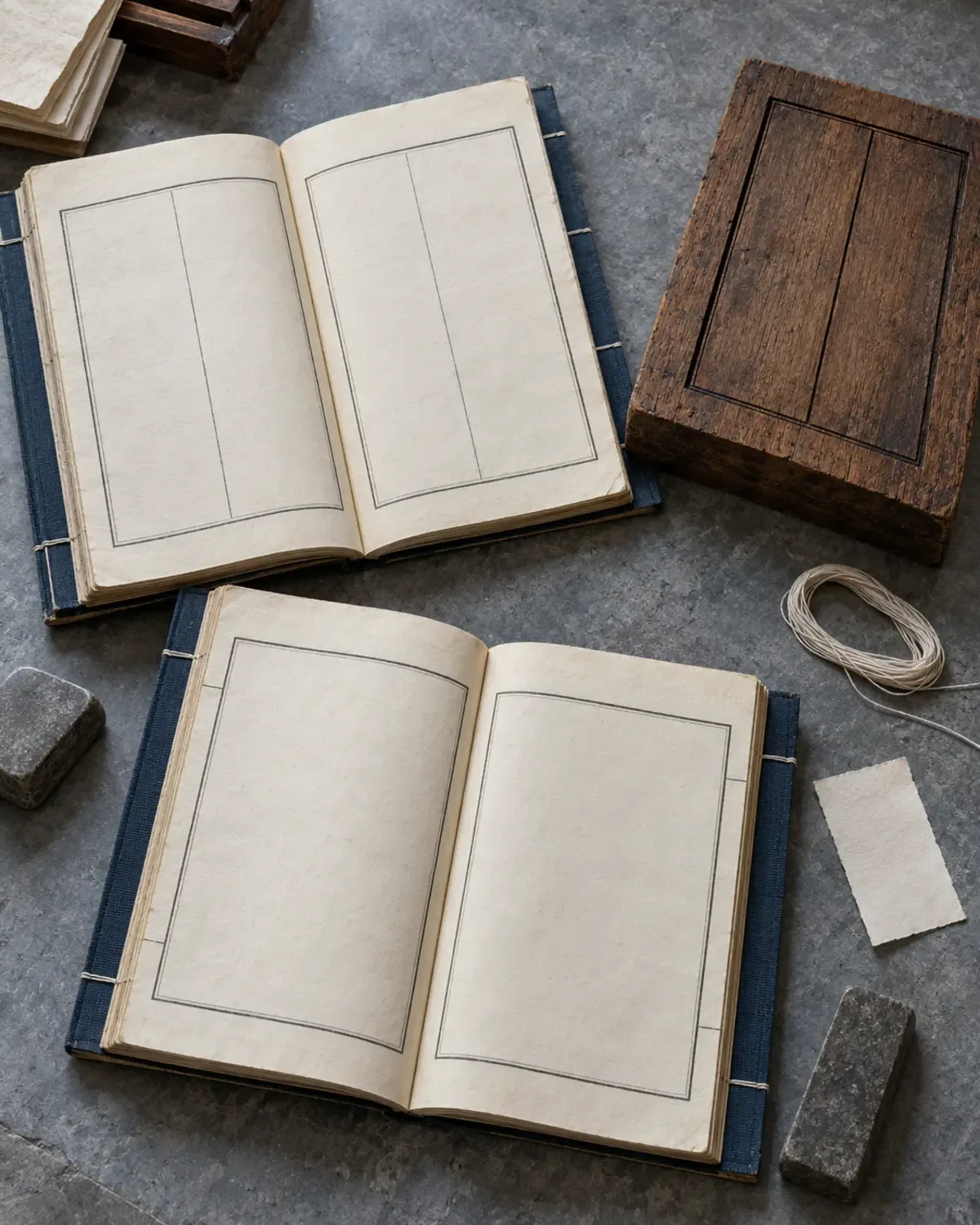
Historical works survive through manuscripts, woodblock editions, collectanea, quotations, modern punctuation and editorial notes—not as transparent photographs of an author’s desk. Cai Xiang’s postface itself describes a circulated draft with errors and a corrected text written for carving in stone. Variant characters, missing diagrams, reordered notes and later commentary can affect how a technical sentence is understood.
Collections helped create the tea canon
A 2024 study of the late-Ming Chashu collection identifies it as the first dedicated collectanea of Chinese tea writings and notes that its few surviving copies vary. Compilation preserved works, but selection, sequence and paratext also shaped what later readers encountered as “the classics.” An edition citation should therefore name editor or repository when possible, not only the ancient author.
7. Translation should expose uncertainty, not conceal it
One modern English word may join several historical terms
“Boil,” “steep,” “whisk,” “powder,” “cake,” “white tea” and “tribute tea” can each mislead when detached from the source term and period. A responsible translation may retain pinyin or Chinese characters on first use, then explain the action or object. It should not silently turn a Song category into a current six-family tea classification or a court cake into a modern branded product.
Reconstruction is an argument with visible choices
Modern experiments can clarify movement, heat, texture and vessel constraints, but every reconstruction chooses substitutes: cultivar, leaf processing, water, fuel, tool dimensions and timing. The result is most useful when it distinguishes textual evidence from material inference and contemporary adaptation. See the related Beiyuan tribute-tea guide for one example of those boundaries.
8. Seven questions for any claim based on a tea classic
- Which exact work, author or attribution and approximate date support the claim?
- What genre is it, and who appears to be its intended audience?
- Is the passage reporting observation, prescribing an ideal, quoting an earlier source or telling a story?
- Which edition, transcription or translation is being used, and are variants noted?
- What tea form, vessel set and preparation sequence does the surrounding passage describe?
- Does the claim stay within the text’s region and period, or leap to all of China and all eras?
- Which parts of a modern reconstruction are documented, inferred, substituted or newly invented?
9. Read across texts, objects and practice
A classic becomes richer when its limits remain visible
Tea books are not less valuable because they are selective. Their choices reveal technologies, landscapes, social ambitions, sensory vocabularies and arguments about refinement. Read several texts against one another; compare them with surviving objects, archaeology, economic history and careful experiment; and keep uncertainty attached to the sentence that needs it. Continue with learning Chinese tea through reading and practice.