Water for Chinese Tea: Springs, Minerals and a Practical Tasting Method
中国茶用水:山泉、矿物与实用对比方法
Water can make the same leaves appear brighter, flatter, sharper or softer, yet tea writing often turns that ordinary fact into a search for one legendary spring. Chinese sources offer something more useful: they show how people compared waters within particular landscapes, technologies and methods of preparation. A modern brewer can learn from that attention without treating an old ranking as a universal recipe—or untreated spring water as automatically safe.
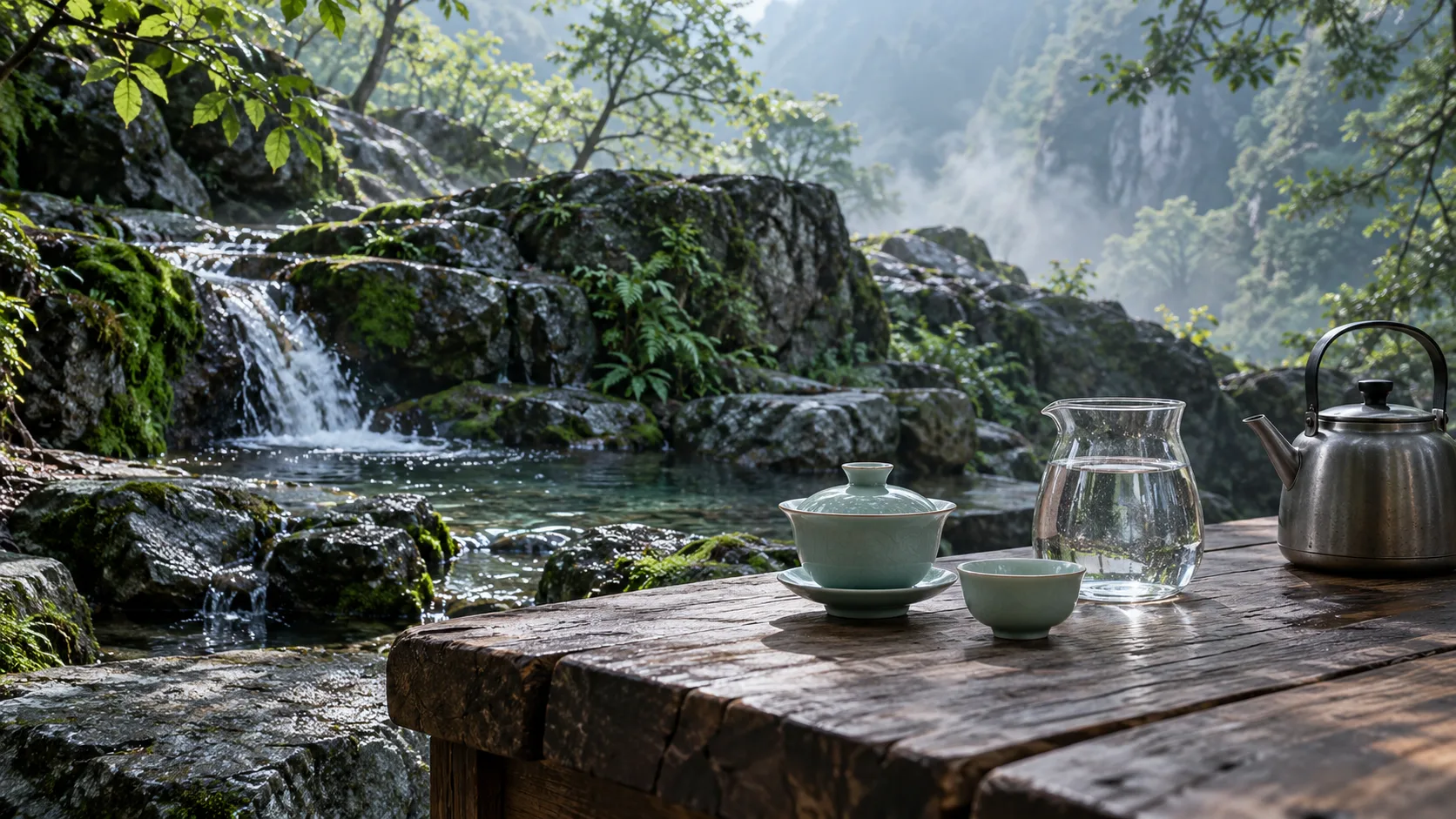
This guide complements the site’s history of Chinese tea culture and its practical gongfu tea method. Its focus is narrower: how to read claims about water, observe what changes in the cup and run a simple comparison that another person could repeat.
Water in Chinese tea writing
Lu Yu described sources and movement
In the eighth-century Classic of Tea, Lu Yu placed mountain water above river water and well water, then distinguished slow-flowing springs and stone pools from rushing falls or stagnant valley water. The passage is not merely a poetic list of famous places. It notices flow, use and surroundings. But it belongs to a chapter on roasting cake tea, heating water, adding salt and boiling tea powder—practices different from today’s repeated infusion of loose leaves.
Later writers disputed neat rankings
By the Northern Song, Ouyang Xiu’s Record of the Water at Daming was already questioning famous lists of seven or twenty waters attributed to earlier authorities. He compared those lists with Lu Yu and found contradictions, then argued that trying to rank every water under heaven misses the point. This debate matters: “the best water” was never one uncontested table handed down unchanged.
Historical advice is evidence, not a safety certificate
Old texts help reconstruct taste, travel, local reputation and methods of preparation. They do not supply a modern microbial or chemical test. A spring praised in literature may have changed, and a clear mountain source can still be contaminated. Historical categories should therefore be read beside present water standards, not substituted for them.
What water changes in the cup
Minerals and pH affect extraction
Brewing water carries dissolved substances, and its pH can alter how colour, taste and aroma compounds appear in an infusion. A 2023 study comparing several waters with green tea found meaningful differences in mineral dissolution, bitterness, astringency, colour and volatile compounds. In that experiment, relatively low-mineral water near neutral pH supported the green tea’s sensory qualities better than the more mineral-rich alternatives.
One experiment is not a rule for every tea
The study concerns particular green tea, waters and laboratory conditions. Roasted oolong, compressed dark tea, black tea and aged white tea may respond differently. Even within one family, leaf material and processing vary. The sound conclusion is not “buy this water”; it is “water is a variable worth controlling.” Use the six tea families guide to describe the tea before comparing its water.
The kettle cannot replace source quality
A kettle heats water; it does not certify where the water came from. Boiling can reduce many microbial risks, but it does not reliably remove every chemical contaminant. Filters also have specific capabilities rather than a universal effect. Begin with water known to be potable, keep the kettle clean and free from strong odours, and avoid grand claims that one metal or clay automatically “activates” water.
A controlled home comparison
Begin with two safe, neutral-smelling waters
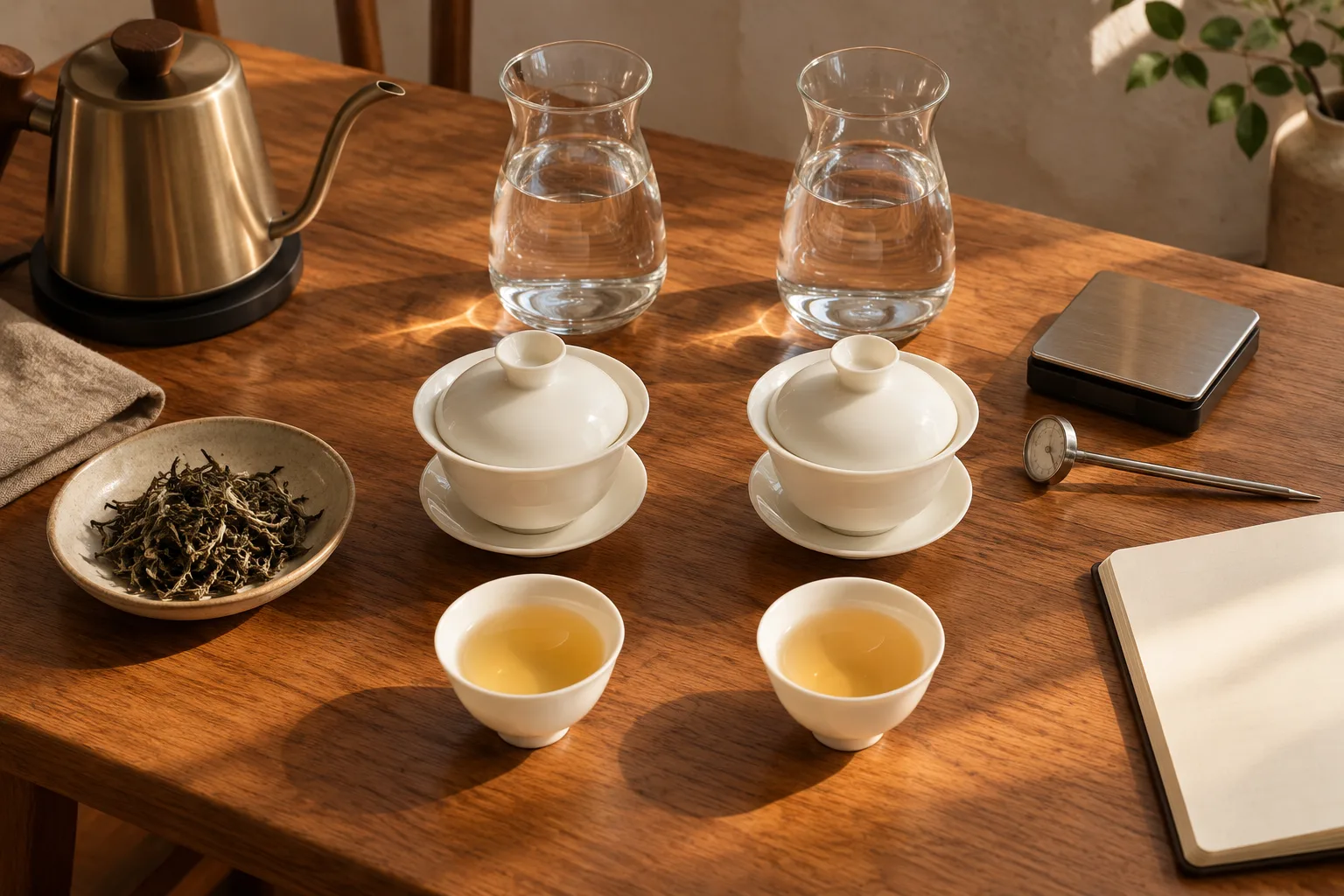
Choose your usual potable water and one reasonable alternative: for example, the same tap water before and after a suitable household filter, or tap water and a low-mineral bottled water. Avoid flavoured, sparkling or strongly mineralised water for the first comparison. Let both reach the same starting temperature and use clean, odour-free containers.
Hold the other variables steady
Use the same tea batch, equal leaf mass, identical vessels, equal water volume, the same temperature, infusion time and pour. Prepare the two cups side by side and change only the water. Perfect laboratory control is unnecessary; visible consistency is enough to make a home observation more informative.
Taste before trying to optimise
Look at colour and clarity only after both cups have settled for the same time. Smell at similar temperatures. Then note ordinary qualities—aroma intensity, body, bitterness, drying sensation, sweetness and finish—without forcing a winner. A difference can be clear while preference remains personal. Repeat the comparison on another day before buying equipment or drawing a general conclusion.
From source to hospitality
Do not romanticise untreated springs
Modern public-health guidance advises against drinking untreated water from springs and other outdoor sources when safety is unknown. Clear appearance, cold temperature and a mountain setting do not reveal microorganisms or chemical hazards. When travelling, use a verified potable supply. A beautiful spring can still be appreciated as landscape without becoming an ingredient.
A six-step water comparison
- Name the waters. Record their source as precisely as the label or utility information allows; do not guess at mineral content.
- Fix the tea. Use one batch and weigh equal portions.
- Match the vessels. Use identical gaiwans or cups and measure equal working volumes.
- Match heat and time. Heat both waters to the same target and infuse for the same duration.
- Describe before judging. Record colour, aroma, texture, bitterness, sweetness and finish in plain language.
- Repeat and contextualise. Test another day or another tea, then keep the water that is safe, practical and pleasing—not the one with the grandest story.
Connect water to the whole tea session
Water is one participant among leaf, heat, vessel, time and company. The point of comparison is not to turn hospitality into a contest; it is to make adjustments understandable. Continue with Tea, Meditation and Taoist Practice for attention without mystical claims, or use Learning Chinese Tea to keep a simple tasting record.
Primary reading includes Lu Yu’s Classic of Tea, “Boiling” and Ouyang Xiu’s Record of the Water at Daming. Modern context comes from the 2023 brewing-water study and public-health guidance on untreated water.