Tea Blending and Batch Construction: Consistency, Style and Transparent Labels
茶叶拼配与批次构建:稳定、风格与透明标示
A finished tea may taste consistent from one purchase to the next even though leaves change with garden, season, picking date and manufacture. Blending is one way makers negotiate that variation. It is the deliberate construction of a batch from identified components for a stated product target—not a guarantee of quality, a synonym for adulteration, or proof that origin no longer matters.
What blending means in tea
Deliberate combination, not accidental mixing
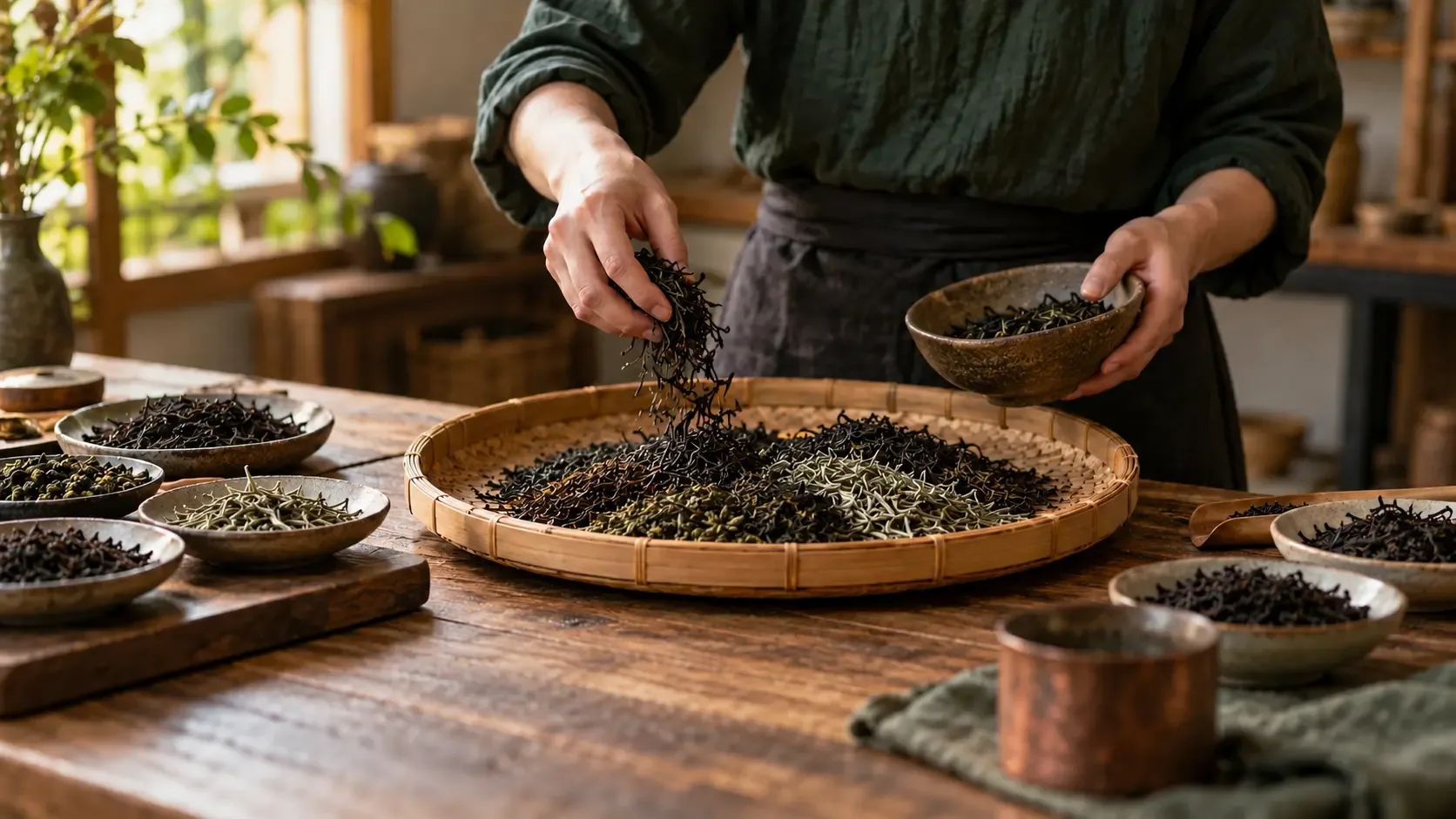
China’s current national vocabulary for tea processing recognises blending within the language of manufacture. In practical terms, a maker selects known components, tests proportions and combines the accepted material into a defined lot. The target may concern aroma, taste, body, liquor colour, appearance or behaviour in brewing. A blend can be excellent or poor; the word describes a method, not the verdict. See GB/T 40633-2021, Tea Processing Vocabulary.
Blending, homogenising and flavouring are different acts
Blending chooses and combines components. Homogenising, often discussed as yundui (匀堆), distributes accepted material evenly through the lot after or during that combination. Flavouring adds flowers, fruit, spices, extracts or aromas and creates a different product category. Official Chinese production rules distinguish refined tea from flavoured tea and place ingredient addition within the latter process. Consult the official production rules.
The lot comes before the formula
Components carry identities
A component may be identified by garden or region, cultivar, picking period, processing lot, leaf form, grade, roast or storage condition. Not every blend crosses origins or cultivars: two fractions from one production lot can be recombined, while a house blend may draw on several lots. The preceding work of picking to a bud-and-leaf standard and sorting and grading helps explain what each component can contribute.
A batch is a traceable production unit
A final lot needs an identity that connects back to its inputs. China’s national tea traceability standard covers records across cultivation, production, processing, circulation and sale. The standard does not prescribe one universal blend sheet, but its logic is clear: combining teas should not erase the internal record of which lots entered the result. See GB/T 33915-2017 on tea traceability.
Where blending can occur
Fresh leaf, rough tea and finished tea
Material can be combined at different stages. Fresh leaves may be brought together before transformations are complete; rough teas can be assembled before refining; finished components can be blended after their individual characters are established. A 2025 black-tea experiment compared fresh-leaf and finished-tea blending in a specific set of cultivars. Its results belong to those conditions, but the study usefully shows that “when” is part of what a blend is. Read the peer-reviewed study.
Timing changes what can be controlled
Early combination lets components pass through later transformations together, so chemical and sensory development may interact. Late blending gives the maker more separate finished teas to taste and adjust, and is usually easier to revise before scale-up. Neither route is universally superior. Tea family, equipment, batch size and target style decide what is sensible within the broader map of the six Chinese tea families.
Why makers build blends
Consistency and house style
Fields and factories do not produce identical leaves every day. A blend can bring several acceptable lots toward a repeatable house profile while allowing each harvest to vary. It can also assemble the leaf sizes needed for a particular infusion or prepare selected material for cakes, bricks or tuos. A current Hunan technical code specifically covers refining and blending for Congou black tea; it is evidence of a defined production practice, not a universal recipe for every tea. See DB43/T 2493-2022. Consistency here should mean fidelity to a declared style, not the removal of all seasonal character.
Balance is not simple averaging
A fragrant component can lift aroma yet thin the middle of the cup; a fuller tea can add body while muting high notes; a smaller fraction may infuse faster than a long leaf. Effects are not always linear, and visual proportions do not predict sensory proportions. Makers therefore work through trials rather than assuming that equal parts will produce a neutral average. Blending may also help use available lots responsibly, but low price alone is not evidence of fraud and high price is not evidence of skilful construction.
Tasting a blend
Build a small trial first
Candidate components should first be assessed separately under controlled conditions. A maker can then weigh a small trial, mix it thoroughly, brew a representative sample and record the result before enlarging the batch. The trial is a working hypothesis: it may need adjustment, rest and retasting. There is no universal ratio for “Wudang tea,” black tea, green tea or any other family.
Judge against a declared target
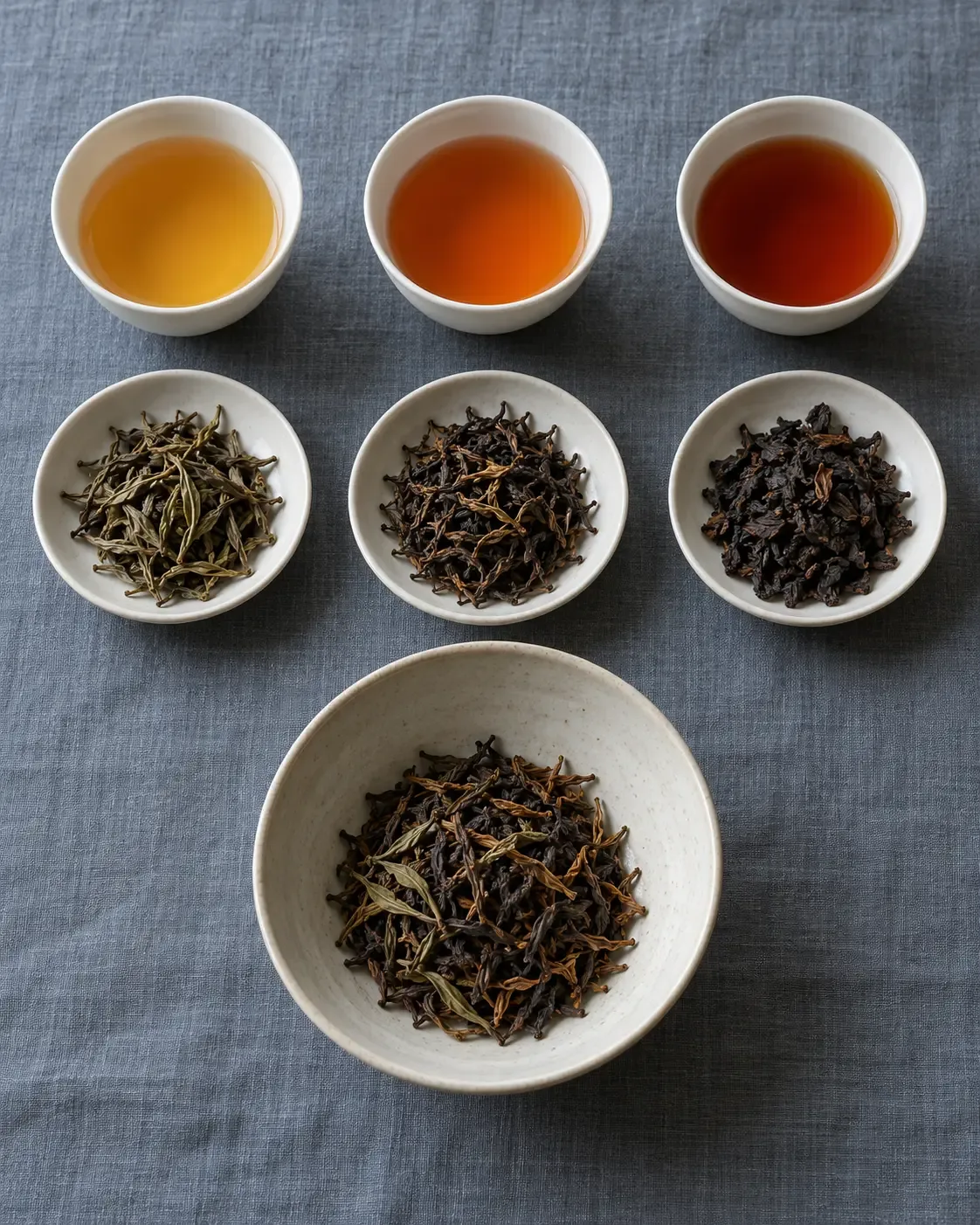
China’s current sensory-evaluation method supplies a structured frame for appearance, liquor colour, aroma, taste and infused leaf. It does not choose the product target for the maker. A useful record names that target and compares both components and trial blend under the same method. See GB/T 23776-2018 on tea sensory evaluation.
“Single origin” is not the opposite of craft
Scope matters
“Single origin” can refer to a country, region, mountain, garden, producer or even a named lot. Without the scope, the phrase is incomplete. A tea from one garden may still combine picking days, fields, screen fractions or roast batches. Conversely, a clearly described regional blend can be more informative than a vague origin claim. Ask what boundary the label actually promises.
Purity is not a sensory verdict
A single-lot tea can reveal the character of one time and place; a blend can express judgement through selection and proportion. Either can be transparent or misleading, vivid or dull. The useful comparison is not “pure versus mixed” but whether the product matches its declared identity, whether the cup is coherent and whether records support the claim.
Blending, adulteration and honest labels
Transparency preserves trust
Legitimate blending does not permit a seller to invent a protected origin, cultivar, season or production method. Internal traceability should retain component identities, while the consumer label must follow the applicable product and labelling rules. Where a claim would reasonably suggest one garden, one year or one cultivar, the maker should define it accurately rather than letting the romance of the name obscure the batch.
Added ingredients create a different category
Tea-to-tea blending combines tea components. Scenting or flavouring with flowers, fruit, spices or flavour preparations belongs to another description and may require an ingredient declaration. Concealed substitution, undeclared additions or false origin are problems of adulteration or mislabelling; they should not be used to condemn every blend. Protect any finished lot in a clean, suitable tea caddy so storage does not undo the work.
Seven questions for reading a blend
- What does the product mean by “blend,” and are all components tea?
- Which origin, cultivar, season or lot boundaries does the label actually promise?
- At what stage were components combined: fresh leaf, rough tea or finished tea?
- What target—aroma, taste, body, colour, appearance or brewing behaviour—guided construction?
- Can the final batch be traced back to its component lots?
- Was a small trial assessed under consistent sensory conditions before scale-up?
- Does the seller distinguish tea blending from added flavouring and from concealed substitution?
From components to a coherent cup
Read the claim, then taste the result
A good blend does not make agricultural variation disappear; it gives that variation a legible form. Read the declared scope, compare the dry leaf and infused leaf, and taste for integration rather than searching for a mythical universal ratio. For standards, scholarship and practical comparison methods, continue to further reading and practice. The best evidence is a coherent cup supported by honest names and a traceable batch.