Tea in Chinese Poetry: Social Worlds, Metaphor and the Limits of Literary Evidence
中国诗歌中的茶:社会交往、诗意表达与文学证据的边界
Tea poems can place a parcel at a gate, steam above a stove, friends around a bowl or a rare product within an imperial economy. Yet a poem is shaped language, not a camera. Rhyme, allusion, occasion, patronage and transmitted editions determine what reaches us. This guide shows how Tang and Song tea verse can illuminate social life while keeping literary evidence within its proper limits.
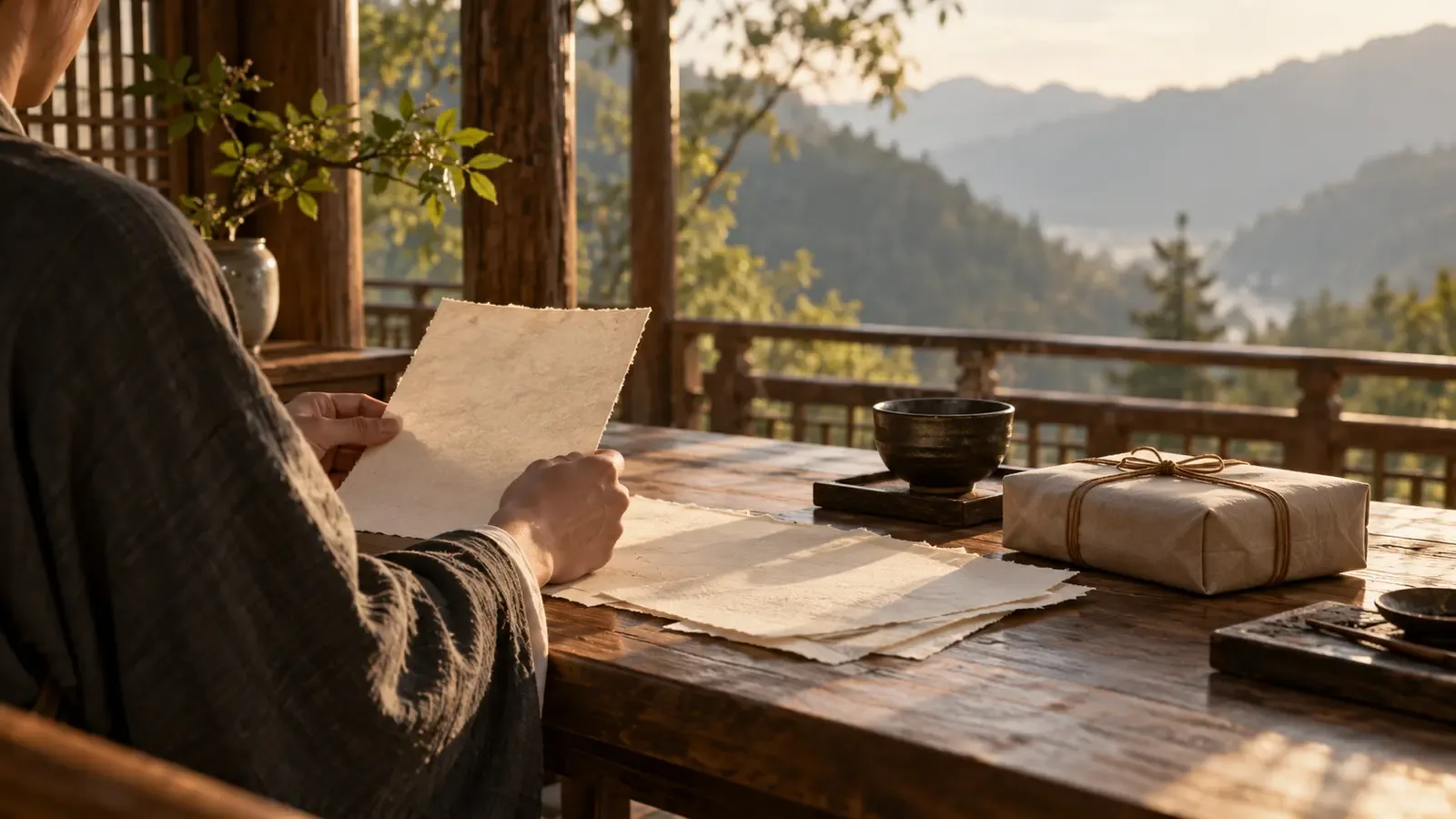
1. A tea poem is an event made into a form
Occasion matters before interpretation
A poem may thank a donor, answer a friend, mark a visit, praise a region or turn solitary drinking into reflection. Title, addressee and sequence can be as important as a famous line. Begin with the site’s introduction to Chinese poetry: voice in a poem is constructed, even when it grows from a real exchange.
Craft is evidence too
Parallel lines, rhyme, allusion and exaggeration show how tea became thinkable and memorable. They may reveal cultural value without proving that every action occurred exactly as narrated. James A. Benn’s scholarly chapter “Tea Poetry in Tang China” treats verse as central to tea’s developing cultural meanings, not as an inventory of literal recipes.
2. Tang verse helped make tea a literary subject
Tea entered established worlds of monks, officials and travellers
Tea did not arrive in poetry as an isolated “tea ceremony.” It appeared beside monasteries, offices, journeys, illness, wakefulness, gifts and parting. The broader scholarly study Tea in China: A Religious and Cultural History follows material, religious and literary contexts together. Compare this growth with our history of Chinese tea culture.
Small scenes can preserve social texture
A short poem can place tea beside waiting for a guest, wine, spring light or a Daoist visitor. The Chinese Text Project text of Shi Jianwu’s “Spring Clears”, for example, joins tea-making, hospitality and an unexpected visitor. It proves the poem’s wording and transmitted setting—not how every Tang household received guests.
3. Gifts and replies disclose networks
A parcel of tea carries relationships
Named senders, seals, messengers, origin claims and reciprocal poems can map obligation and friendship. Tea is at once a material good and a reason to write. A poem of thanks may amplify rarity because gratitude is part of its work. Read it alongside the site’s guide to tea trade networks, which treats circulation beyond elite correspondence.
Access is uneven even when the poem sounds intimate
Prestigious tea could move through court, official and scholarly networks while growers, carriers and workshop labour stayed outside the speaking voice. Silence is not absence from history. Ronald Egan’s chapter on tea’s social and literary history from Tang to Song traces how the subject spread through elite culture; it does not make elite verse a census of all drinkers.
4. Read Lu Tong’s whole poem, not only “seven bowls”
The famous ascent begins with a delivery
Lu Tong’s “Writing Quickly to Thank Censor Meng for Sending New Tea” survives in juan 388 of the Quan Tangshi. Before the celebrated bowls, the poem describes a sealed parcel, early spring tea, imperial precedence and the surprise that a mountain recluse received it. The sensory ascent therefore sits inside a social and political exchange.
Ecstasy ends by asking about labour
The poem’s exhilaration culminates not simply in transcendence but in a question about people suffering on steep mountains. Reading only the seven-bowl sequence turns a complex poem into a wellness slogan. Its bodily language is literary experience, not clinical evidence or a dosage guide. For the material tea world behind such verse, consult reading Chinese tea classics.
5. Sensory language moves between observation and metaphor
Colour, foam, fragrance and sound can be concrete
Poems mention pale surfaces, cloudlike steam, grinding, fire, water and bowls. Such details can support questions about objects and techniques when corroborated. They can also be conventional images chosen for rhythm or association. Our guide to Song whisked tea separates material procedure from later pictorial imagination.
Purity and awakening are not chemical measurements
Words translated as pure, light, numinous or awakening may describe taste, moral character, religious aspiration, social distinction or poetic mood at once. Do not convert them automatically into claims about detoxification, mental health or pharmacology. Translation should preserve productive ambiguity rather than selecting the most marketable modern meaning.
6. Song poetry links tea to place and distinction
Poems could help make regional reputations
Song writers compared waters, gardens and famous teas, sending praise through official and literary networks. The Cambridge study “Tea and Place” shows poems participating in the construction of terroir and local authority. Praise records a relationship among product, writer and audience; it does not certify an unchanged modern origin claim.
Refinement can include exclusion
Rare tea, apt water and accomplished verse could form a “three perfections,” but the very language of discernment distinguishes insiders from outsiders. Literary prestige may illuminate taste-making more clearly than ordinary consumption. The site’s Tang-poetry overview helps situate tea verse within larger canons and institutions.
7. Transmission and translation reshape the poem
Anthologies decide what becomes representative
Collected works, imperial compilations, modern selections and quotations preserve some poems while making others hard to see. A familiar tea line may owe its fame to repeated excerpting. Read the site’s guide to Chinese poetry anthologies, and cite the poem, collection, juan and edition when possible.
A translation is an interpretation, not a replacement
Tea terms, poetic forms and allusions rarely map neatly into English or French. “Boil,” “steep,” “cake,” “powder,” “immortal” or “pure” can obscure period-specific objects and registers. Compare translations with the Chinese text and surrounding lines; do not build a historical claim on one elegant paraphrase.
8. Seven questions for reading a tea poem as evidence
- Who is the attributed poet, and when and in what collection does the poem survive?
- What occasion, addressee or exchange does the title establish?
- Which details describe objects or actions, and which work primarily as allusion or metaphor?
- Is the poetic speaker identical with the historical author, or a crafted voice?
- What labour, commerce or social group remains outside the poem’s viewpoint?
- Does another text, object or record corroborate the technical or regional claim?
- Which edition and translation are being quoted, and what uncertainty should remain visible?
9. Let poems ask historical questions
Literary evidence is strongest in company
Tea poems reveal relationships, aspirations, sensory vocabularies and the making of cultural value. They become more historically precise when read beside tea books, surviving vessels, economic records, biographies and landscape history. Preserve the poem’s artistry while refusing to make it prove what it cannot. Continue with learning Chinese tea through reading and practice.