Tea Landscapes in China: Gardens, Forests, Terraces and Living Knowledge
中国茶景观:茶园、古茶林、梯田与活态知识
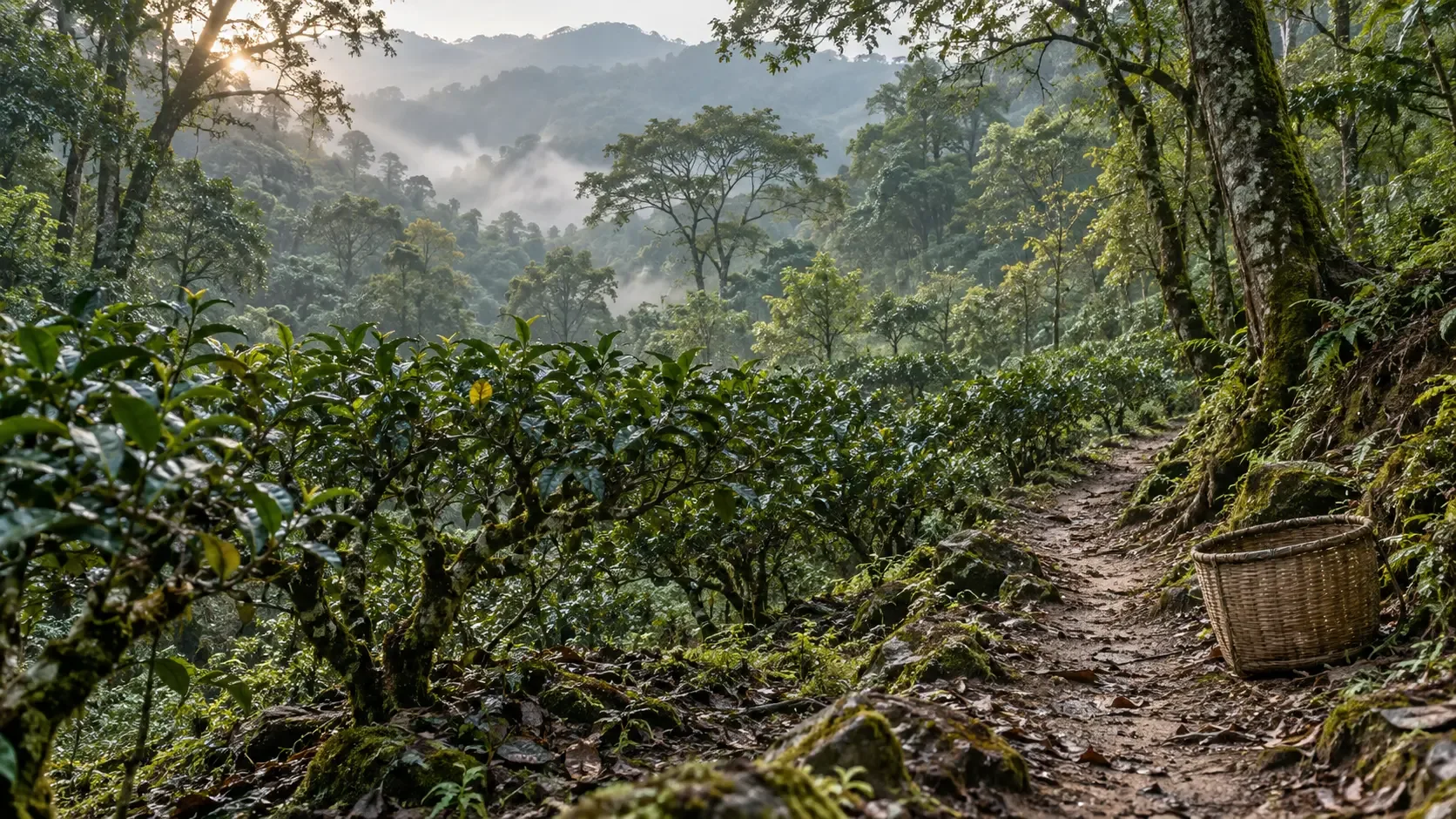
A tea landscape is not just a green backdrop for a photograph. It is a working relationship among plants, soils, water, slope, paths, settlements, seasonal labour and accumulated knowledge. China contains many such relationships: old tea trees beneath a forest canopy, clipped gardens on hillsides, terraced fields, mixed farms and places where tea is grown near other crops. Reading them carefully helps us understand tea before it becomes a finished leaf or a brewed cup.
A landscape is a system, not scenery
What the eye can and cannot see
Rows, terraces and shade trees are visible; tenure, work schedules, local rules and plant knowledge usually are not. A beautiful view may therefore hide the decisions that keep soil in place, direct water, select harvests and maintain paths. The term “cultural landscape” is useful because it treats human practice and the more-than-human environment as connected, without pretending that every connection is harmonious.
Tea begins long before processing
Processing changes harvested leaves, but the harvest itself depends on growth, season and decisions in the field. The separate guide to tea types and character explains why finished categories cannot be read directly from a scenic photograph. Landscape is part of the story, not a shortcut to flavour or quality.
There is no single Chinese tea landscape
Forests, gardens and terraces
Some tea trees grow beneath taller forest cover; others stand in managed gardens, contour rows or terraces. Each form has many local variations. “Forest tea” does not automatically mean wild, ancient or untouched, just as orderly rows do not by themselves prove intensive chemical use. Ask how the plants are propagated, pruned, shaded, harvested and governed.
Mixed land uses
Tea may sit beside woodland, food crops, fruit trees, villages, workshops and waterways. These neighbouring elements can support livelihoods and shape water or access, but their relationships must be demonstrated place by place. A landscape is better read as a mosaic than as a single field isolated from community life.
Follow slope, water and shade
Topography organizes work
Mountain terrain affects paths, drainage, erosion risk and the effort required to carry leaves. Terraces can slow runoff and make steep ground workable, yet they also require construction and maintenance. Contour, retaining edges and ground cover tell us about labour as much as appearance.
Microclimate is local, not magical
Elevation, exposure, canopy and moisture can alter growing conditions within short distances. They do not guarantee a particular taste. Variety, plant age, field practice, harvest timing, processing and storage also matter. Claims about “mist,” “rock” or “high mountain” should be treated as questions for evidence, not automatic quality seals.
Jingmai: old tea forests within a lived system
Forest, village and tea together
UNESCO’s account of the Cultural Landscape of Old Tea Forests of Jingmai Mountain in Pu’er describes traditional villages within old tea groves, surrounded by forests and plantations, developed by Blang and Dai communities over more than a millennium. Understorey cultivation responds to the mountain ecosystem and subtropical monsoon climate while remaining tied to local governance, belief and ceremony. The place is therefore not simply a collection of old trees.
Horizontal and vertical connections
The ICOMOS evaluation explains how forests, old tea forests and villages connect horizontally, while headwater forests, farms, settlements and rivers form a vertical system. Protective partition forests can buffer wind and pests and mark village boundaries. This is a specific landscape with specific peoples and history—not a template to project onto every tea region.
Two different Fujian mosaics
Anxi: headwater forests, gardens and settlements
FAO’s description of the Anxi Tieguanyin Tea Culture System presents a top-to-bottom pattern of headwater forests, hillside tea gardens and villages, lower farmland and rivers. It also connects farming to workshops, buildings, social organization and evolving craft. The value of the example lies in these relationships, not in turning a heritage designation into a guarantee for every tea labelled Anxi.
Fuzhou: tea, jasmine and water
In the Fuzhou jasmine-and-tea system, tea on higher ground, settlements, jasmine near river plains and water form another vertical sequence. Tea and jasmine grow in different conditions before being joined through scenting. This landscape reminds us that the geography of a finished tea can include more than one plant and more than one working zone.
Labour turns ecology into practice
Seasonal attention
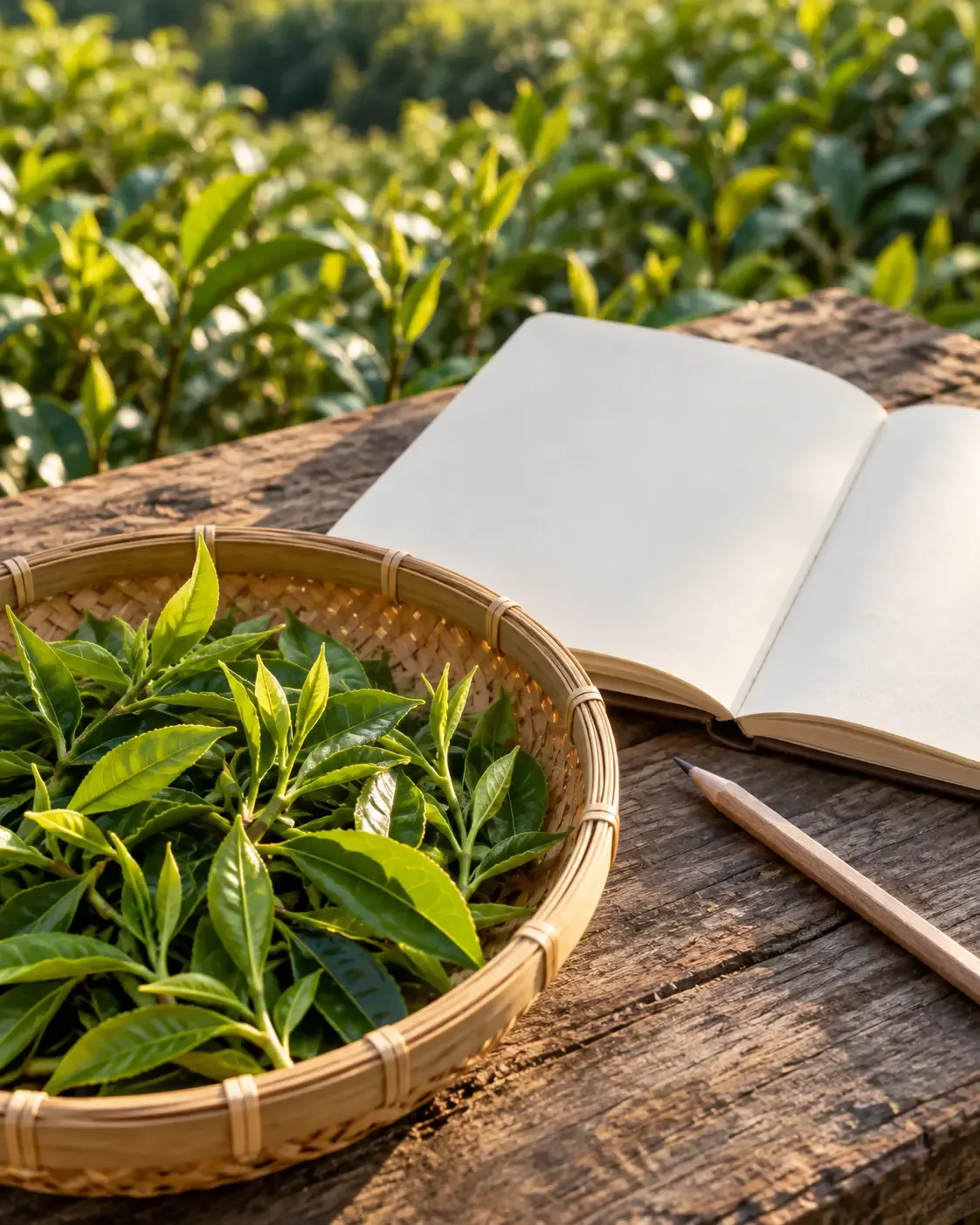
Pruning, soil care, path repair, pest observation, picking and carrying leaves are timed tasks, not picturesque details. UNESCO’s file on traditional tea processing techniques and associated social practices in China explicitly includes plantation management and leaf picking alongside processing, drinking and sharing. Knowledge lives in repeated work and social transmission, and it can change while remaining meaningful.
Heritage labels are starting points
Recognition is not a packet-level quality mark
World Heritage and agricultural heritage programmes recognize particular places, practices and management systems. They do not authenticate every commercial product using a regional name, nor do they prove that a tea is organic, ancient-tree, handmade or superior. Traceability still requires a producer, harvest, processing record and credible chain of custody. For portable forms, continue with the guide to compressed tea as an object of trade and storage.
Living landscapes face change
Conservation includes communities
Climate shifts, urban development, tourism, labour migration and commercial pressure can alter land use and knowledge transmission. Freezing a place into an imagined past is not a neutral answer: people need livelihoods, housing and agency. Good conservation attends to ecological functions, community governance and the right of living traditions to adapt, while documenting what changes and who makes decisions.
Read a tea landscape, then return to the cup
A seven-question field method
- What grows here? Distinguish tea trees, canopy, companion plants, food crops and spontaneous vegetation.
- How is the slope used? Look for terraces, contour planting, ground cover, paths and retaining edges.
- Where does water move? Trace headwaters, drainage, rivers and places vulnerable to runoff.
- Who works and governs? Ask about households, communities, cooperatives, estates, seasonal workers and local rules.
- What work is seasonal? Separate pruning, picking, carrying and field care from factory processing.
- Which claims are evidenced? Verify age, “wild” status, origin, certification and heritage boundaries independently.
- What is changing? Notice tourism, new roads, altered crops, labour shifts and climate pressures without assuming all change is loss.
Landscape does not dictate the cup, but it restores missing context. Continue through the history of Chinese tea culture, the Tea–Horse trade networks, the guide to water for tea and attention and hospitality. Together they connect land, movement, preparation and shared practice without reducing any one place to a marketing image.