Tea, Meditation and Taoist Practice
茶、静坐与道家修习
Tea can mark a pause before quiet practice, but it is not a requirement for meditation and it does not turn an ordinary pause into a Taoist rite. The useful starting point is to name the setting: private reflection, hospitality, study, formal religious activity or simply drinking tea.
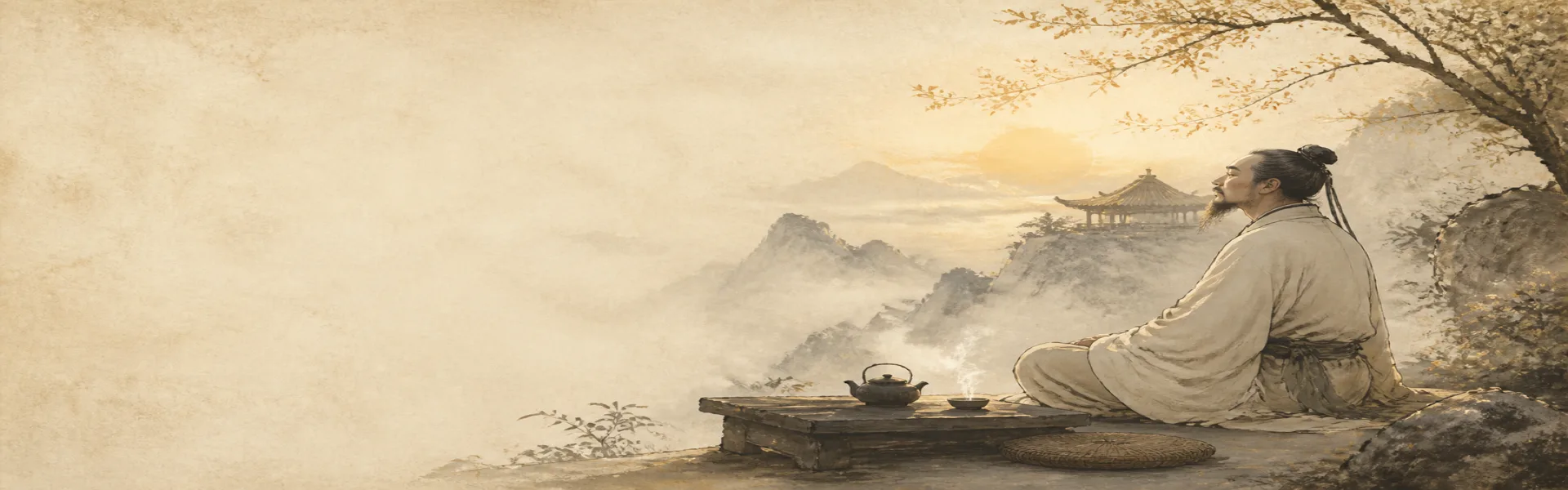
This guide separates documented history from modern personal practice. It offers a modest way to use tea as a transition into attention while respecting the diversity of Daoist communities and individual responses to caffeine.
1. Keep tea optional
A cup may help someone slow down, put away a phone and notice the next few minutes. The same person may practise just as well with water or with no drink. Tea is a setting for attention, not evidence of attainment and not a condition for cultivation.
Begin with purpose rather than symbolism. If the aim is to sit quietly, choose a simple preparation that leaves little to manage. If the aim is tasting, give the tea itself more time. Combining both is possible, but neither activity needs a spiritual claim to be worthwhile.
2. Read religious history by time and place
Tea has a well-documented history in Chinese religious and literati life. James A. Benn's study, described by its university press, traces Buddhist monastic use, exchange with scholars and changing ritual and cultural meanings. That evidence belongs to particular texts, institutions and periods; it should not be expanded into a single practice shared by every temple.
The record for Daoist settings also needs specific witnesses. A tea served at a mountain residence, a drink used in everyday study and an offering within a named ritual are not interchangeable. Where a source does not identify the community, date and action, this page leaves the larger claim open.
3. Distinguish hospitality, offering and instruction
Hospitality is directed toward a guest; an offering belongs to a devotional or ritual context; instruction has a teacher, purpose and method. The same beverage can appear in all three, but its meaning comes from the people and occasion rather than from the liquid alone.
When visiting, accept or decline courteously and follow the host's explanation. Do not rearrange cups, imitate an offering or treat ordinary refreshment as a secret teaching. A respectful question is more accurate than a confident guess.
4. Daoist context is not one universal method
Daoist traditions include philosophical reading, communal ritual, monastic and household life, meditation and other forms of cultivation. Their vocabularies and disciplines vary. Calling any calm tea session “Daoist meditation” can erase those differences and imply authority that the host does not possess.
For personal reflection, it is enough to say that a quiet tea practice is inspired by values such as simplicity, restraint and attention to change. For lineage practice or ritual, follow qualified instruction and use the name given by that community.
5. Make a simple transition
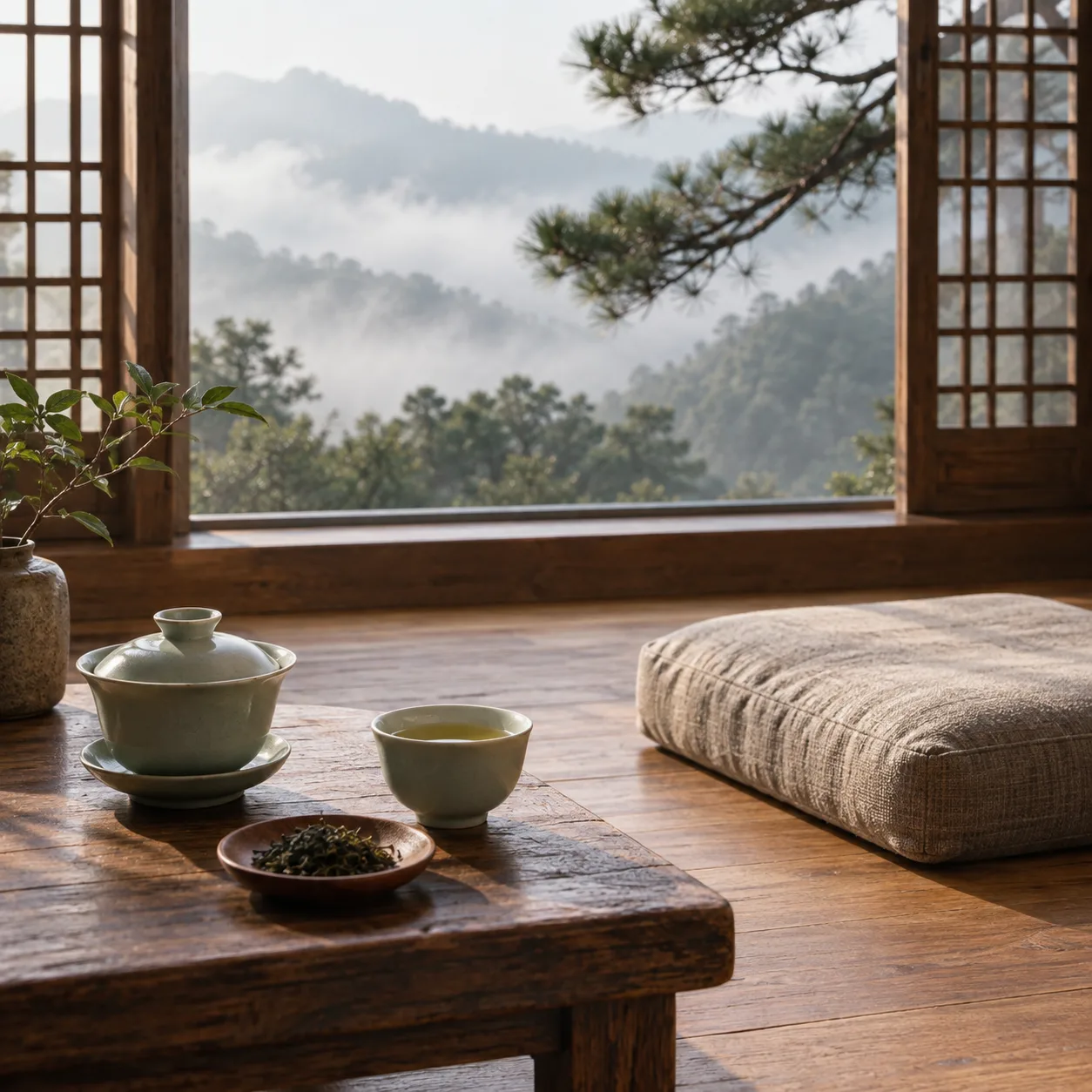
Clear a small surface, silence unnecessary notifications and choose one vessel that is safe to handle. Prepare only as much tea as you want to drink. The sequence can be ordinary: warm water, leaf, infusion, pour, pause.
Notice weight, temperature, sound and aroma without forcing concentration. Let each action finish before beginning the next. When the cup is ready, decide whether to continue tasting, sit quietly or return to the day; the transition works because it has a clear end.
6. Work with caffeine, not a promise
Tea normally contains caffeine, but the amount varies with the leaf, preparation and serving. The FDA notes wide differences in individual sensitivity and warns that excessive caffeine can contribute to jitters, anxiety and disrupted sleep. Those facts do not establish a meditation benefit or one suitable dose.
Observe your own response without turning the session into a medical test. Choose less leaf, a shorter infusion, a low-caffeine alternative or no tea when that is more comfortable. If pregnancy, medication, a health condition or recurring symptoms raise concerns, seek individual advice from a qualified health professional.
7. Treat sensations as observations
Warmth, alertness, calm, restlessness, a dry mouth or a faster heartbeat may be noticed during tea drinking. Temperature, caffeine, posture, expectation and the pace of drinking can all contribute. A sensation may be real without proving a hidden property, spiritual rank or diagnosis.
Traditional expressions such as qi or chaqi can carry meanings within a community of practice. Record the speaker's meaning and your own experience carefully; do not use a vivid feeling to grade the tea, the practitioner or the depth of meditation.
8. Share tea without pressure
Ask guests what they want and whether they consume caffeine. Offer water or a non-caffeinated drink, explain hot vessels and make participation optional. Silence may suit one gathering while conversation suits another; neither is automatically more authentic.
If a teacher or host sets a formal context, listen for the purpose and boundaries before copying the sequence elsewhere. Consent and clarity matter more than specialised vocabulary, expensive ware or an appearance of solemnity.
9. Visit Wudang without inventing a tea lineage
UNESCO documents Wudang as a major historical Daoist architectural complex, with surviving buildings from several dynasties. That record establishes the importance of the site; it does not by itself prove that a particular tea, shop, ceremony or brewing method belongs to an ancient Wudang lineage.
Treat present-day claims individually. Ask who produced the tea, where it was grown, who leads a session and whether the activity is hospitality, commerce, cultural demonstration or religious practice. A precise answer protects both visitors and Wudang's history.
10. Try four short observation sessions
Across four sessions, keep the vessel and tea similar. First notice the preparation sequence; next compare a lighter infusion; then try water or a caffeine-free drink; finally invite one willing guest and observe how hospitality changes the pace. Write only what you can directly observe.
Use the Chinese Tea Culture gateway for the wider reading path, then continue with Learning Chinese Tea for sources, tasting notes and study habits. The aim is not to make tea prove a doctrine, but to practise careful attention, accurate language and considerate sharing.