Chapter 4 — The Empty Source

第四章 道冲而用之

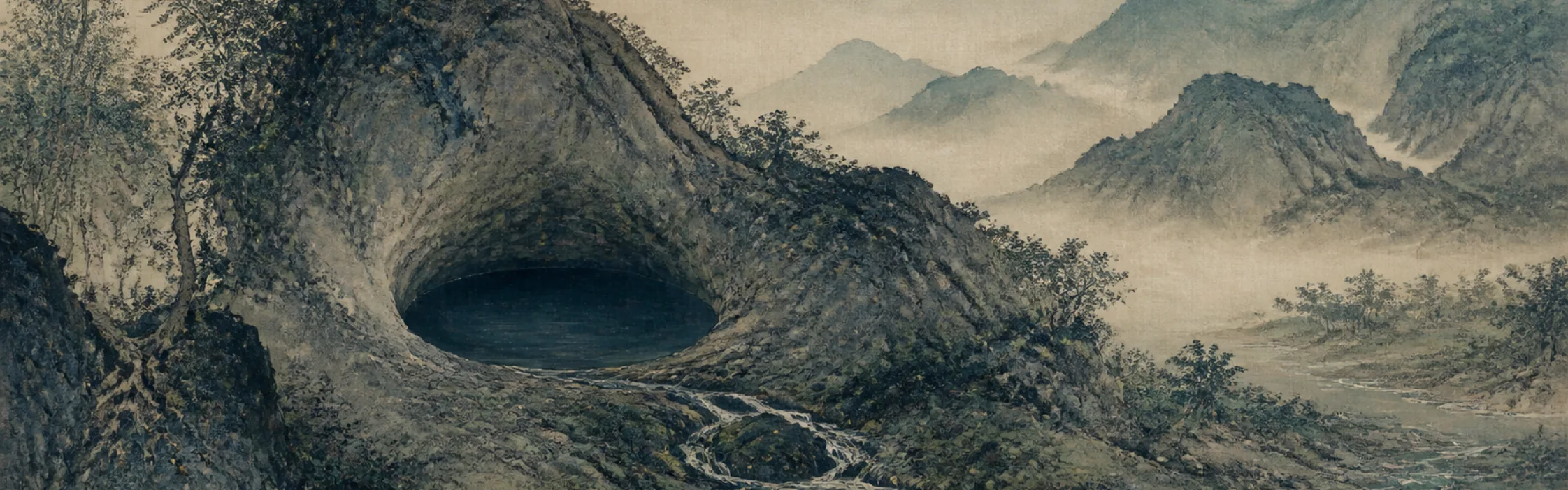
The Tao is compared to an empty vessel and a deep pool. Its power lies not in being packed with fixed content, but in remaining available to every form. It blunts what is too sharp, loosens what has become tangled, softens glare, and enters ordinary dust without losing its depth.
Chapter 4 — The Empty Source

Classical text

道冲,而用之或不盈。渊兮,似万物之宗。挫其锐,解其纷,和其光,同其尘。湛兮,似或存。吾不知谁之子,象帝之先。

Original rendering

The Tao is empty, yet in use it may never be filled. Deep—like the ancestral source of the ten thousand things. It blunts sharp edges, unties tangled knots, softens its light, and joins with the dust. Still and clear, it seems barely to exist. I do not know whose child it is; it appears to precede even the Lord of Heaven.

Beginner’s guide

A person, practice, or organization becomes brittle when it must defend a perfectly sharp identity. The chapter’s images suggest another kind of strength: spacious enough to receive, patient enough to untangle, and humble enough to take part in ordinary life.

Key ideas

  • Emptiness means capacity, not mere absence.

  • The deepest power often works by softening excess.

  • The Tao is presented as prior to every named authority or form.

Reading it in modern life

Leave some room in a schedule so that the unexpected can be handled well. In conversation, do not prepare every answer while the other person is speaking. When a conflict becomes sharp, begin by lowering the glare—reduce public embarrassment, simplify the issue, and separate the knots one at a time.

A question to carry

What could become possible if I stopped trying to fill every space or sharpen every position?


Continue reading the complete Tao Te Ching overview, Chapter 3 or continue to Chapter 5.