Chapter 80 — A Small and Contented Community

第八十章 小国寡民

This chapter offers a deliberately small-scale vision: few people, nearby communities, satisfying food and clothing, secure homes, and customs that remain meaningful. Advanced tools may exist, but life is not organised around using every capability merely because it is available.
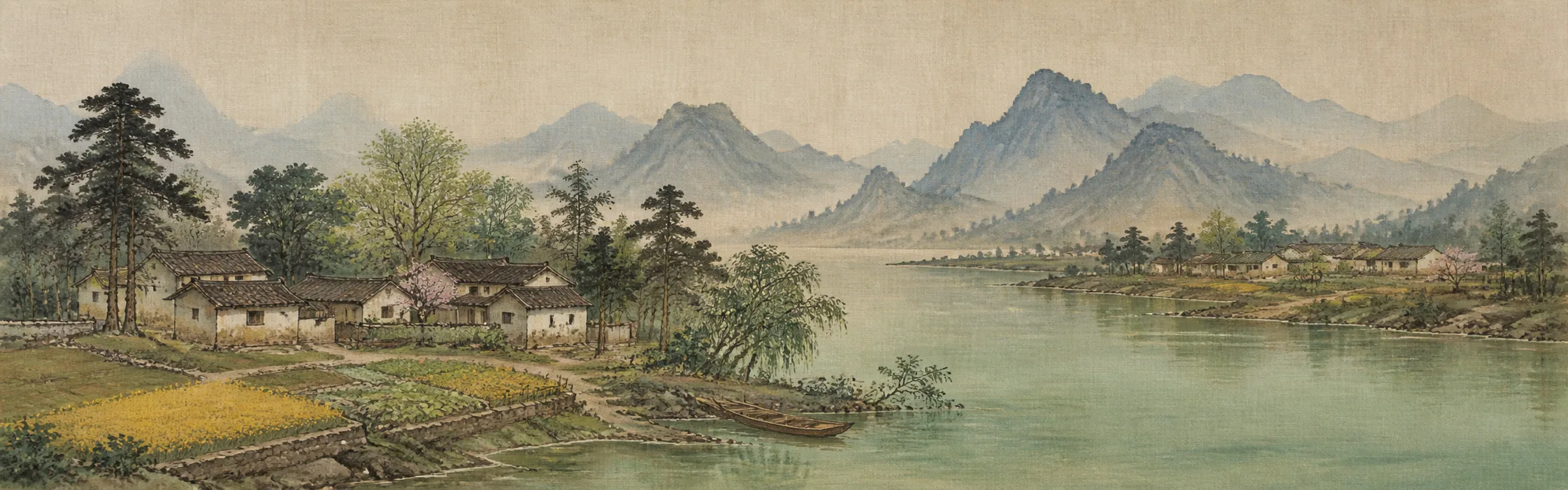
Chapter 80 — A Small and Contented Community

Classical text

小国寡民。使有什伯之器而不用,使民重死而不远徙。虽有舟舆,无所乘之;虽有甲兵,无所陈之。使民复结绳而用之。甘其食,美其服,安其居,乐其俗。邻国相望,鸡犬之声相闻,民至老死,不相往来。

Original rendering

Let there be a small state with few people. Though there are devices capable of the work of ten or a hundred people, let them not be compulsively used. Let people value life and not migrate far. Though there are boats and carts, let there be no need to ride them; though there are armour and weapons, no occasion to display them. Let people return to simple records with knotted cords. Let them savour their food, find beauty in their clothes, feel secure in their homes, and delight in their customs. Neighbouring states look upon one another; the sounds of dogs and chickens are heard across the border, yet people grow old and die without needing to travel back and forth.

Beginner’s guide

The passage need not be treated as a literal programme to abolish technology or contact. It is a counter-image to restless expansion. The question is whether tools serve a meaningful local life or whether life is uprooted to serve tools, markets, and constant movement.

Key ideas

  • Capability does not create an obligation to use it.

  • Local sufficiency can reduce compulsive movement and conflict.

  • Technology should serve life rather than define its purpose.

Reading it in modern life

Strengthen local relationships, repair skills, and sources of food and culture. Choose technology for clear benefit rather than novelty alone. Make home and community meaningful enough that travel remains a choice, not an escape from emptiness.

A question to carry

Which capability is useful, and which one is quietly reorganising life around itself?


Continue reading the complete Tao Te Ching overview, Chapter 79 or continue to Chapter 81.