Chapter 51 — Profound Virtue Nourishes

第五十一章 道生德畜

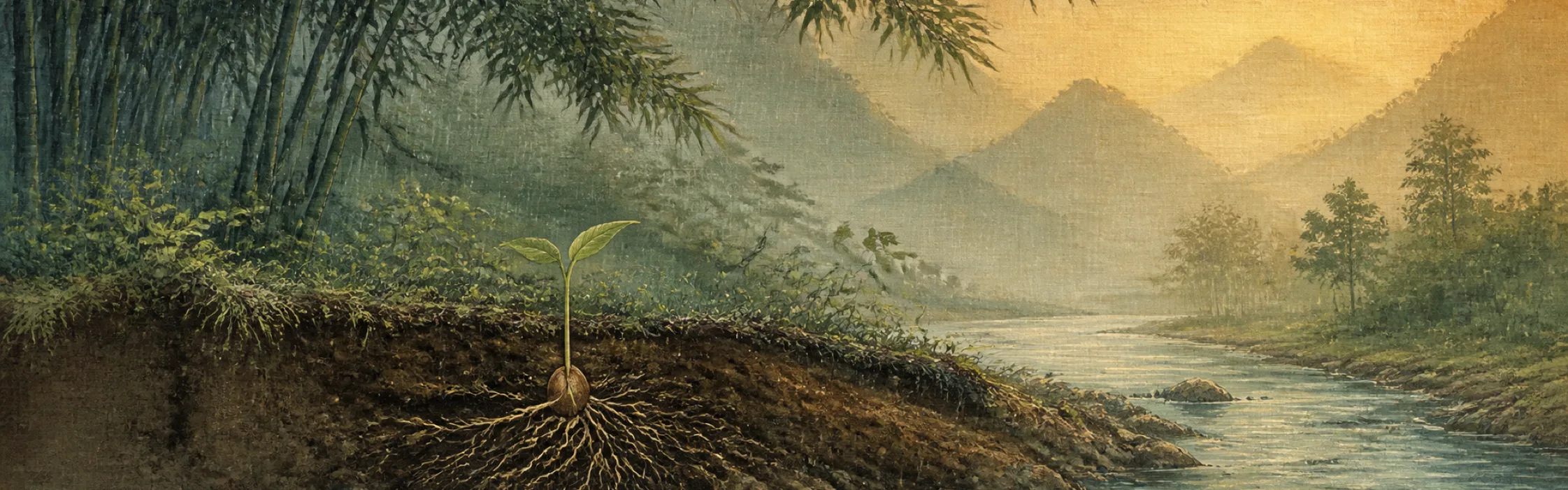
This chapter distinguishes source, nourishment, form, and circumstance. Tao gives rise to life; virtue sustains it; material conditions give it shape; the surrounding situation helps it mature. Growth is never the achievement of a single isolated cause, so no helper can honestly claim complete ownership.
Chapter 51 — Profound Virtue Nourishes

Classical text

道生之,德畜之,物形之,势成之。是以万物莫不尊道而贵德。道之尊,德之贵,夫莫之命而常自然。故道生之,德畜之;长之育之,亭之毒之,养之覆之。生而不有,为而不恃,长而不宰,是谓玄德。

Original rendering

The Tao gives them life; virtue nourishes them; things give them form; circumstances bring them to maturity. Therefore none of the ten thousand things fails to honour the Tao and value virtue. The Tao is honoured and virtue valued not by command, but because it is naturally so. Thus the Tao gives life and virtue nourishes—growing and raising, settling and maturing, feeding and sheltering. Give life without possessing, act without depending on the action, guide growth without ruling it: this is called profound virtue.

Beginner’s guide

The repeated teaching ‘nourish without possessing’ is central to Taoist care. Parents, teachers, leaders, and practitioners participate in growth, but the life being supported is not their property. Mature guidance gradually makes room for independence.

Key ideas

  • Life develops through source, care, form, and circumstance.

  • Nourishment does not confer ownership.

  • Profound virtue supports maturity without permanent control.

Reading it in modern life

When mentoring, explain the goal and provide resources, then let the learner make meaningful choices. Credit conditions and contributors that made a result possible. Measure care not by how dependent someone remains, but by whether they can eventually stand and adapt.

A question to carry

Can I support this growth without making it belong to me?


Continue reading the complete Tao Te Ching overview, Chapter 50 or continue to Chapter 52.