Chapter 53 — The Great Way and the Side Paths

第五十三章 大道甚夷

The chapter contrasts a polished court with neglected fields and empty granaries. A society can display wealth while the foundations of life deteriorate. Laozi calls this boastful robbery because luxury is being supported by conditions that leave ordinary nourishment unattended.
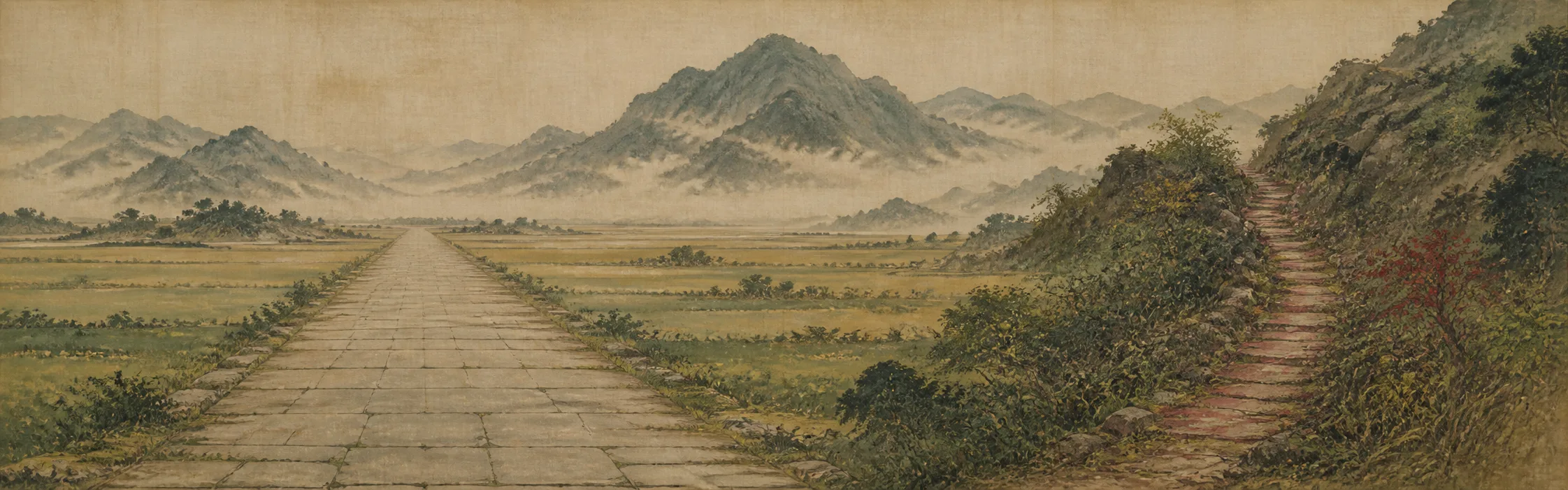
Chapter 53 — The Great Way and the Side Paths

Classical text

使我介然有知,行于大道,唯施是畏。大道甚夷,而民好径。朝甚除,田甚芜,仓甚虚;服文采,带利剑,厌饮食,财货有余。是谓盗夸,非道也哉!

Original rendering

If I had the smallest reliable knowledge, I would walk the great Tao and fear only straying from it. The great Tao is very level, yet people prefer side paths. The court is splendidly cleared while fields are overgrown and granaries empty. People wear embroidered clothes, carry sharp swords, tire of rich food, and possess goods in excess. This is called robbery and boasting. Surely it is not the Tao.

Beginner’s guide

The ‘side path’ is the attractive shortcut that separates private advantage from public consequence. The criticism is not of beauty itself, but of display built on neglected agriculture, security, and common needs. Dignity requires substance beneath presentation.

Key ideas

  • A polished surface can conceal an abandoned foundation.

  • Shortcuts often transfer costs to less visible people.

  • Public prosperity must be judged by shared conditions, not elite display.

Reading it in modern life

When evaluating an organisation, look beyond its front page to pay, workload, maintenance, and service quality. Before buying prestige, ask what essential field is being left uncultivated. Choose improvements that strengthen the base before decorating the top.

A question to carry

What impressive surface am I maintaining while the field beneath it grows neglected?


Continue reading the complete Tao Te Ching overview, Chapter 52 or continue to Chapter 54.