Chapter 78 — Nothing Is Softer Than Water

第七十八章 柔之胜刚

Water yields to touch, yet over time it wears stone, carries mountains grain by grain, and enters the smallest openings. Everyone knows the image, Laozi says, but few can practise its patience when faced with resistance.
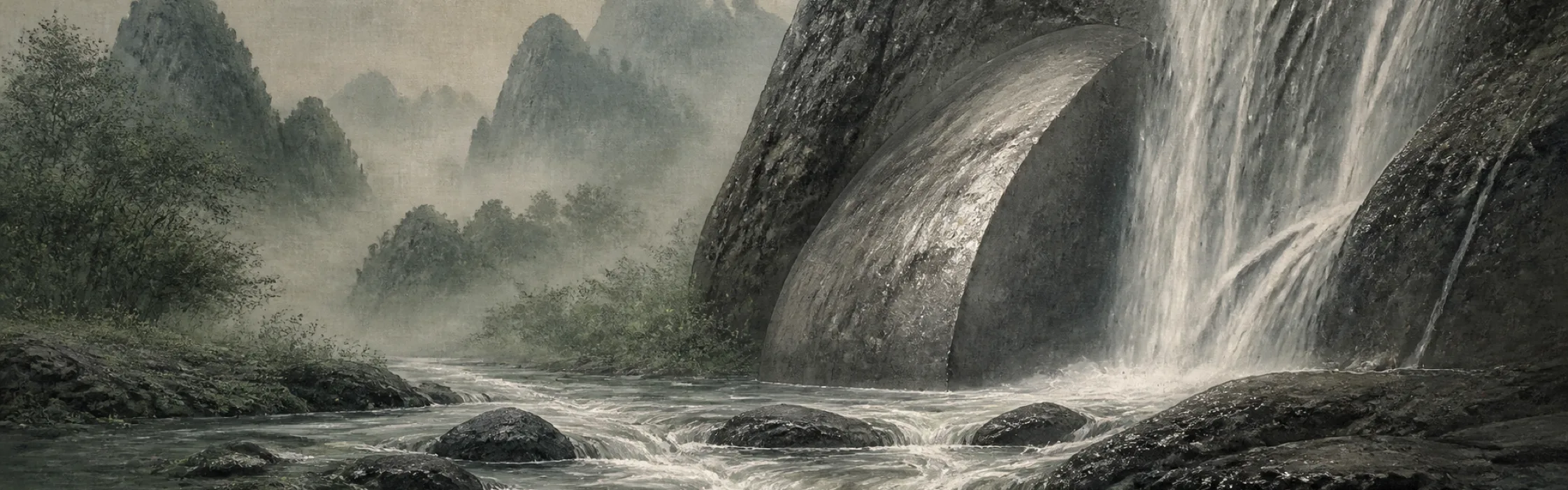
Chapter 78 — Nothing Is Softer Than Water

Classical text

天下莫柔弱于水,而攻坚强者莫之能胜,以其无以易之。弱之胜强,柔之胜刚,天下莫不知,莫能行。是以圣人云:受国之垢,是谓社稷主;受国不祥,是为天下王。正言若反。

Original rendering

Nothing under heaven is softer and weaker than water, yet in attacking the hard and strong nothing can surpass it, for nothing can replace it. That the weak overcomes the strong and the soft overcomes the hard—no one in the world fails to know it, yet no one can practise it. Therefore the sage says: one who receives the state’s disgrace is called lord of the altars of soil and grain; one who receives the state’s misfortune is called ruler of the world. True words seem contrary.

Beginner’s guide

Receiving disgrace does not mean accepting abuse without boundaries. In leadership it means taking responsibility for failure and difficult burdens rather than transferring them downward. Water-like action remains persistent while choosing a form suited to conditions.

Key ideas

  • Yielding can persist where rigidity breaks.

  • Known wisdom matters only when practised under pressure.

  • Leadership carries collective burdens instead of exporting them.

Reading it in modern life

Change route without abandoning purpose. When an organisation fails, leaders should absorb responsibility and protect vulnerable members from blame. Use steady repeated action where one dramatic push would harden resistance.

A question to carry

How can I remain persistent like water without becoming rigid about the form?


Continue reading the complete Tao Te Ching overview, Chapter 77 or continue to Chapter 79.