Chapter 16 — Returning to the Root

第十六章 归根曰静

Stillness in this chapter is not escape from life. It is the vantage from which we can observe life’s returning movements. Projects begin and end, bodies exert and recover, emotions rise and pass, seasons flourish and withdraw. Knowing these cycles prevents us from treating every temporary state as permanent.
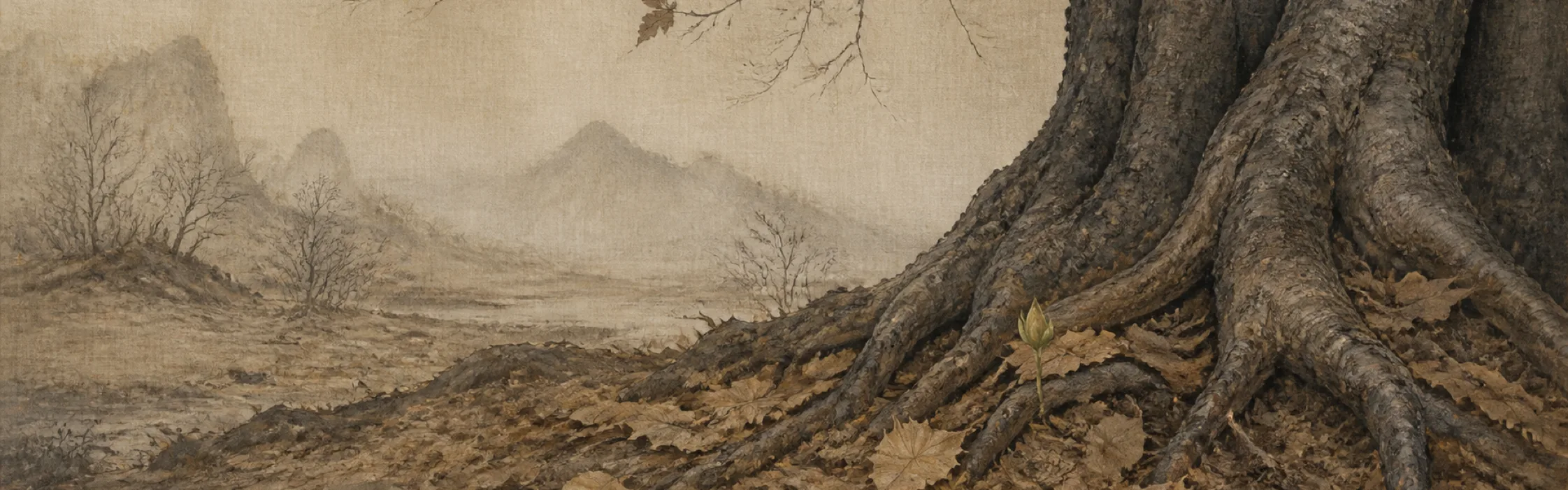
Chapter 16 — Returning to the Root

Classical text

致虚极,守静笃。万物并作,吾以观复。夫物芸芸,各复归其根。归根曰静,是谓复命。复命曰常,知常曰明。不知常,妄作凶。知常容,容乃公,公乃全,全乃天,天乃道,道乃久,没身不殆。

Original rendering

Reach the utmost openness; guard stillness deeply. The ten thousand things arise together, and I observe their return. Things flourish in profusion, and each returns to its root. Returning to the root is called stillness; this is returning to one’s allotment. Returning to one’s allotment is called the constant. Knowing the constant is clarity; not knowing it leads to reckless action and misfortune. Knowing the constant brings capacity; capacity brings impartiality; impartiality brings wholeness; wholeness accords with heaven; heaven accords with the Tao; the Tao endures. Through the end of the body, there is no danger.

Beginner’s guide

The “constant” is not an unchanging object but the reliability of transformation and return. Clarity comes from expecting cycles without becoming careless about consequences. Capacity grows because we no longer need every phase to continue forever.

Key ideas

  • Stillness helps reveal change rather than deny it.

  • Return and recovery belong to every sustainable cycle.

  • Seeing impermanence can enlarge patience and fairness.

Reading it in modern life

Build recovery into training and work instead of waiting for collapse. When an emotion is intense, name its present reality without declaring it permanent. Review a completed project to see what should end, what should be carried forward, and what can return to rest.

A question to carry

What is trying to return to its root, and am I allowing the cycle to complete?


Continue reading the complete Tao Te Ching overview, Chapter 15 or continue to Chapter 17.