Chapter 54 — Cultivation from Self to World

第五十四章 修之于身

Lasting culture begins with what is planted well enough not to be uprooted. The chapter then traces cultivation from person to family, community, state, and world. Each wider circle tests and enlarges virtue; none can be replaced by announcing universal ideals while neglecting conduct close at hand.
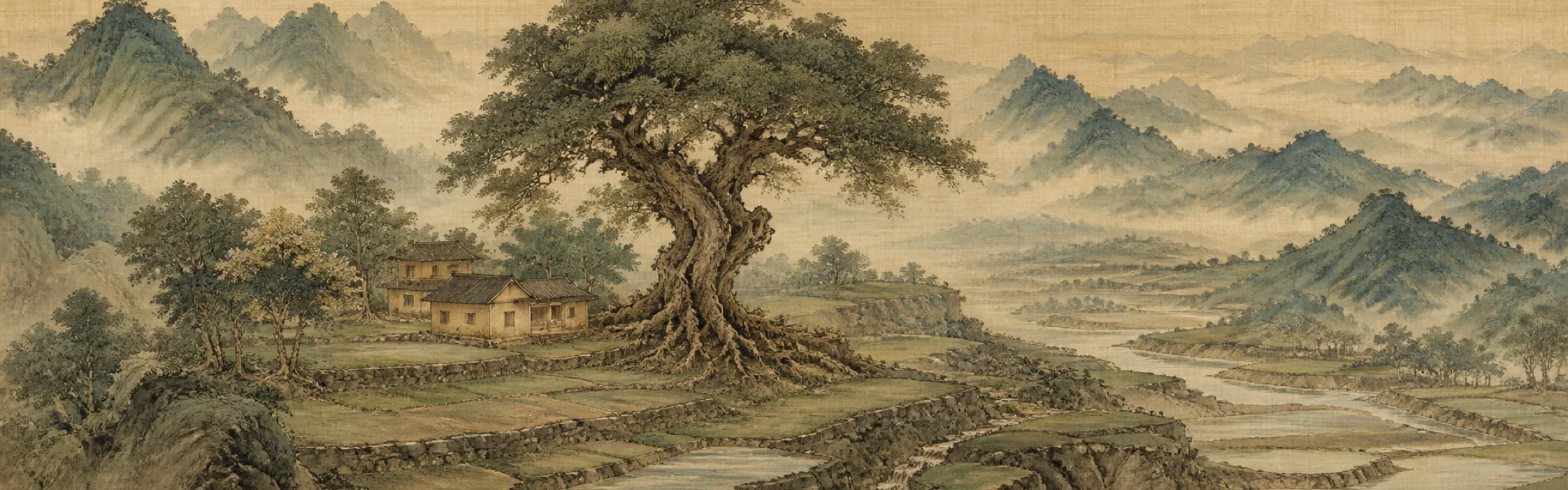
Chapter 54 — Cultivation from Self to World

Classical text

善建者不拔,善抱者不脱,子孙以祭祀不辍。修之于身,其德乃真;修之家,其德乃余;修之乡,其德乃长;修之国,其德乃丰;修之天下,其德乃普。故以身观身,以家观家,以乡观乡,以国观国,以天下观天下。吾何以知天下然哉?以此。

Original rendering

What is well established cannot be uprooted; what is well held cannot slip away, and descendants will continue the ancestral rites. Cultivate it in the person and virtue becomes genuine; cultivate it in the family and virtue overflows; cultivate it in the community and virtue endures; cultivate it in the state and virtue becomes abundant; cultivate it in the world and virtue becomes universal. Therefore observe persons through the person, families through the family, communities through the community, states through the state, and the world through the world. How do I know the world is so? Through this.

Beginner’s guide

The nested circles are not a claim that one model should be imposed everywhere. The final lines ask us to observe each scale through its own reality. Cultivation begins personally but must learn how responsibility changes as relationships widen.

Key ideas

  • Durable practice needs roots, not temporary enthusiasm.

  • Virtue expands through actual relationships and institutions.

  • Each scale must be understood in its own conditions.

Reading it in modern life

Make a personal principle visible in household routines, team practices, and public decisions. Test whether values survive when responsibility widens. Before offering universal advice, examine whether it works in the lived setting where it will be applied.

A question to carry

How does the principle I claim personally appear in the next wider circle of my life?


Continue reading the complete Tao Te Ching overview, Chapter 53 or continue to Chapter 55.