Chapter 27 — Leaving No One Behind

第二十七章 无弃人,无弃物

Mastery is shown not by visible complication but by fitness so complete that little waste remains. The sage applies this care to people and materials: no person is reduced to a disposable failure, and no thing is discarded before its remaining use is understood. Learning moves in both directions between the skilled and unskilled.
Chapter 27 — Leaving No One Behind

Classical text

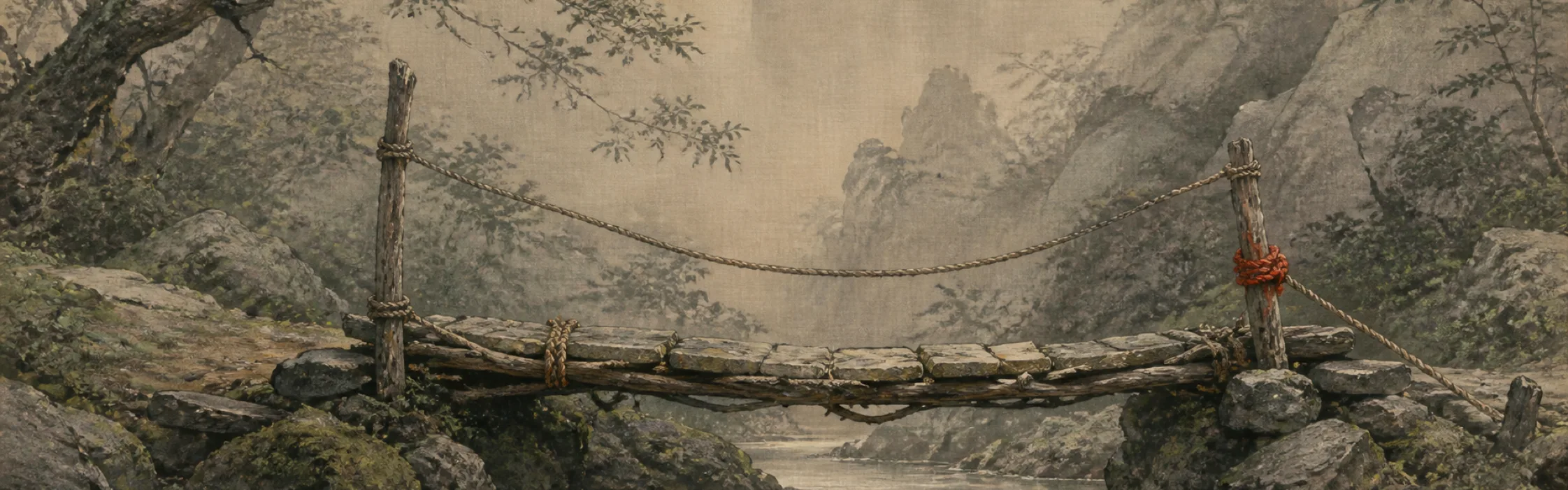
善行无辙迹;善言无瑕谪;善数不用筹策;善闭无关楗而不可开;善结无绳约而不可解。是以圣人常善救人,故无弃人;常善救物,故无弃物,是谓袭明。故善人者,不善人之师;不善人者,善人之资。不贵其师,不爱其资,虽智大迷,是谓要妙。

Original rendering

Good travelling leaves no track; good speech leaves no flaw to accuse; good reckoning needs no counting rods. A good closure has no bolt, yet cannot be opened; a good binding has no rope, yet cannot be untied. Therefore the sage is always good at rescuing people and so abandons no one, always good at rescuing things and so wastes nothing. This is called following illumination. The good person is the teacher of the not-good; the not-good person is material for the good person’s learning. Fail to honour the teacher or care for the material, and even with intelligence there is great confusion. This is called the essential subtlety.

Beginner’s guide

“No discarded person” does not remove boundaries or consequences. It refuses the belief that someone’s present failure exhausts their human possibility. Likewise, seeing another’s mistakes as learning material should never turn that person into an object of contempt.

Key ideas

  • Mastery reduces waste and unnecessary trace.

  • Every person has capacity beyond a present label.

  • Teachers and learners depend upon one another.

Reading it in modern life

Correct harmful behaviour clearly while leaving a path back to trust. Before replacing equipment or systems, identify what can be repaired, reassigned, or learned from failure. When mentoring, notice what the beginner reveals about assumptions experts no longer see.

A question to carry

Who or what have I labelled useless before understanding the remaining possibility?


Continue reading the complete Tao Te Ching overview, Chapter 26 or continue to Chapter 28.