Chapter 15 — The Ancient Masters

第十五章 古之善为士者

The cultivated person is described through images rather than credentials. Careful as someone crossing a winter river, respectful as a guest, loosening like thawing ice, plain as uncarved wood, open as a valley, and willing to appear unclear like muddy water. Depth does not rush to advertise certainty.
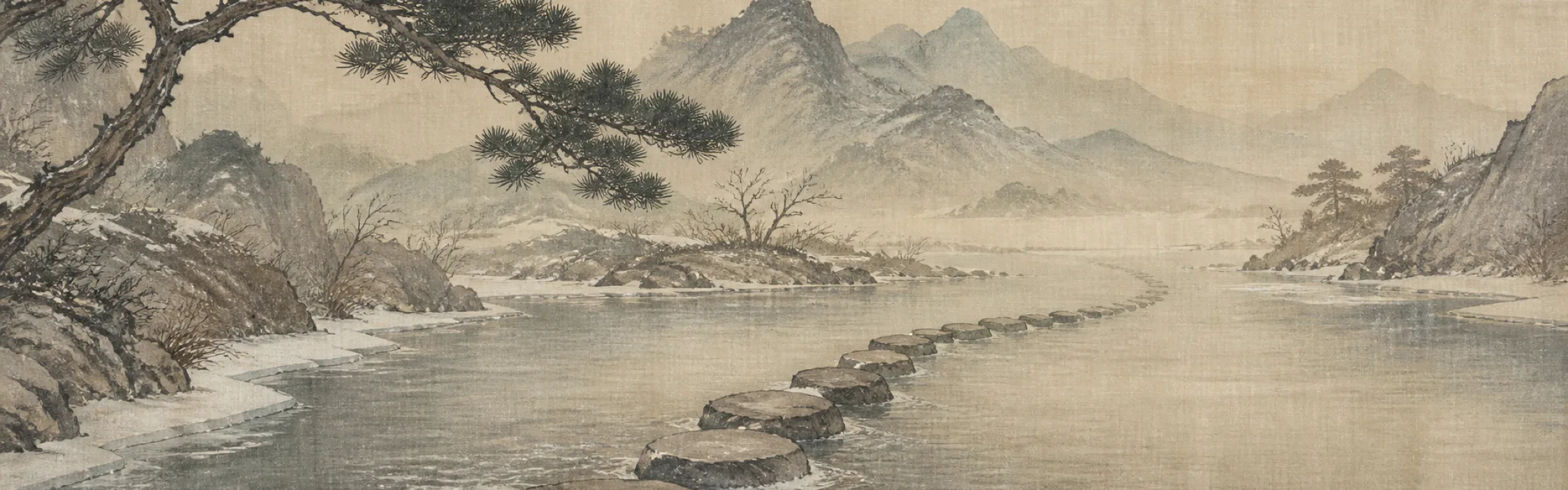
Chapter 15 — The Ancient Masters

Classical text

古之善为士者,微妙玄通,深不可识。夫唯不可识,故强为之容:豫兮若冬涉川;犹兮若畏四邻;俨兮其若客;涣兮若冰之将释;敦兮其若朴;旷兮其若谷;混兮其若浊。孰能浊以静之徐清?孰能安以久动之徐生?保此道者不欲盈。夫唯不盈,故能蔽而新成。

Original rendering

Those of old who were skilled in the Tao were subtle, mysterious, penetrating, and too deep to be known. Because they could not be known, we can only describe their appearance: cautious, as if crossing a river in winter; alert, as if aware of neighbours on every side; dignified, like a guest; yielding, like ice about to melt; genuine, like uncarved wood; open, like a valley; blended, like muddy water. Who can remain still in muddiness until it slowly clears? Who can remain at rest and, through long movement, slowly come to life? Those who keep this Tao do not wish to be full. Because they are not full, they can wear with age and yet be renewed.

Beginner’s guide

Muddy water clears when it is not continually stirred. This is not a rule to delay every decision, but a reminder that agitation often makes perception worse. Not being “full” means leaving room to learn, change, and be renewed rather than defending a completed identity.

Key ideas

  • Maturity may look cautious and ordinary rather than impressive.

  • Stillness allows confused conditions to settle.

  • Remaining incomplete keeps learning and renewal possible.

Reading it in modern life

After receiving upsetting news, wait until the first surge passes before sending a message. Enter unfamiliar communities as a guest. State what you know without pretending to know what has not yet become clear. Let an old role loosen when new circumstances require a different response.

A question to carry

What might become clear if I stopped stirring the situation for a while?


Continue reading the complete Tao Te Ching overview, Chapter 14 or continue to Chapter 16.