Chapter 64 — Careful at the End as at the Beginning

第六十四章 慎终如始

The famous tree, tower, and journey images place great achievement inside tiny beginnings. Prevention is easiest before a pattern hardens. Yet the chapter also looks at the other end: people often fail when almost finished because attention relaxes and grasping replaces care.
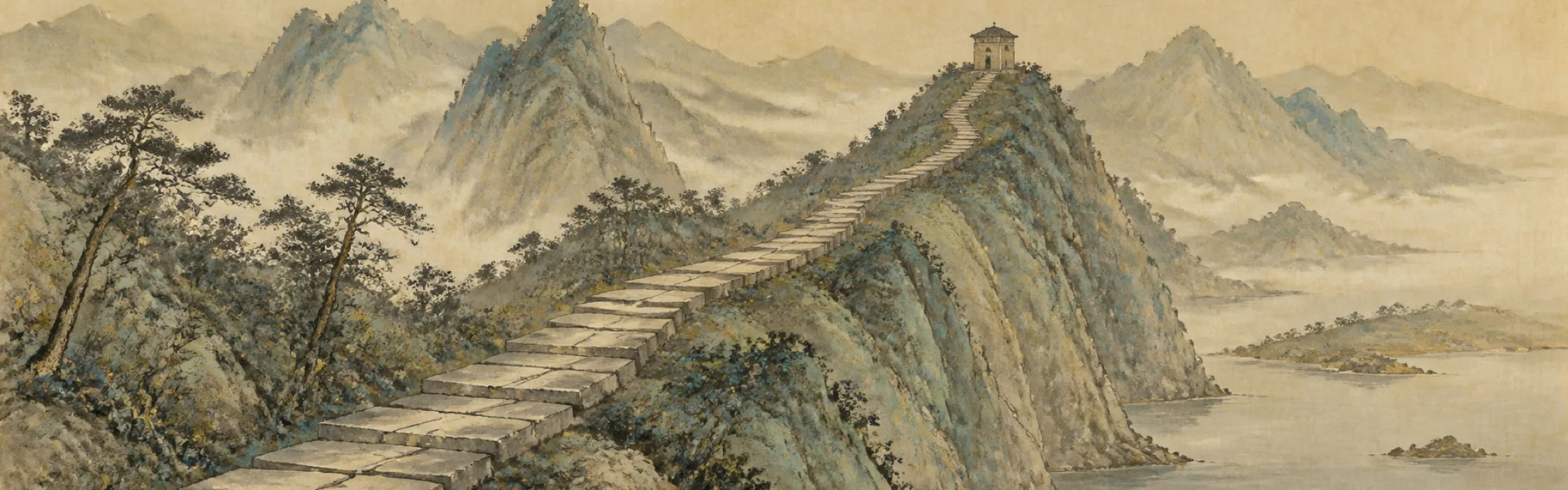
Chapter 64 — Careful at the End as at the Beginning

Classical text

其安易持,其未兆易谋;其脆易泮,其微易散。为之于未有,治之于未乱。合抱之木,生于毫末;九层之台,起于累土;千里之行,始于足下。为者败之,执者失之。是以圣人无为故无败,无执故无失。民之从事,常于几成而败之。慎终如始,则无败事。是以圣人欲不欲,不贵难得之货;学不学,复众人之所过,以辅万物之自然而不敢为。

Original rendering

What is settled is easy to hold; before signs appear, it is easy to plan. What is brittle is easy to break; what is minute is easy to disperse. Act before something exists; bring order before disorder appears. A tree wider than two arms grows from a tiny shoot; a nine-storey tower rises from heaps of earth; a journey of a thousand miles begins beneath the feet. Those who manipulate spoil; those who grasp lose. The sage therefore does not force and so does not spoil, does not grasp and so does not lose. People often fail in affairs when close to completion. Be as careful at the end as at the beginning, and affairs will not fail. Thus the sage desires freedom from craving, does not prize rare goods, learns to unlearn, and returns to what people pass by—supporting the natural development of all things without daring to force it.

Beginner’s guide

Non-forcing does not cancel preparation; it begins earlier and more gently. ‘Learning to unlearn’ means revisiting assumptions and recovering what clever pursuit overlooked. The goal is to support development, not seize it at the final moment.

Key ideas

  • Prevention is lightest before a pattern hardens.

  • Large achievements grow through tiny repeated actions.

  • Completion needs as much care as beginning.

Reading it in modern life

Create maintenance routines before failure. At ninety percent complete, review with fresh attention instead of rushing to claim the result. Ask which assumption must be unlearned and what ordinary detail everyone has walked past.

A question to carry

Where am I close enough to completion that I am becoming careless or possessive?


Continue reading the complete Tao Te Ching overview, Chapter 63 or continue to Chapter 65.