Chapter 8 — The Goodness of Water

第八章 上善若水

Water is one of the book’s clearest images of effective gentleness. It nourishes without demanding attention, adapts to the ground it meets, and willingly enters low places. Yet water is not weak in the ordinary sense: over time it shapes valleys, carries weight, and finds a way around what cannot be moved directly.
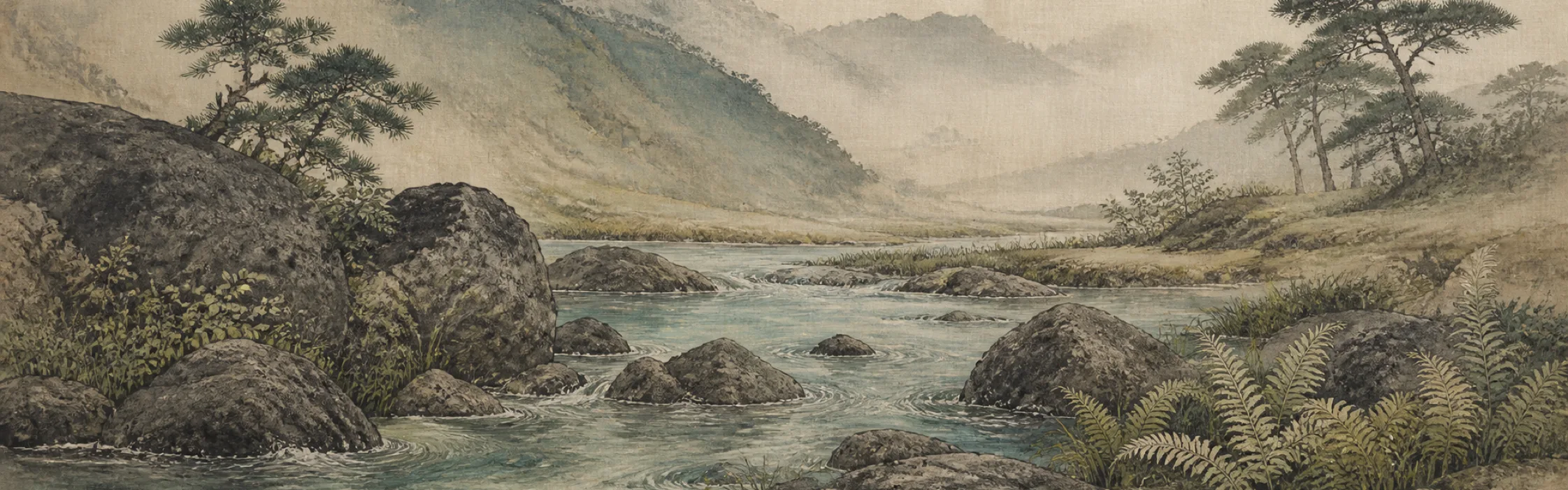
Chapter 8 — The Goodness of Water

Classical text

上善若水。水善利万物而不争,处众人之所恶,故几于道。居善地,心善渊,与善仁,言善信,政善治,事善能,动善时。夫唯不争,故无尤。

Original rendering

The highest goodness is like water. Water is good at benefiting the ten thousand things without contending. It settles in places that people dislike, and so it comes close to the Tao. In dwelling, value the fitting ground; in mind, value depth; in giving, value humane care; in speech, value trust; in governing, value order; in affairs, value ability; in movement, value the right time. Because there is no contention, there is no blame.

Beginner’s guide

The chapter does not ask everyone to yield in every situation. It offers criteria for action: choose the right place, deepen the mind, keep speech reliable, develop real skill, and respect timing. Non-contention means not creating an unnecessary contest where useful work could flow another way.

Key ideas

  • Gentleness can be persistent and highly effective.

  • Fit the action to place, capacity, and time.

  • Benefit does not require constant recognition.

Reading it in modern life

When a direct argument will only harden resistance, change the channel: ask a better question, adjust the timing, or demonstrate a workable example. Build expertise quietly so that you can respond when needed. Take an unglamorous role if it is where you can genuinely help the whole.

A question to carry

Where could I flow around resistance without abandoning the purpose?


Continue reading the complete Tao Te Ching overview, Chapter 7 or continue to Chapter 9.