Chapter 77 — The Way of Heaven Is Like a Bow

第七十七章 损有余补不足

Drawing a bow lowers what is high and raises what is low until tension becomes useful. Laozi sees a similar balancing movement in heaven. Human systems often reverse it, taking from those with least reserve to add to those already possessing excess.
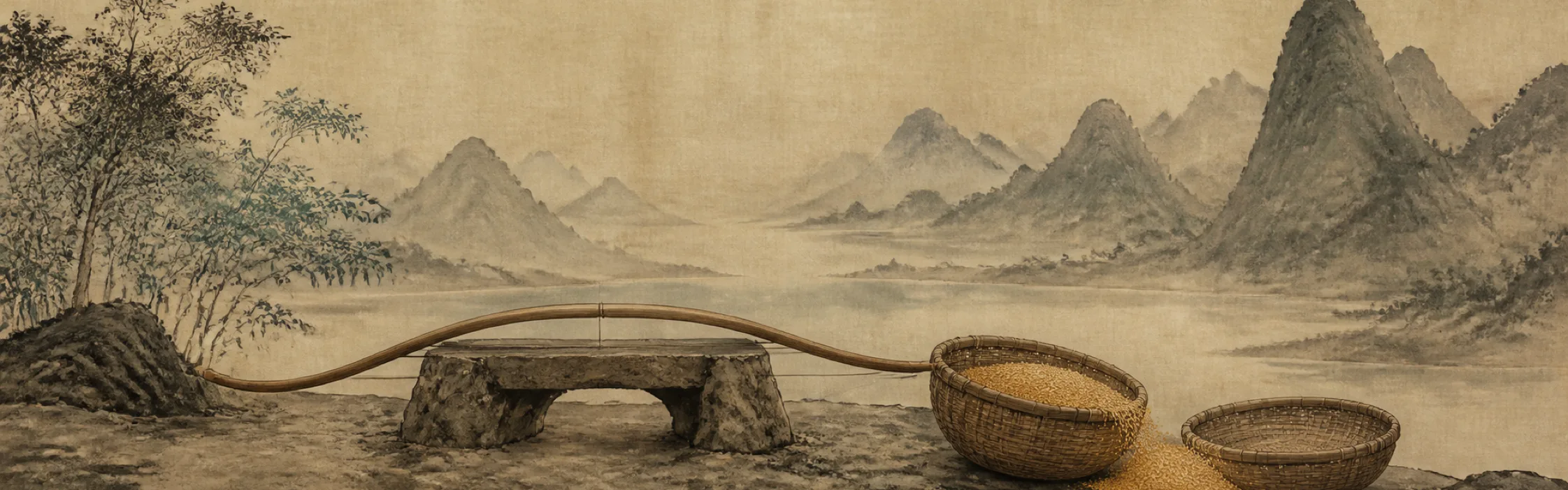
Chapter 77 — The Way of Heaven Is Like a Bow

Classical text

天之道,其犹张弓欤?高者抑之,下者举之;有余者损之,不足者补之。天之道,损有余而补不足。人之道则不然,损不足以奉有余。孰能有余以奉天下?唯有道者。是以圣人为而不恃,功成而不处,其不欲见贤。

Original rendering

Is not the Way of heaven like drawing a bow? What is high is lowered; what is low is raised. What has excess is reduced; what is insufficient is supplemented. The Way of heaven reduces excess and supports insufficiency. The human way is often otherwise: it takes from the insufficient to offer to those with excess. Who can use abundance to serve the world? Only one who has the Tao. Thus the sage acts without depending on the action, completes the work without dwelling in it, and does not wish to display superiority.

Beginner’s guide

Balance here is not forced sameness. Like a bow, different parts retain distinct positions while tension is adjusted for the whole to work. The ethical question is whether surplus serves life or merely protects accumulated advantage.

Key ideas

  • Healthy balance responds to excess and insufficiency.

  • Systems reveal their ethics through where resources flow.

  • Giving is most trustworthy when it does not purchase domination.

Reading it in modern life

Direct surplus money, time, space, or knowledge toward real shortages. Check whether fees and rules take most from those least able to absorb them. Share resources without using help to demand permanent loyalty.

A question to carry

What excess under my care could relieve a genuine insufficiency?


Continue reading the complete Tao Te Ching overview, Chapter 76 or continue to Chapter 78.