WUDANG TAIJIQUAN · 武当太极拳

Jade Maiden Works the Shuttles (Yunü Chuansuo): Four-Corner Diagonal Stepping and Rolling Ward-Off in Wudang Taijiquan 玉女穿梭:武当太极拳的四角斜行步法、滚掤护顶与穿梭推掌要法

A comprehensive biomechanical guide to Yunü Chuansuo (玉女穿梭) in traditional Wudang Taijiquan, detailing four-corner diagonal footwork (Si Yu), threading palm into rolling overhead Ward-Off (Gunbupeng), and waist-rooted shuttle palm release.


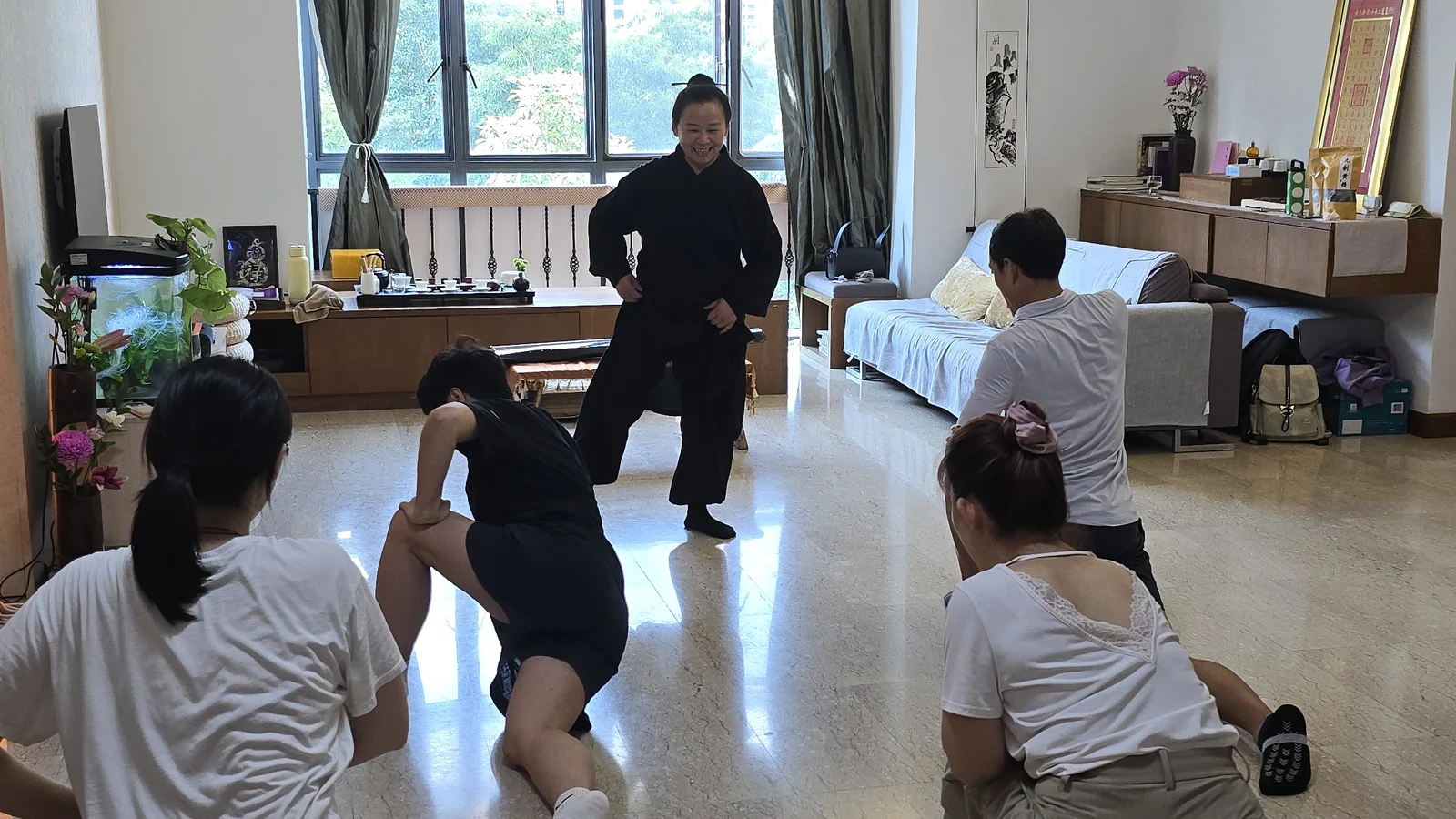
A Wudang taijiquan lesson in a sunlit room: students seen from behind kneel into deep lunges to open the hips while a teacher in black Taoist-style clothing stands in a wide stance, smiling, with an ink-painting scroll on the wall behind.

The Loom-Shuttle Metaphor and Four-Corner Spatial Geometry (Si Yu)

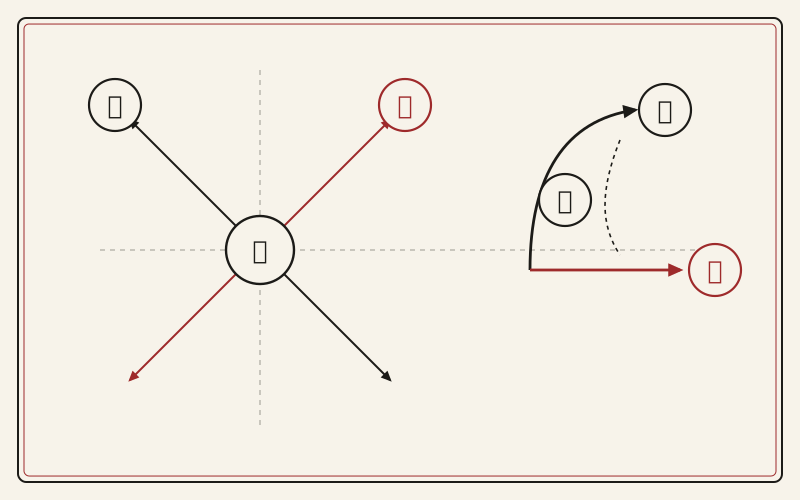
Among the classical postures shared across traditional Wudang Taijiquan and the thirteen-posture canon described in Wang Zongyue's Taijiquan Lun (太极拳论, Taoist & Internal Martial Classics), 'Jade Maiden Works the Shuttles' (Yunü Chuansuo, 玉女穿梭) stands out as the primary training ground for multi-directional diagonal transitions. The name evokes a skilled weaver passing a wooden shuttle briskly back and forth through the warp threads of a loom: the body pivots smoothly through the four diagonal corners (Si Yu, 四隅—typically thirty to forty-five degrees off the cardinal axis) while the arms thread, roll upward to deflect overhead, and emit forward in one continuous breath. Rather than retreating linearly when surrounded, the practitioner uses circular stepping (Hooking Step Koubu and Swinging Step Baibu) to slip to the outside angle of an incoming line of force.

Upper-Limb Mechanics: From Chuanzhang Threading to Rolling Ward-Off (Gunbupeng)

Each corner sequence begins with a subtle gathering at the waist and a threading palm (Threading Palm Chuanzhang Guide). As the rear foot hooks in (Koubu, 扣步) and the lead foot steps out to the new diagonal corner, the lead forearm threads upward along the inside of the partner's arm or beneath the opposite elbow. As the bow stance (Gongbu, 弓步) settles, that rising forearm rotates outward along its longitudinal axis (Chansijin, 缠丝劲) into an arc positioned slightly above and in front of the forehead—known in traditional manuals as rolling Ward-Off (Gunbupeng, 滚步掤 or 架掤). Critically, this upper arm is never locked flat or pressed backward over the crown; the elbow remains slightly lower than the wrist, the scapula sinks into the back (Chenjian Zhuizhou, 沉肩坠肘), and the forearm maintains an outward expanding curve that deflects descending or high-line force away to the side.

Jade Maiden Works the Shuttles (Yunü Chuansuo): Four-Corner Diagonal Stepping and Rolling Ward-Off in Wudang Taijiquan

Four-corner footwork and upper-limb coordination of Wudang Yunü Chuansuo (Jade Maiden Works the Shuttles): ① Central Zhongding pivot and Koubu / Baibu corner transitions across the four diagonal directions (Four Corners / Si Yu), ② First diagonal shuttle (Southeast / Northwest corner bow stance), ③ Second diagonal shuttle across the opposite axis, ④ Threading forearm upward along the centerline (Chuanzhang) evolving into rolling overhead Ward-Off (Gunbupeng), ⑤ Simultaneous waist-driven palm push (An / Tui) at chest level, and ⑥ Mutual Yin-Yang opposition between the upper canopy forearm and forward emitting palm.

The Shuttle Strike: Waist-Driven Palm Push and Upper-Lower Opposition

Simultaneously with the outward roll of the upper guarding forearm, the opposite hand—which has coiled beside the hip or lower ribs much like the preparation in White Snake Spits Its Tongue and Green Dragon Emerges from the Water—travels straight forward along the diagonal line at chest level like a weaver's shuttle shooting through the frame. The wrist sits softly (Zuowan, 坐腕) with the fingers pointing upward and the palm center (Laogong, 劳宫) slightly hollowed. Power is generated not by straightening the elbow in isolation, but by the mutual pull-and-push opposition (Dui La Ba Chang, 对拉拔长) between the upper forearm rolling upward-outward and the forward palm pressing forward-downward from the rear heel and waist.

Across the four shuttles of the sequence, the practitioner alternates between ninety-degree adjacent corner turns and one-hundred-eighty-degree opposite diagonal reversals. Beginners frequently lose balance during the long reversal by spinning on the ball of the foot or letting the knees collapse inward. In the Wudang Taijiquan curriculum (and introduced in our Start Here guide), every pivot must first fold into the rear hip crease (Kwa, 胯) to empty the turning foot completely before hooking or swinging the toe to the new corner. Keep the gaze level toward the emerging corner before the hands arrive, ensuring that spirit leads movement and the vertical axis (Zhongding, 中定) stays calm amidst rapid directional change.

Seeker’s Q&A · Frequently Asked Questions

What is the key structural alignment in Jade Maiden Works the Shuttles (Yunü Chuansuo)?

A comprehensive biomechanical guide to Yunü Chuansuo (玉女穿梭) in traditional Wudang Taijiquan, detailing four-corner diagonal footwork (Si Yu), threading palm into rolling overhead Ward-Off (Gunbupeng), and waist-rooted shuttle palm release.
