WUDANG TAIJIQUAN · 武当太极拳

Snake Creeps Down (Xiashi / Pubu) in Wudang Taijiquan: Safe Drop-Stance Mechanics, Threading the Palm & High-to-Low Adaptations 武当太极拳“下势(仆步穿掌)”详解:松胯坐根、顺胫穿掌与高中低三阶护膝练法

How to transition from Single Whip into the low Drop Stance without twisting your supporting knee—and why choosing the right stance height builds leg strength and hip mobility at every age.

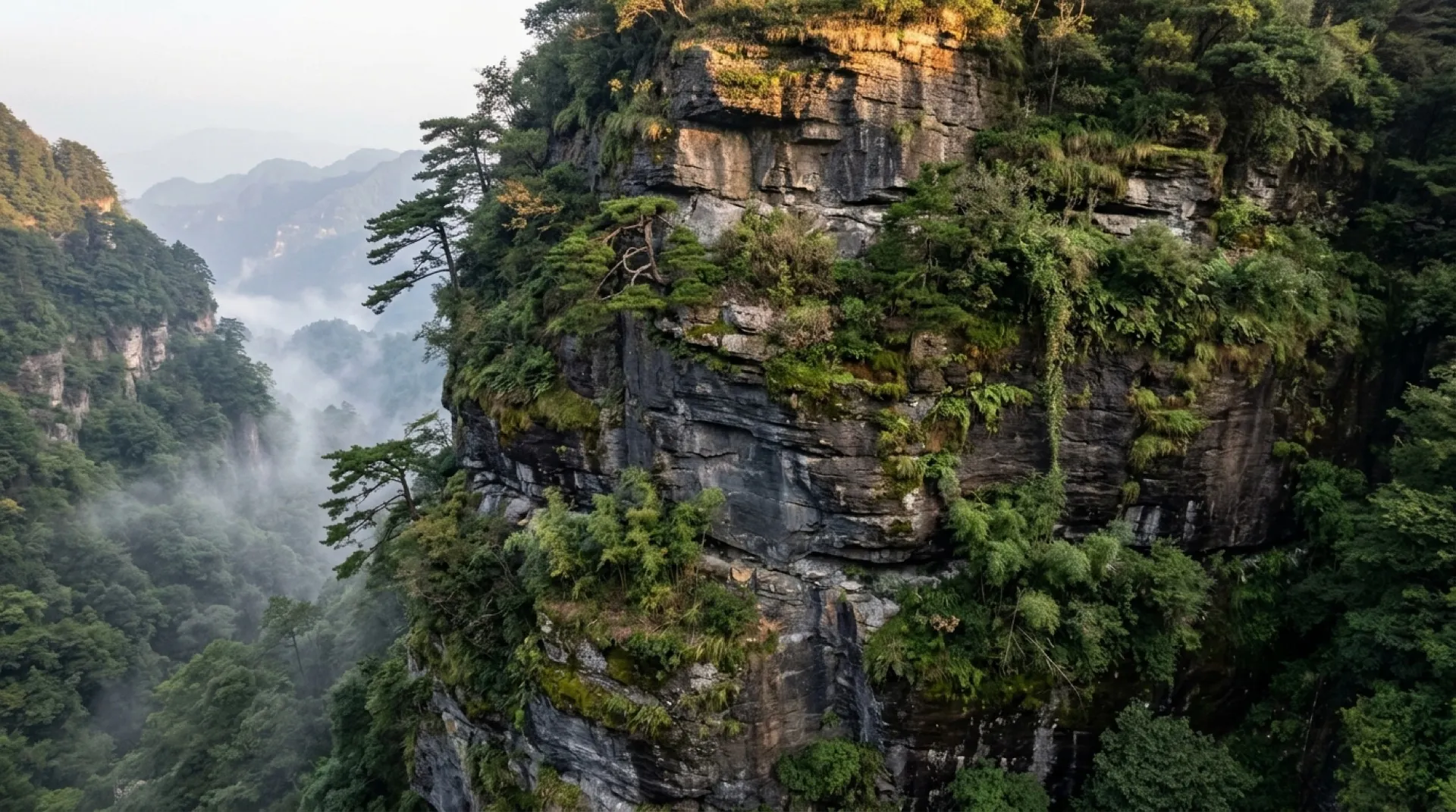
A sheer layered cliff face hung with ferns and pines above a misty gorge.

Among all the postures of Wudang Taijiquan, none looks more dramatic—or intimidates new students more—than “Snake Creeps Down” (下势, Xiashi, also called Pubu Chuanzhang 仆步穿掌, “Drop Stance with Threading Palm”). Developing directly out of Single Whip (Danbian) and rising immediately into Golden Rooster Stands on One Leg (Jinji Duli), this posture coils the body close to the earth before springing tall into a single-leg stand.

Yet in authentic Wudang transmission, Xiashi is never a flexibility contest to see who can force their hips lowest at the expense of their knees or lower back. Whether you practise at high, medium, or low height, the internal principles remain identical.

1. Structural Anatomy of Snake Creeps Down (下势仆步)

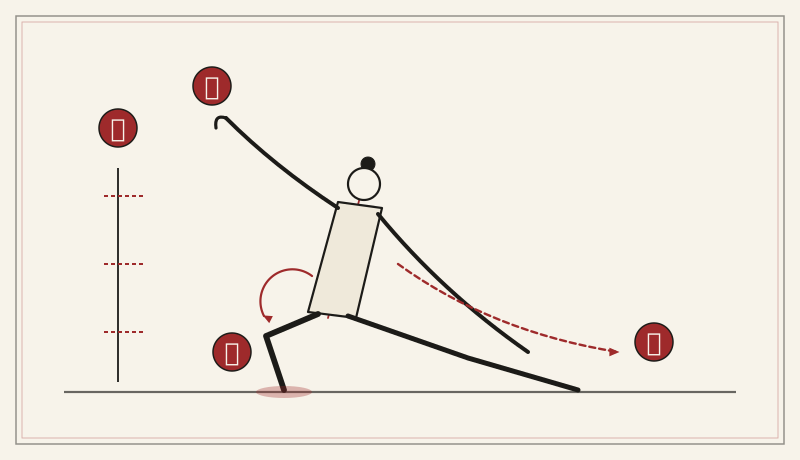
Classical ink-and-cinnabar diagram of Wudang Taijiquan Snake Creeps Down (Xiashi Pubu) showing the three progressive height levels on the left, the deeply rooted rear hip and aligned knee, the raised rear beak-hand counterbalance, and the lead palm threading along the front shin

Four structural pillars of Snake Creeps Down (武当太极拳“下势”仆步穿掌四维图解).

  1. Three Progressive Stance Heights (高中低三阶仆步 · 量力而行): choose High, Medium, or Low depth so your spine stays long and your supporting knee remains completely pain-free
  2. Folding the Rear Hip & Aligning Knee with Toes (坐胯沉根 · 膝尖对脚尖): sit back into the rear hip crease (just as in Haidizhen) while keeping the rear heel glued to the floor and the knee tracking strictly over the rear toes
  3. Rear Beak-Hand Counterbalance (后勾手高举 · 上下相称): the rear hook-hand stays elevated behind and above the shoulder, counterbalancing the low front leg so the chest never collapses
  4. Threading the Snake Palm Along the Inner Shin (顺胫穿掌 · 由下而上): the lead palm glides down the torso and threads forward along the inside of the extended front leg, preparing to shift weight forward into Golden Rooster

2. Why “Sitting into the Rear Hip” Protects the Supporting Knee

Echoing Chapter 26 of the Tao Te Ching (Dao De Jing)—“The heavy is the root of the light” (重为轻根)—two biomechanical rules make Xiashi safe and powerful:

  • Never let the rear knee cave inward (忌跪膝内扣): As you shift weight back from Single Whip, open the rear groin (Kua 胯) so the rear knee points in the exact same direction as your rear toes. If the rear knee collapses inward toward the midline, shear stress falls on the medial meniscus.
  • Sit the hips backward rather than pushing the knee forward: Think of sitting back onto a low wooden stool behind your rear heel while your extended front leg acts like a quiet anchor on the ground (Empty and Full).

3. How to Transition Smoothly from Snake Creeps Down into Golden Rooster

Many students get “stuck at the bottom” of Xiashi and have to heave their torso upward to stand up. Use this three-beat Wudang transition:

  1. Turn the front toes slightly outward (45 degrees) as your palm threads forward: Before shifting your weight forward, open the extended front foot 45 degrees so the front hip socket can receive your weight cleanly.
  2. Push from the rear leg through the waist (Six Harmonies): Shift your center horizontally from the rear foot onto the front foot first—do not stand straight up while still weighted on the back leg!
  3. Rise on the front leg as the rear knee lifts into Jinji Duli: Once the front foot is 100% full, press the ground downward and let the crown float effortlessly to the sky.
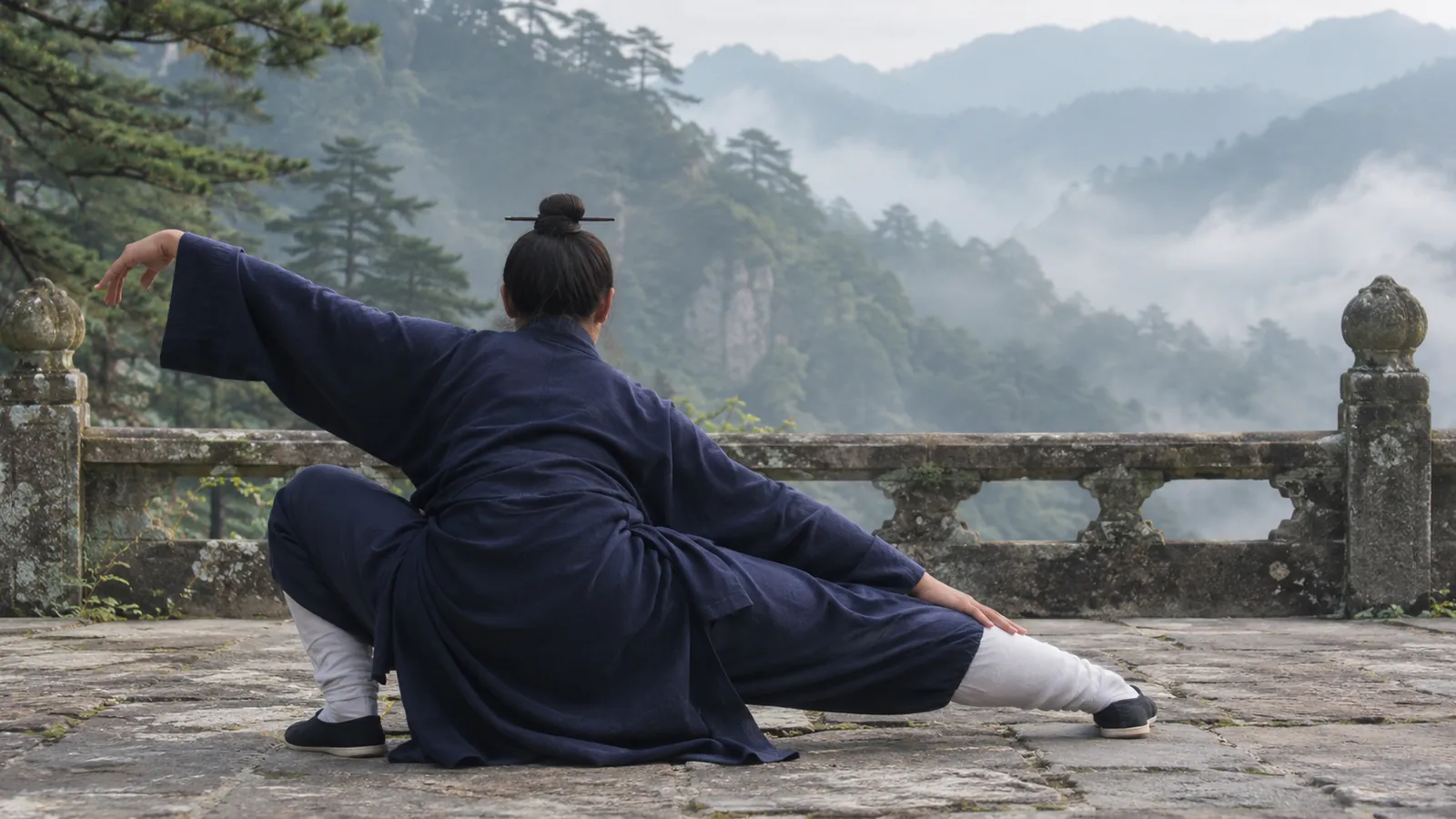
A practitioner in dark indigo Taoist robes and white cotton leg wraps seen from behind in a deep low Snake Creeps Down (Xiashi) stance of Wudang Taijiquan, one leg extended along the flagstones and one arm raised, on a stone mountain terrace above morning mist.

Snake Creeps Down (Xiashi) at dawn: the supporting hip sits deep over a bent leg while the other leg extends flat along the ground.

4. Training Progressive Stance Work Between Wudang Mountain and Singapore

Connecting the authentic martial tradition near Wudang Mountain’s UNESCO World Heritage ancient Taoist temples with our regular classes in Singapore, Wudang.Org tailors stance height to every student’s body and stage of training. Start with Wudang Tai Chi for Beginners, visit Start Here, or join our Singapore Tai Chi Retreat Camp.

Safety note: Always practise Xiashi in a High or Medium stance until your hips and ankles comfortably allow a deeper squat with the rear heel flat on the floor; traditional martial training does not replace medical care.

Seeker’s Q&A · Frequently Asked Questions

What if my hips or knees cannot squat all the way down in Snake Creeps Down (Xiashi)?

Practise a High or Medium stance! In Wudang Taijiquan, keeping the rear heel flat, the rear knee aligned over the toes, and the spine upright in a medium stance is far more beneficial than forcing a low squat with a hunched back.


Why does the rear hand stay raised in a beak-hook (Diaoshou 吊手) during Snake Creeps Down?

The raised rear beak-hand acts as a structural counterweight to your low, extended front leg and threading palm—embodying the Taiji principle “where there is down, there is up; where there is front, there is back.”

How do I stand up from Snake Creeps Down into Golden Rooster without straining my knee?

First turn your extended front toes 45 degrees outward, then shift your weight horizontally forward onto the front foot while staying low, and only rise vertically once your weight is centered over the front foot.
