
WUDANG TAIJIQUAN · 武当太极拳

Needle at Sea Bottom (Haidizhen) and Fan Through the Back (Shantongbei) in Wudang Taijiquan: Folding Sinking, Dorsal Opening, and Up-Down Elasticity 武当太极拳“海底针”与“闪通背”详解:折腰沉采、夹脊开背与高下吞吐身法

Learn the classical linked pair of Needle at Sea Bottom (Haidizhen) and Fan Through the Back (Shantongbei)—how hip-crease folding in an Empty Step (Xubu) coils directly into expansive dorsal power without rounding the spine.

A clear mountain stream running between mossy boulders through bamboo and forest in soft morning light.

1. A Classic Yin-Yang Pair: Extreme Sinking Flowing into Expansive Opening

Throughout traditional Wudang Taijiquan routines, two postures almost always appear as an inseparable sequence: Needle at Sea Bottom (Haidizhen 海底针) followed immediately by Fan Through the Back (Shantongbei 闪通背, also called Shan Tong Bei 扇通背). Together they embody the Chapter 36 principle that “what is about to be expanded must first be gathered”: Haidizhen gathers the body downward into a compact, rooted Empty Step (Xubu), and Shantongbei releases that stored spring upward and forward into a spacious Bow Stance (Gongbu) like a fan unfurling across the upper back.

Practiced together, this pair trains vertical elasticity, single-leg root stability, and the Taijiquan Treatise maxim that “force is rooted in the feet, generated in the legs, governed by the waist, and expressed through the fingers—powered from the spine (li you ji fa 力由脊发).”

2. Needle at Sea Bottom (Haidizhen): Folding the Hip Crease Without Dropping the Head

In Haidizhen, the right hand extends diagonally downward toward the floor in front of the lead toe while the left foot touches lightly on the ball of the foot in an empty step. Beginners frequently make the mistake of bending the upper back and staring straight down at the floor, which collapses the chest and strains the lumbar discs. Traditional Wudang body mechanics correct this through three precise alignments:

  1. Fold at the Hip Creases (Zhekua 折胯), Never Hunch the Spine: As weight shifts 85–90% onto the rear supporting leg, draw both hip creases (kua) deep backward as if sitting onto a high wooden stool (Zhedie folding). The torso inclines forward up to 30 degrees strictly from the hip hinge while the spine from tailbone to crown stays one long, unbroken line.
  2. Suspend the Crown and Look Forward-Downward: Keep the neck gently upright (Xuling Dingjin) with the gaze directed about two meters ahead on the ground—never dropping the head below the heart.
  3. Downward Plucking and Piercing (Cai 采 + Zha 扎): The downward-reaching arm expresses a spiral plucking-and-piercing vector initiated by the waist and shoulder blade rather than leaning body weight onto the front toe.
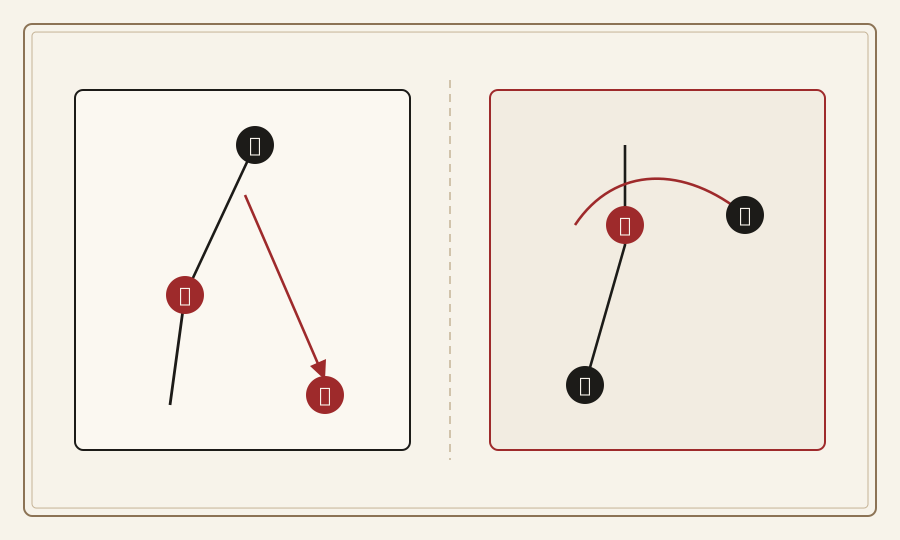
Classical numbers-only diagram contrasting Needle at Sea Bottom on the left (① folded kua hinge, ② straight crown-to-tailbone spine, ③ diagonal downward needle vector) with Fan Through the Back on the right (④ rooted bow stance, ⑤ dorsal Jiaji spinal expansion, ⑥ upper ward-off and forward palm).

Wudang Taijiquan Haidizhen & Shantongbei (numbers-only SVG key): Hip-hinge folding in Empty Step transitioning into dorsal expansion in Bow Stance.

  1. ① Deep Hip-Crease Hinge (Songkua Zhedie): Sitting back into the rear hip crease so the lower back stays flat and supported.
  2. ② Unbroken Crown-to-Tailbone Line: The spine inclines as a single elastic bow without hunching the shoulders or dropping the head.
  3. ③ Diagonal Diving Needle Vector (Haidizhen): Waist-led downward extension past the empty lead foot.
  4. ④ Rooted Bow-Stance Drive: Pushing smoothly from the rear heel through the legs to rise into Shantongbei.
  5. ⑤ Dorsal Expansion Through the Spine (Tongbei / Jiaji): Opening the space between the shoulder blades like an unfurling fan.
  6. ⑥ Split Upper Ward-Off and Forward Palm: One arm frames above the temple while the opposite palm extends forward from the back.

3. Fan Through the Back (Shantongbei): Unfurling Force Through the Shoulder Blades

From the coiled depth of Haidizhen, Shantongbei rises on the next breath: as the lead foot steps forward into a bow stance, the right arm arcs upward to frame above the right temple while the left palm presses calmly forward at chest height. Why is it called “Fan Through the Back” (Tongbei 通背)?

  • Connecting Both Arms Across the Upper Back (Hanxiong Babei 含胸拔背): Rather than pushing with isolated deltoid muscles, the chest softens slightly inward so the thoracic spine (Jiaji 夹脊) and both shoulder blades spread wide like the ribs of an open fan, linking the upper framing hand directly to the forward pressing palm.
  • Vertical-to-Horizontal Elastic Release: Because the hips and spine were cleanly coiled in Haidizhen, rising into Shantongbei feels effortless—the legs lengthen, the waist turns, and the back opens in one continuous wave (Six Harmonies).

4. 5-Minute Solo Linked Drill & Knee/Back Safety Notes

Practice this five-minute linked drill on Wudang Mountain or at home in Singapore: from a left empty step, exhale as you fold the right hip crease back and extend the right fingers diagonally downward to mid-shin height in Haidizhen (keeping your spine long and head upright). Inhale as you lift the right forearm and step the left foot forward; exhale as you settle into a left bow stance and open both arms across the upper back in Shantongbei. Step back and repeat six slow cycles per side.

Safety note: in Haidizhen, never force the fingertips to touch the floor—reaching toward knee or shin height while keeping the spine straight and rear knee aligned with the toes gives the full benefit without straining the lower back or knees. If you have lumbar disc issues or vertigo, practice in a high frame and consult a qualified healthcare professional.

Seeker’s Q&A · Frequently Asked Questions

How low should I bend in Needle at Sea Bottom (Haidizhen) in Wudang Taijiquan?

You should only fold as low as your hip creases (kua) and supporting leg allow while keeping the spine completely straight and the head upright—typically directing the fingertips toward knee or mid-shin level rather than rounding the lower back to touch the floor.


