WUDANG TAIJIQUAN · 武当太极拳

Needle at Sea Bottom (Haidizhen) & Fan Through the Back (Shantongbei): Empty-Stance Folding and Spinal Bow Release in Wudang Taijiquan 海底针与闪通背:武当太极拳的虚步折叠、身弓蓄发与通背劲路详解

A technical study of the paired Wudang Taijiquan postures Haidizhen (海底针) and Shantongbei (闪通背), examining Xubu hip-hinge mechanics, downward Cai-plucking redirection, and full-spine Tongbei expansion.


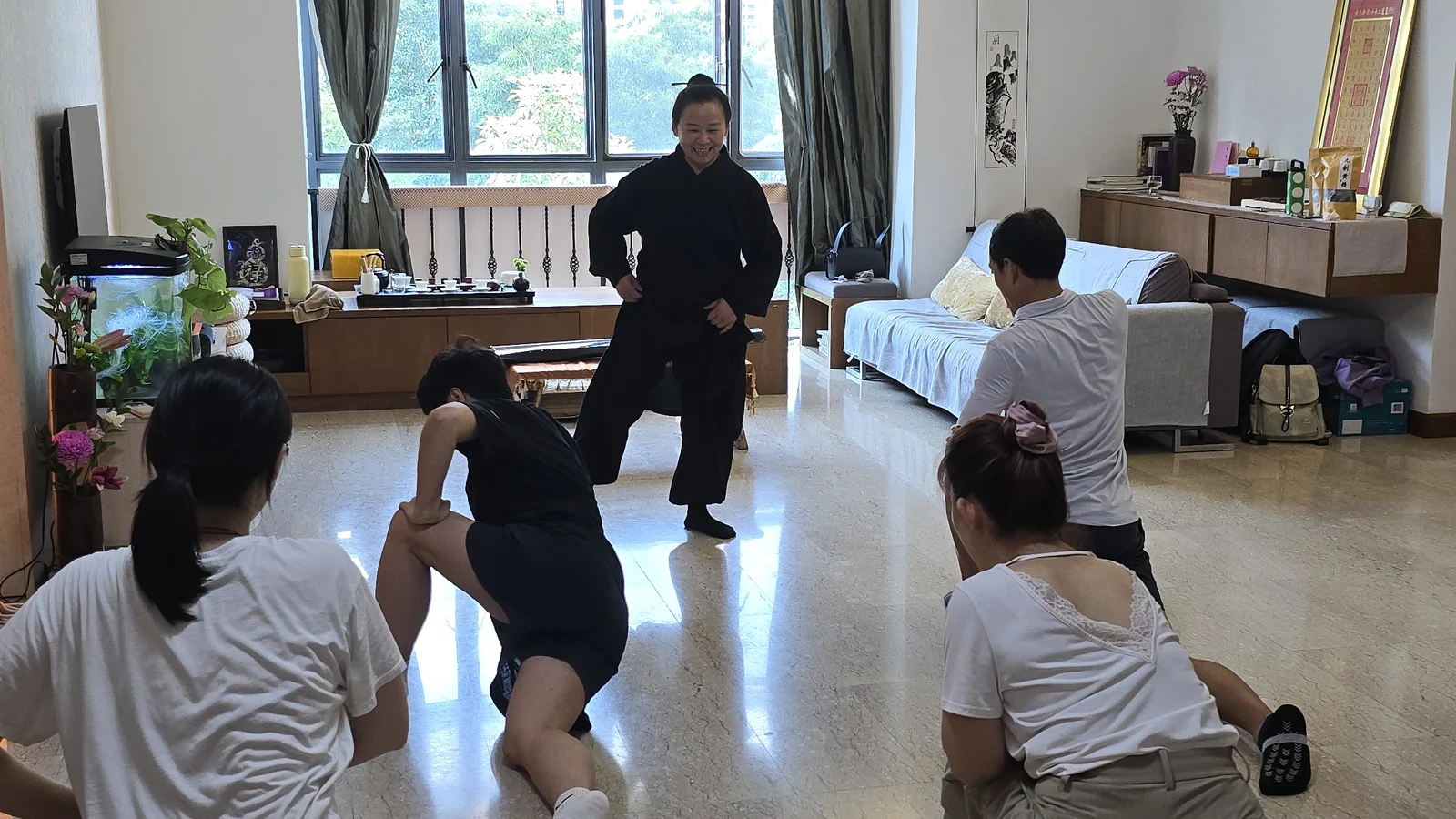
A Wudang taijiquan lesson in a sunlit room: students seen from behind kneel into deep lunges to open the hips while a teacher in black Taoist-style clothing stands in a wide stance, smiling, with an ink-painting scroll on the wall behind.

Extreme Low-to-High Oscillation in the Traditional Wudang Frame

In traditional Wudang Taijiquan forms, 'Needle at Sea Bottom' (Haidizhen, 海底针) and 'Fan Through the Back' (Shantongbei, 闪通背—also written 扇通臂) always appear as an indivisible pair. Together they embody the dynamic balance described in Tao Te Ching Chapter 77 (The Bow of Heaven): Haidizhen folds deeply downward into an empty stance (Xubu, 虚步) to redirect or pluck a low-line or over-extended wrist, and Shantongbei immediately uncoils upward and forward into a long bow stance (Gongbu, 弓步) that releases power through the upper back and scapulae. Practicing the two together trains the practitioner to transition between low gathering (He, 合) and expansive opening (Kai, 开) without breaking spinal alignment.

Haidizhen (海底针): Folding the Kwa Without Collapsing the Spine

Following a half follow-step (Fist Under Elbow and Following Step Genbu Guide) that shifts the weight onto the rear leg, the lead foot touches down lightly on the ball or toe in an empty stance (Xubu). As the rear hip crease (Kwa, 胯) folds deeply backward and the lumbar gate (Mingmen, 命门) expands, the lead hand descends vertically along the centerline with the palm facing inward (Lizhang, 立掌) and fingers pointing sharply downward toward the floor like a diver's needle probing the seabed, while the opposite hand guards near the temple or hip. The critical biomechanical rule is to fold at the hip joints rather than rounding the upper back or dropping the head: the neck and spine remain along one elongated diagonal line so the rear heel bears the load effortlessly.

Needle at Sea Bottom (Haidizhen) & Fan Through the Back (Shantongbei): Empty-Stance Folding and Spinal Bow Release in Wudang Taijiquan

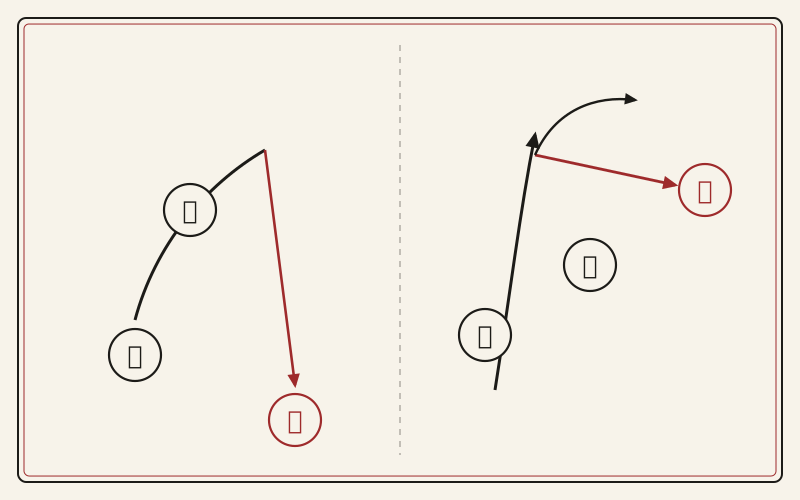
Biomechanical transition from Haidizhen (Needle at Sea Bottom) to Shantongbei (Fan Through the Back): ① Rear-leg sit and deep inguinal fold (Kwa) in Empty Stance (Xubu), ② Elongated spinal bow from Mingmen to Baihui during the downward fold, ③ Vertical sword-finger or vertical-palm downward probe along the centerline (Haidizhen), ④ Stepping forward into Bow Stance (Gongbu) as the spinal bow uncoils upward, ⑤ Upper forearm lifting and deflecting overhead while the lead palm thrusts forward from the back (Shantongbei), and ⑥ Two-way longitudinal expansion connecting the rear heel, Mingmen, and fingertips.

Shantongbei (闪通背): Uncoiling the Spinal Bow and Emitting Through the Back

From the coiled depth of Haidizhen, the practitioner rises smoothly as the lead foot steps out into a bow stance. The rising hand threads upward along the centerline and rotates outward above the forehead—similar to the upper guard in Jade Maiden Works the Shuttles (Yunü Chuansuo)—while the opposite palm presses straight forward at shoulder height. The term Tongbei (通背, 'through the back') indicates that the two arms do not move as separate limbs; instead, the rounding of the chest (Hanxiong, 含胸) and expansion of the upper back (Babei, 拔背) link both shoulder blades across the seventh cervical vertebra (Dazhui, 大椎), transferring ground reaction force from the rear heel directly through the spine into the fingertips.

Gaze Alignment, Breath Timing, and Knee Protection

As outlined in our Start Here guide and the classical manuals preserved in our Taoist & Martial Classics overview, coordinate the breath with the vertical wave of the posture: exhale slowly as the hips fold and the fingertips sink into Haidizhen, inhale during the initial upward uncoiling and step, and exhale again as Shantongbei settles into its final expansion. During Haidizhen, keep the supporting rear knee aligned directly over the rear foot rather than twisting inward, and direct the gaze forward-downward past the descending fingertips rather than staring straight at the floor.

Seeker’s Q&A · Frequently Asked Questions

What is the key structural alignment in Needle at Sea Bottom (Haidizhen) & Fan Through the Back (Shantongbei)?

A technical study of the paired Wudang Taijiquan postures Haidizhen (海底针) and Shantongbei (闪通背), examining Xubu hip-hinge mechanics, downward Cai-plucking redirection, and full-spine Tongbei expansion.
