WUDANG TAIJIQUAN · 武当太极拳

Parting the Wild Horse’s Mane (Yema Fenzong) in Wudang Taijiquan: Holding the Ball, Diagonal Splitting Energy (Lie) and Continuous Bow-Step Flow 武当太极拳“野马分鬃”详解:抱球蓄势、挒劲斜分与连环进步身法

How Wudang Taijiquan uses the image of a galloping horse’sflowing mane to train the transition from coiled spherical storage (Baoqiu) to expansive diagonal Ward-Off and Split (Peng-Lie).

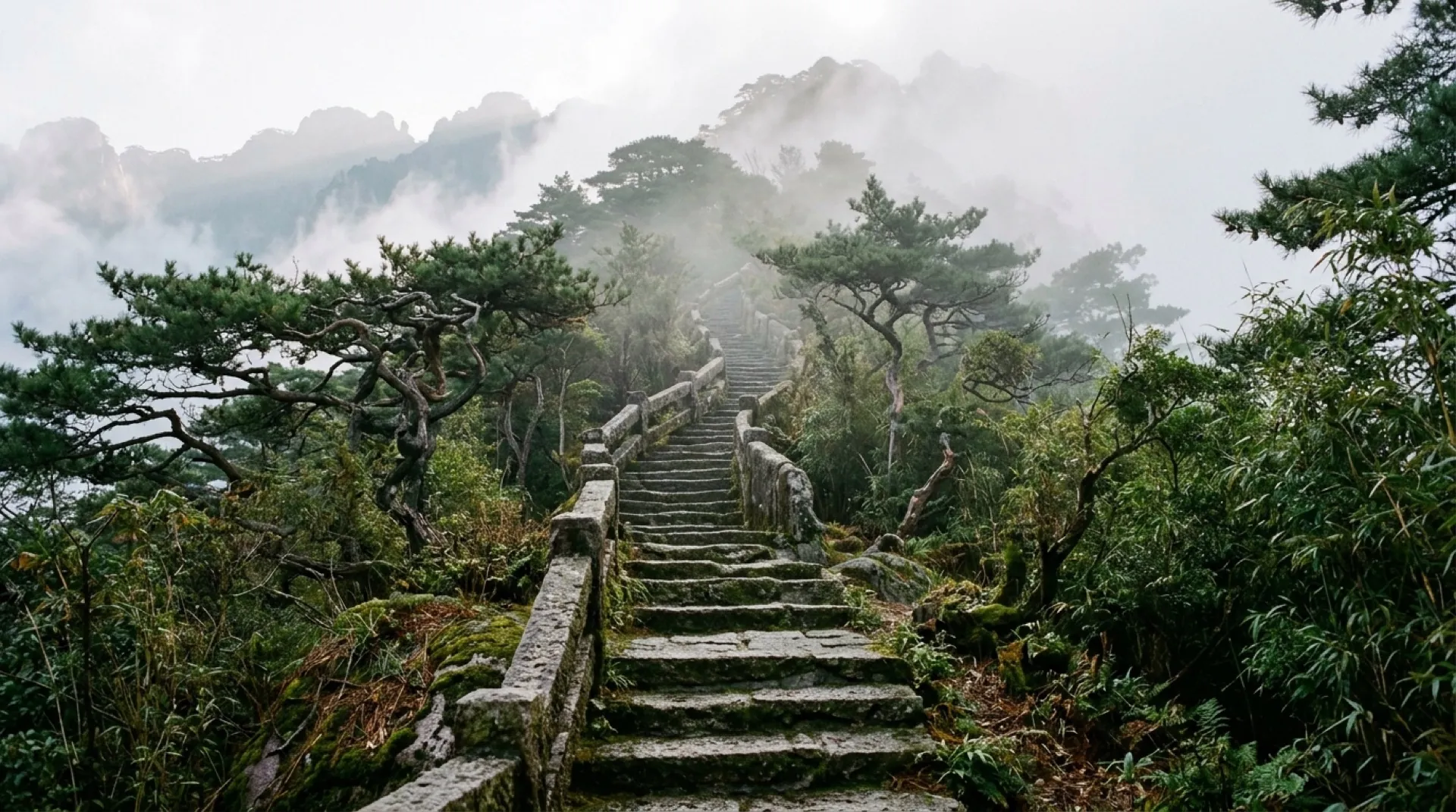
A worn stone stairway with a stone balustrade climbing through twisted pines into the mist.

If Brush Knee and Twist Step (Louxi Aobu) trains cross-body forward pushing and Repulse the Monkey (Daojuanhong) trains spiral retreat, then “Parting the Wild Horse’s Mane” (野马分鬃, Yema Fenzong) is the premier posture in Wudang Taijiquan for training spherical coiling (“Holding the Ball,” 抱球) followed by diagonal splitting expansion (Peng and Lie).

Picture a wild horse galloping across an open plain with its long mane parting smoothly to left and right in the wind: there is nothing stiff or choppy in the movement, yet a tremendous forward momentum carries through the spine and legs.

1. Why “Holding the Ball” (抱球, Baoqiu) Is the Womb of Taiji Transitions

Echoing Chapter 42 of the Tao Te Ching (Dao De Jing)—“The ten thousand things carry Yin on their backs and embrace Yang in their arms, blending vital breath to achieve harmony” (万物负阴而抱阳,冲气以为和)—every cycle of Yema Fenzong begins by gathering the two hands into a living sphere in front of the torso:

  • When coiled over the right hip, the right palm rests above (at chest height, palm facing down) and the left palm rests below (at navel/Dantian height, palm facing up), as if cradling a buoyant wooden ball in water.
  • Neither arm is collapsed against the ribs (keep a hollow space under both armpits), and the empty left foot gathers lightly beside the supporting right ankle before stepping out.

2. Four-Step Biomechanics of “Parting the Wild Horse’s Mane”

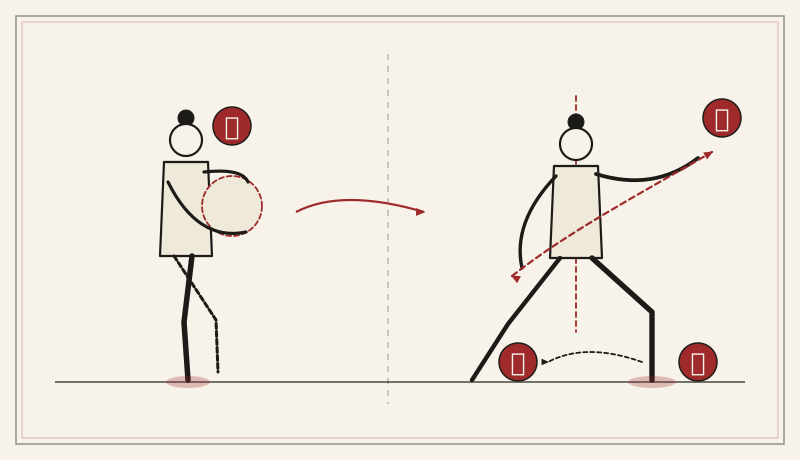
Classical ink-and-cinnabar diagram of Wudang Taijiquan Parting the Wild Horse's Mane (Yema Fenzong) showing Holding the Taiji Ball on the left, the rooted bow stance on parallel rails on the right, the diagonal splitting expansion of the two forearms, and the sit-back 45-degree foot pivot for the next step

From coiled sphere to diagonal split: the four-step cycle of Parting the Wild Horse’s Mane (野马分鬃 · 抱球斜分).

  1. Coiling the Sphere Over the Supporting Hip (坐胯抱球 · 负阴抱阳): 90% of weight roots into the supporting leg while the upper and lower palms face each other across a buoyant sphere and the empty foot gathers lightly by the ankle
  2. Stepping Out on Shoulder-Width Rails (迈步落踵 · 川字弓步): the empty foot steps forward-and-outward heel-first onto its own shoulder-width track (Cat-Walking)
  3. Waist-Driven Diagonal Split (转腰分鬃 · 掤挒相合): as weight shifts 60–70% into the front bow stance, the lower hand spirals obliquely upward (Shun Chan) to chest-to-shoulder height with palm facing obliquely inward, while the upper hand spirals downward to settle beside the rear hip—parting along a single diagonal line
  4. Sitting Back & Turning Out the Front Foot 45° (后坐撇脚 · 再抱太极球): to step continuously into the next side, sit weight back into the rear hip crease first so the front toes lift lightly, turn the front foot outward 45 degrees on its heel, and shift forward while coiling the hands into the opposite ball

3. Avoiding the Two Classic Mistakes in Continuous Stepping

  • Mistake 1 — Twisting the Front Knee Under Load: When linking Left, Right, and Left Yema Fenzong, nevergrind your front foot outward while 70% of your weight is still pressing down on it. Always sit back into the rear hip first (clear distinction before transformation), pivot the unloaded front foot 45 degrees on the heel, and only then pour weight back into it.
  • Mistake 2 — Flinging the Front Hand Past the Centerline: The leading forearm in Yema Fenzong rises in a rounded Peng–Lie arc to shoulder height with the elbow softly bent and heavy—never straightening the elbow or throwing the hand behind your head.
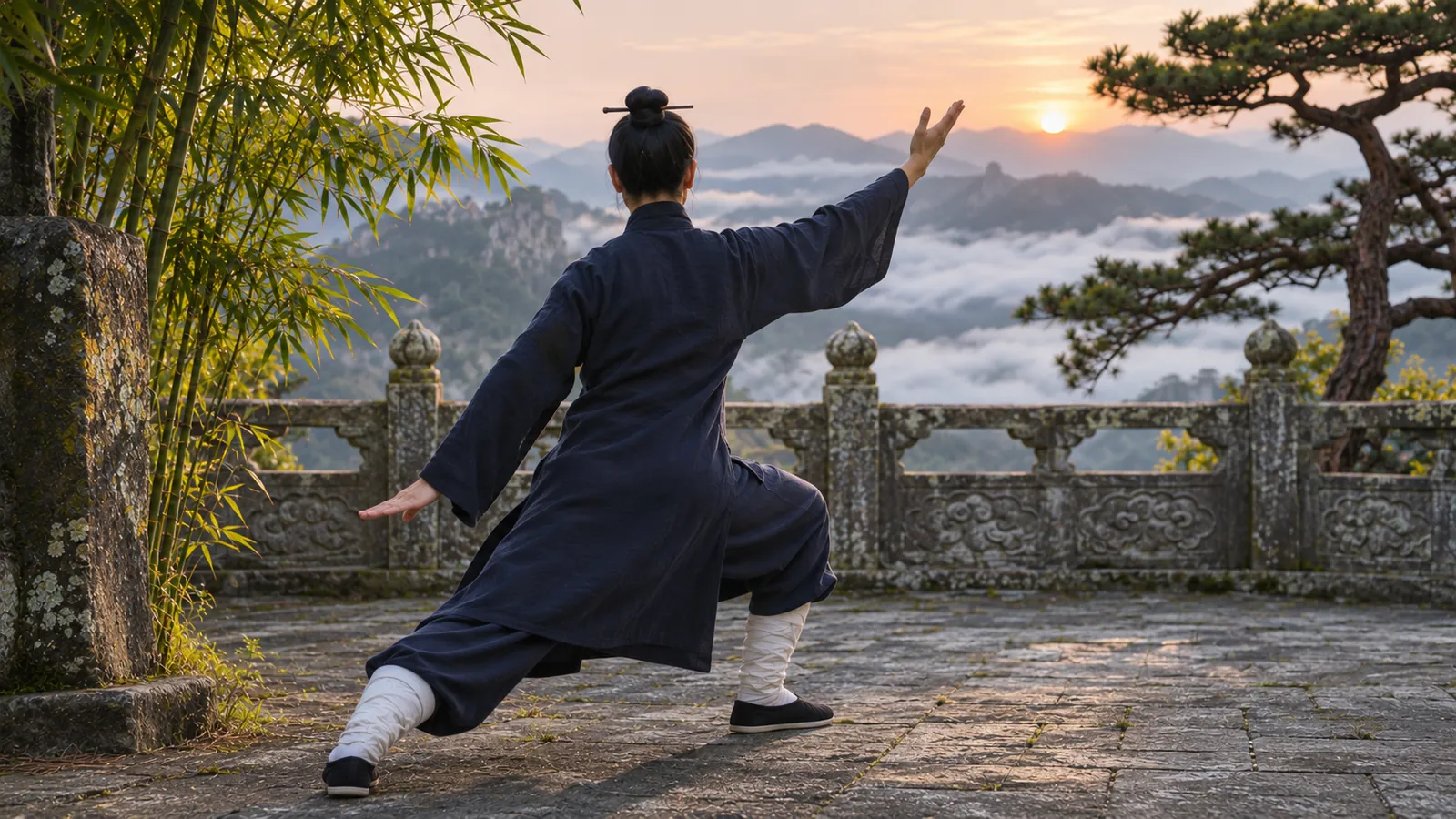
A practitioner in dark indigo Taoist robes and white cotton leg wraps seen from behind in the diagonal bow stance of Wudang Taijiquan’s Parting the Wild Horse’s Mane (Yema Fenzong) on a stone mountain terrace above morning clouds.

Parting the Wild Horse’s Mane (Yema Fenzong) at dawn: one arm sweeps up on the diagonal while the other presses down, the waist turning as if holding a ball.

4. Practising Yema Fenzong Between Wudang Mountain and Singapore

Connecting the living martial heritage near Wudang Mountain’s UNESCO World Heritage ancient Taoist temples with our regular classes in Singapore, Wudang.Org helps students link Yema Fenzong smoothly with Grasp the Sparrow’s Tail and Single Whip and Cloud Hands. Begin with Wudang Tai Chi for Beginners, visit Start Here, or join our Singapore Tai Chi Retreat Camp.

Safety note: Always unload the front leg by sitting back into the rear hip before pivoting the front foot 45 degrees so the knee joint experiences zero rotational torque; traditional martial training does not replace medical care.

Seeker’s Q&A · Frequently Asked Questions

Which hands are on top and bottom when “Holding the Ball” (Baoqiu 抱球) in Parting the Wild Horse’s Mane?

followed by a simple rule: whichever leg is currently bearing your weight has its same-side hand on top. When sitting on the right leg preparing to step out with the left foot, the right hand is on top (chest height) and the left hand is on bottom (navel height).


How do I protect my knees when linking multiple steps of Parting the Wild Horse’s Mane?

Always follow the four-part transition: (1) sit weight back into the rear hip crease, (2) let the front toes lift lightly on the heel, (3) turn the unloaded front foot outward 45 degrees, and (4) shift weight forward to gather the next ball—never twisting a loaded knee.

What internal energies (Jin) are trained in Parting the Wild Horse’s Mane?

It primarily unites Peng (buoyant Ward-Off in the rising lead forearm) and Lie (diagonal Splitting energy generated by the two arms parting in opposite directions from the waist axis), balanced by Cai/An in the settling rear hand.
