WUDANG TAIJIQUAN · 武当太极拳

Step Up to Seven Stars (Shangbu Qixing) & Retreat to Ride the Tiger (Tuibu Kuahu): Cross-Wrist Peng Guard and Retreating Agility in Wudang Taijiquan 上步七星与退步跨虎:武当太极拳的七星相照、十字掤架与退步化劲要法

A technical guide to the late-form Wudang Taijiquan sequence Shangbu Qixing (上步七星) and Tuibu Kuahu (退步跨虎), detailing seven-point structural alignment, crossed-wrist Peng mechanics, and retreating single-leg balance.


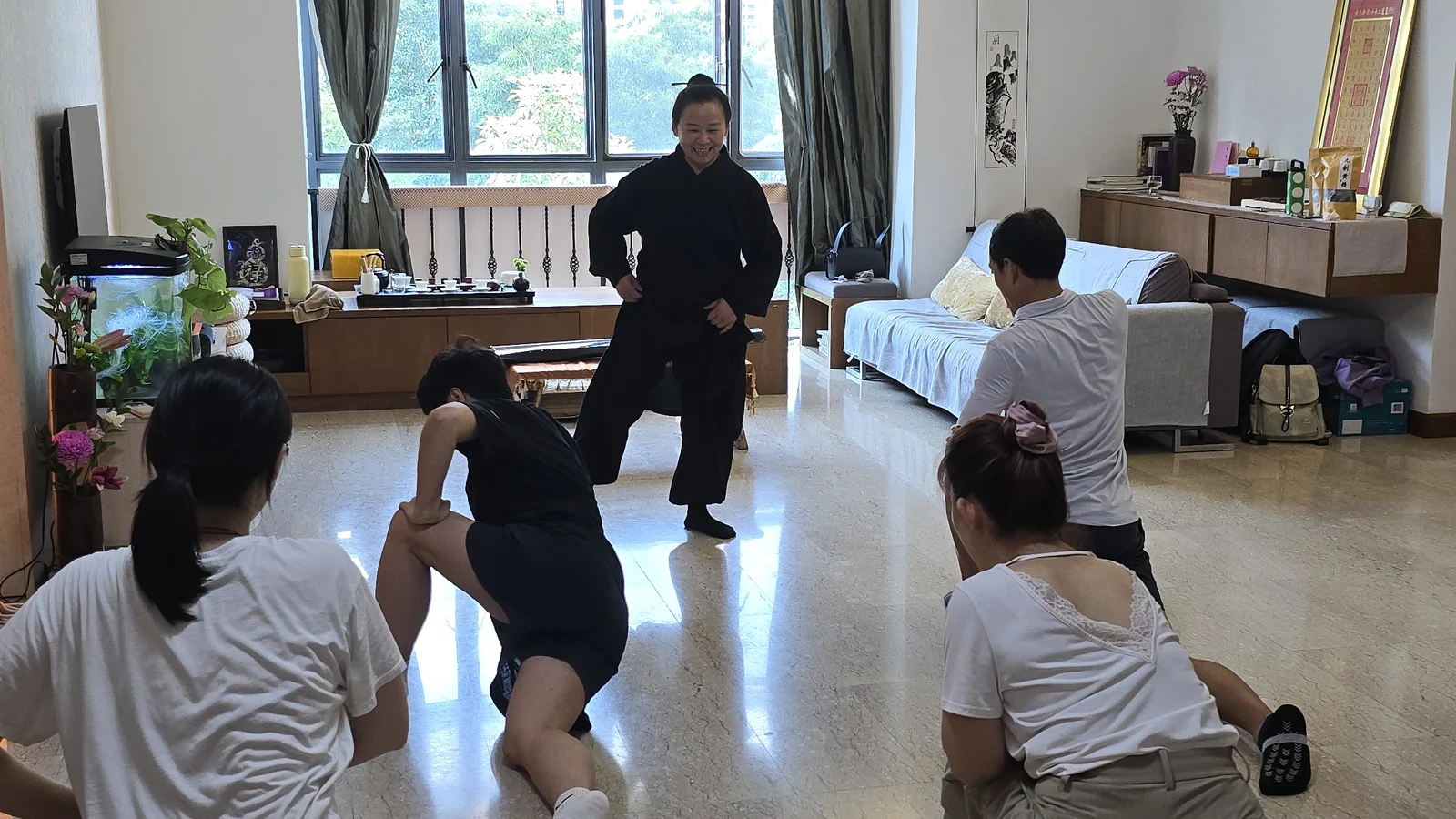
A Wudang taijiquan lesson in a sunlit room: students seen from behind kneel into deep lunges to open the hips while a teacher in black Taoist-style clothing stands in a wide stance, smiling, with an ink-painting scroll on the wall behind.

Advancing to Seal and Retreating to Dissolve in the Late Form

In the closing third of traditional Wudang Taijiquan forms, 'Step Up to Seven Stars' (Shangbu Qixing, 上步七星) and 'Retreat to Ride the Tiger' (Tuibu Kuahu, 退步跨虎) form a classic advance-and-retreat couplet right before the spinning lotus kick. Where Shangbu Qixing steps boldly into an empty stance (Xubu, 虚步) while crossing both wrists in hollow fists at shoulder height to seal the upper centerline, Tuibu Kuahu immediately steps backward, opens the arms in a sweeping circle, and poises lightly over the front toe like a rider mounting a tiger's back. Together they embody the water-like adaptability of Tao Te Ching Chapter 78: advancing to intercept without stiffness, and retreating to dissolve incoming momentum without losing central equilibrium.

Shangbu Qixing (上步七星): The Seven Stars Alignment and Cross-Wrist Peng

In classical Chinese martial terminology (studied under Taoist & Martial Classics), the 'Seven Stars' (Qixing, 七星) refer both to the Northern Dipper constellation (Beidou Qixing, 北斗七星—revered across Wudang Mountain) and to the seven structural nodes of the human frame: head, shoulders, elbows, hands, hips, knees, and feet. Transitioning from Single Whip (Diagonal Single Whip and Hook Hand Guide), the rear foot steps forward to touch down on the ball of the foot in an empty stance while the rear hand rises to cross outside the lead wrist in front of the throat or chin. Both hands form hollow fists (Kongxinquan, 空心拳) with the backs of the fists facing obliquely outward-upward. Rather than collapsing the elbows against the ribs, the practitioner maintains a rounded space between the chest and wrists so the crossed forearms act as a springy spherical shield (Shizi Peng, 十字掤).

Step Up to Seven Stars (Shangbu Qixing) & Retreat to Ride the Tiger (Tuibu Kuahu): Cross-Wrist Peng Guard and Retreating Agility in Wudang Taijiquan

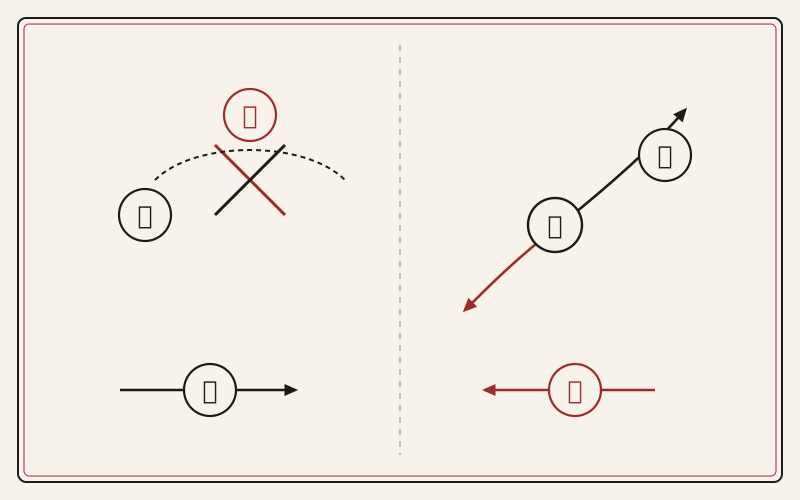
Biomechanical transition from Shangbu Qixing (Step Up to Seven Stars) to Tuibu Kuahu (Retreat to Ride the Tiger): ① Rear-leg root and forward Empty Stance (Xubu) step, ② Crossed-wrist hollow-fist Peng guard at shoulder height aligning the Seven Stars (head, shoulders, elbows, hips, knees, hands, feet), ③ Spherical scapular expansion (Babei) supporting the crossed wrists, ④ Retreating step (Tuibu) shifting the center of mass smoothly backward, ⑤ Downward-and-outward circular arm split and upward crane-wing suspension (Tuibu Kuahu — Retreat to Ride the Tiger), and ⑥ Single-leg / empty-toe agile equilibrium ready for Turn and Sweep Lotus (Zhuanshen Bailian).

Tuibu Kuahu (退步跨虎): Retreating Unweighting and Circular Splitting

When an opponent presses downward or forward against the crossed-wrist guard of Shangbu Qixing, the practitioner does not resist head-on. Instead, the front empty foot lifts and steps smoothly backward onto the ball and heel, drawing the center of mass onto the new rear leg while the former supporting front leg becomes a light empty stance (or lifted knee in high-frame variants). Simultaneously, the crossed fists open into palms, drop downward past the abdomen to shed the opponent's force, and separate outward—one hand arcing upward beside the temple with the palm facing out, and the other brushing past the front hip and knee. This sweeping posture resembles straddling a tiger's back: agile, elevated in spirit, and completely free of forward entanglement.

Preparing the Axis for Turn-Body Sweep Lotus (Zhuanshen Bailian)

Because Tuibu Kuahu directly precedes the 360-degree pivot into Turn-Body Sweep Lotus and Standing Balance Kicks, the stability of the rear supporting leg in Tuibu Kuahu determines the quality of the entire closing sequence. As taught in our Start Here curriculum, fold the rear inguinal crease (Kwa, 胯) deeply as the weight shifts back, keep the torso upright rather than leaning away from the front foot, and let the gaze look steadily through the space between the open arms.

Seeker’s Q&A · Frequently Asked Questions

What is the key structural alignment in Step Up to Seven Stars (Shangbu Qixing) & Retreat to Ride the Tiger (Tuibu Kuahu)?

A technical guide to the late-form Wudang Taijiquan sequence Shangbu Qixing (上步七星) and Tuibu Kuahu (退步跨虎), detailing seven-point structural alignment, crossed-wrist Peng mechanics, and retreating single-leg balance.
