WUDANG TAIJIQUAN · 武当太极拳

Commencing Taiji from Wuji (Taiji Qishi): Opening Footwork, Rising Peng, and Sinking An in Wudang Taijiquan 太极起势(由无极生太极):武当太极拳的虚静立桩、平开步法与起落开合要法

A foundational biomechanical and internal guide to the Opening Posture of Wudang Taijiquan (太极起势), detailing the transition from Wuji stillness to Yin-Yang movement, shoulder-width Kaibu stepping, and wrist-led rising and sinking.


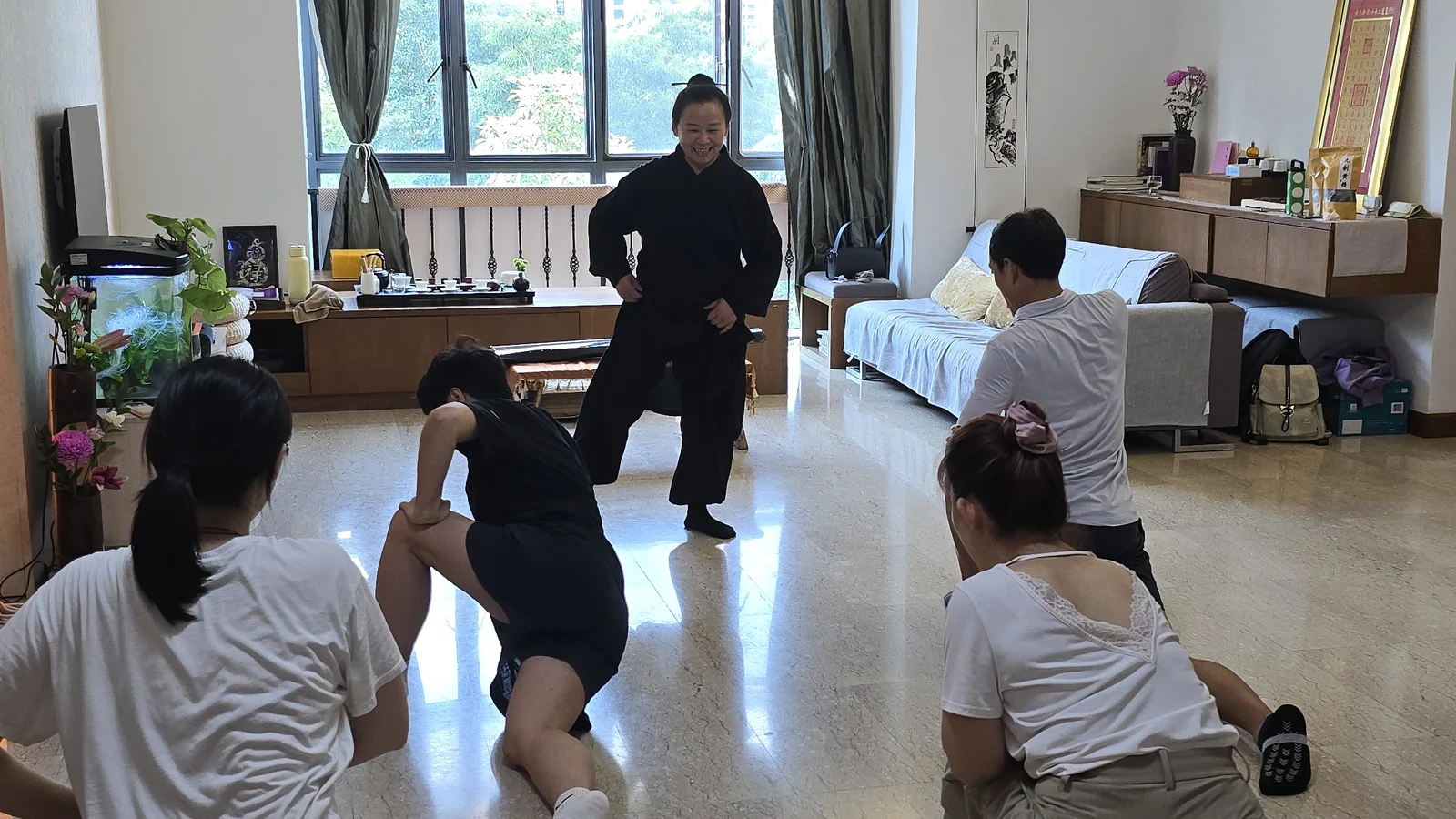
A Wudang taijiquan lesson in a sunlit room: students seen from behind kneel into deep lunges to open the hips while a teacher in black Taoist-style clothing stands in a wide stance, smiling, with an ink-painting scroll on the wall behind.

Taiji Born from Wuji: The Philosophical Threshold of the First Movement

Every traditional Wudang Taijiquan form opens with the same deceptively simple movement: 'Commencing Posture' (Qishi, 起势, or Taiji Qishi, 太极起势). In the opening line of Wang Zongyue's Taijiquan Lun (太极拳论, studied under Taoist & Martial Classics)—'Taiji is born from Wuji; it is the mother of Yin and Yang; in motion it separates, in stillness it fuses' (太极者,无极而生,动静之机,阴阳之母也。动之则分,静之则合)—this first posture is the exact moment when undifferentiated stillness (Wuji, 无极) stirs into the first separation of Yin and Yang. Paired with Cross Hands and Closing Taiji (Shizishou & Shoushi) at the end of the sequence, Qishi fulfills Tao Te Ching Chapter 64's maxim that 'a journey of a thousand li begins beneath the feet' and that one must remain 'as careful at the end as at the beginning' (慎终如始).

From Wuji Standing to Kaibu (开步): Stepping Without Scattering the Root

Before lifting the hands, the practitioner stands quietly in Wuji for several breaths: feet parallel or heels touching, knees unlocked, tailbone neutrally suspended, tongue resting against the upper palate, and crown lightly lifted (Xuling Dingjin, 虚灵顶劲). To open the stance (Kaibu, 开步), do not abruptly kick the left foot out to the side. Instead, sink the weight quietly into the right leg by softening the right hip crease (Song and Fangsong in Wudang Taijiquan), peel the left heel and ball of the foot effortlessly off the ground, place the left toe down at shoulder width, and lower the left heel until weight rests fifty-fifty across both Yongquan (涌泉, KI-1) points.

Commencing Taiji from Wuji (Taiji Qishi): Opening Footwork, Rising Peng, and Sinking An in Wudang Taijiquan

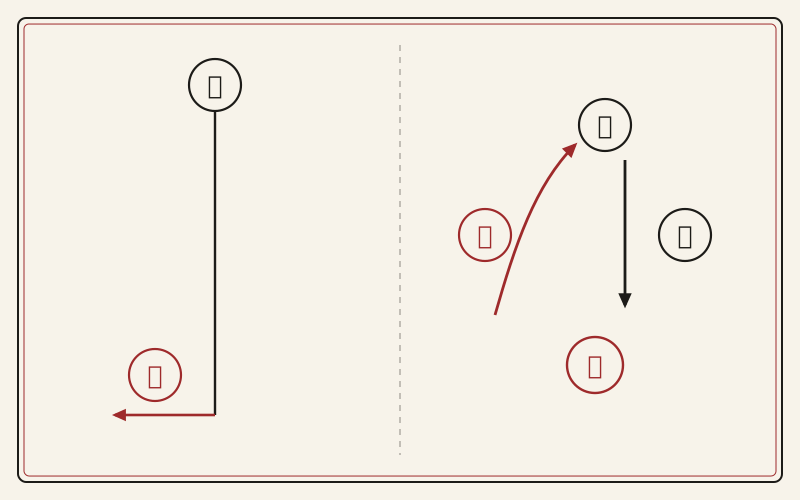
Biomechanical sequence of Taiji Qishi (Commencing Taiji from Wuji): ① Wuji standing equilibrium with feet together and crown suspended at Baihui, ② Unweighting the left heel and stepping sideways to shoulder-width parallel stance (Kaibu — 'A journey of a thousand li begins beneath the feet'), ③ Inhaling as both wrists float gently forward and upward to shoulder height (Peng — rising Yang), ④ Relaxing the shoulders and dropping the elbows (Chenjian Zhuizhou) at the peak of the lift, ⑤ Exhaling as the knees bend slightly, the hips fold (Songkua), and the palms press softly down toward the lower Dantian (An — descending Yin), and ⑥ Unified Peng-An readiness before transitioning into Grasping the Sparrow's Tail (LanQueWei).

Rising Wrists (Peng) and Sinking Elbows (An): The First Yin-Yang Wave

On a calm inhalation, the backs of the wrists gently lead both arms forward and upward to shoulder height, palms facing downward with the fingers softly relaxed. Rather than lifting the arms with tight deltoids, imagine the forearms floating upward on rising mountain mist—an expression of ascending Ward-Off energy (Peng, 掤 / Yang). As the hands reach shoulder level, the shoulders settle and the elbows drop slightly downward (Chenjian Zhuizhou, 沉肩坠肘). On a slow exhalation, the knees bend and the inguinal creases fold (Songkua, 松胯) as the palms press gently downward to hip or lower-abdomen height, expressing descending Roll-Back and Press energy (Lu-An, 捋按 / Yin) as the breath sinks into the lower Dantian.

Diagnostic Value of Qishi in Daily Wudang Training

In the courtyard training of Wudang Mountain and our Start Here curriculum, masters often say that a practitioner's entire level of internal coordination is visible in the first three seconds of Taiji Qishi. If the shoulders shrug when the arms rise, or if the knees protrude past the toes when the palms sink, the body is moving as disconnected segments rather than an integrated whole. Practicing ten slow repetitions of Qishi as a standalone Daoyin drill is one of the most effective ways to unify breath, root, and spirit.

Seeker’s Q&A · Frequently Asked Questions

What is the key structural alignment in Commencing Taiji from Wuji (Taiji Qishi)?

A foundational biomechanical and internal guide to the Opening Posture of Wudang Taijiquan (太极起势), detailing the transition from Wuji stillness to Yin-Yang movement, shoulder-width Kaibu stepping, and wrist-led rising and sinking.
