WUDANG TAIJIQUAN · 武当太极拳

Play the Lute (Shouhui Pipa) in Wudang Taijiquan: Heel-Touch Empty Stance (Xubu), Centerline Guard, and Folding Listening Energy 武当太极拳“手挥琵琶”详解:脚跟着地虚步、中线抱琵琶防护与折叠听劲

Master the biomechanics of Play the Lute (Shouhui Pipa) in Wudang Taijiquan: how the rear-weighted heel-touch empty stance (Xubu), concave chest (Hanxiong), and oblique two-hand guard protect the centerline and receive incoming force.


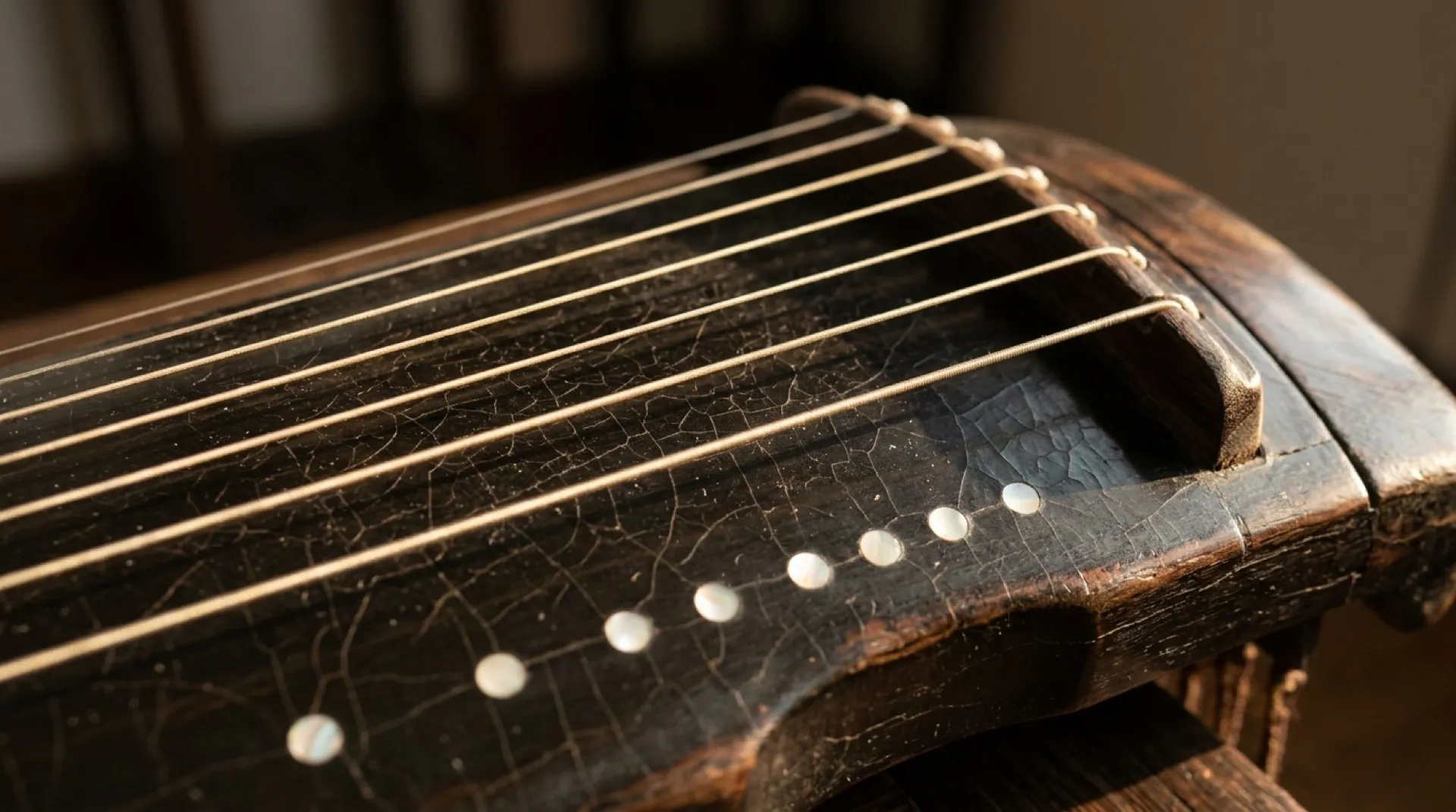
A close view of a guqin: seven strings running over dark lacquer beside a row of mother-of-pearl position markers.

1. What 'Playing the Lute' (Shouhui Pipa) Teaches About Compact Internal Guard

In the traditional solo sequence of Wudang Taijiquan, Shouhui Pipa (手挥琵琶, 'Play the Lute' or 'Strum the Pipa') appears early in the form right after Grasp the Sparrow's Tail (Lanquewei), Single Whip (Danbian), and Raise Hands (Tishou Shangshi). Its poetic name refers to the classical four-stringed Chinese lute (Pipa), which musicians hold diagonally across the torso with one hand near the neck and the other strumming near the soundboard.

Far from being merely decorative, this posture trains one of the most important skills in Wudang internal martial arts: how to fold a wide stance into a compact, half-step empty stance (Xubu 虚步) while closing and protecting the central line (Zhongxian 中线). Whereas postures like Single Whip expand outward like an open courtyard, Shouhui Pipa gathers energy inward so that both hands and the front foot guard the body's gates simultaneously.

2. Footwork Mechanics: The Rear-Step Adjustment (Genbu) and Heel-Touch Empty Stance

The transition into Shouhui Pipa begins from the feet and waist before the hands settle. When transitioning from a bow stance, the rear foot makes a small half-step forward (Genbu 跟步, follow-step) to shorten the wheelbase, and the practitioner sits weight back into the rear hip crease (Kua 胯) so the rear leg carries roughly 70 to 80 percent of body weight. Once the rear root is solid, the front foot advances half a step and touches the ground lightly with the heel, toes gently lifted and ankle relaxed.

Two common errors spoil this empty stance and strain the joints: first, locking the front knee straight when placing the heel down, which transmits harsh impact up the shin and freezes mobility; second, sitting the hips backward behind the rear heel instead of folding the inguinal crease downward. In a well-aligned Shouhui Pipa, the front knee retains a soft micro-bend, and the front heel rests so lightly on the flagstones that you could lift it at any instant—embodying the principle of distinguishing empty and full (Fen Qing Xu Shi).

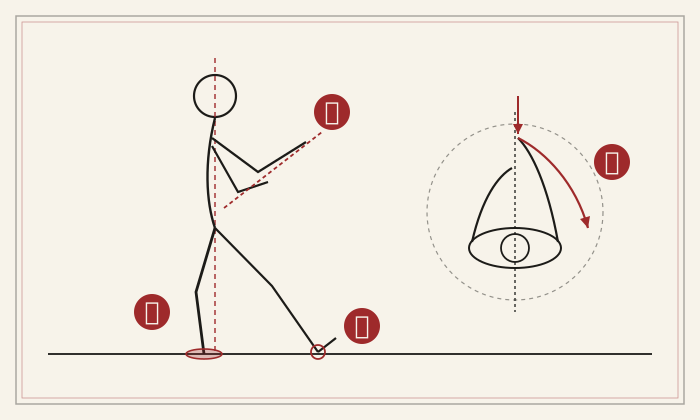
Classical diagram of Wudang Taijiquan Play the Lute (Shouhui Pipa) showing rear-leg root, front-heel empty step (Xubu), diagonal lute-holding arm structure, and centerline deflection

Structural mechanics of Shouhui Pipa: sitting into the rear hip crease while the front heel touches lightly and the hands guard the centerline.

  1. ① Rear-Leg Solid Root (Shijiao): 70–80% of weight settles through the folded rear hip crease (Kua) directly into the rear heel and sole.
  2. ② Heel-Touch Empty Step (Xubu): The front heel touches the ground lightly with toes slightly raised and knee softly micro-bent, ready to lift or step.
  3. ③ Diagonal Lute Axis (Pipa Structure): Shoulders and elbows sink as the lead palm and rear palm align obliquely across the chest without clamping the armpits.
  4. ④ Centerline Wedge & Redirection: Incoming linear force meets the forearm pair and is guided tangentially past the shoulder via waist rotation (Lu/Cai).

3. Upper-Body Structure: Concave Chest (Hanxiong) and Two-Palm Centerline Alignment

As the rear hip settles and the front heel touches down, both arms fold inward toward the centerline as if cradling a Pipa. With the left foot forward, the left hand extends forward at approximately nose or throat height with the palm vertical (facing right) and index finger pointing upward, while the right hand settles inward so its vertical palm (facing left) sits opposite the left elbow or mid-forearm.

Notice how the two palms do not cross passively: they squeeze gently toward the centerline while simultaneously maintaining buoyant outward Peng expansion in the elbows—a classical example of 'merging inward and outward intent.' This naturally hollows the chest (Hanxiong 含胸) and rounds the upper back between the shoulder blades (Babei 拔背), one of the core Ten Essentials of Taijiquan. In cooperative Push Hands (Tuishou) study, this two-hand alignment allows the lead wrist and rear palm to make two-point contact along a partner's extended arm, listening (Tingjin) to the angle of force and guiding it softly to the side without stiff resistance.

4. Alternating Solo Drill: Stepping Into and Out of Shouhui Pipa

To build single-leg strength and centerline coordination, practice Shouhui Pipa as a slow alternating line drill across three or four paces. Begin in a left heel-touch Shouhui Pipa; shift weight forward onto the left foot as the sole flattens, bring the right foot up in a quiet half-step behind, sit weight into the left leg, and extend the right heel forward into a right-lead Shouhui Pipa as the right hand rises to the front position and the left hand guards the right elbow.

Exhale softly each time you sit into the rear hip and settle the elbows into the lute posture; inhale naturally as you transition weight to step. Keep the rear knee aligned directly over the rear toes and avoid dipping too low if your quadriceps or knees feel fatigued. Safety note: this instructional guide is for educational martial arts and movement study; practice at a comfortable stance height and consult a healthcare professional if you have knee or hip joint conditions.

Seeker’s Q&A · Frequently Asked Questions

What is the core takeaway of Play the Lute (Shouhui Pipa) in Wudang Taijiquan?

Master the biomechanics of Play the Lute (Shouhui Pipa) in Wudang Taijiquan: how the rear-weighted heel-touch empty stance (Xubu), concave chest (Hanxiong), and oblique two-hand guard protect the centerline and receive incoming force.
