WUDANG TAIJIQUAN · 武当太极拳

Repulse the Monkey (Daojuanhong) in Wudang Taijiquan: Retreat-Stepping Without Looking Back, Waist-Led Spirals and Yielding While Advancing 武当太极拳“倒卷肱”详解:退步不回头、螺旋撤引与以退为进身法

Why retreating in Wudang Taijiquan is never a hurried stumble backward—and how toe-first parallel stepping and alternating Silk-Reeling arms turn retreat into rooted forward energy.

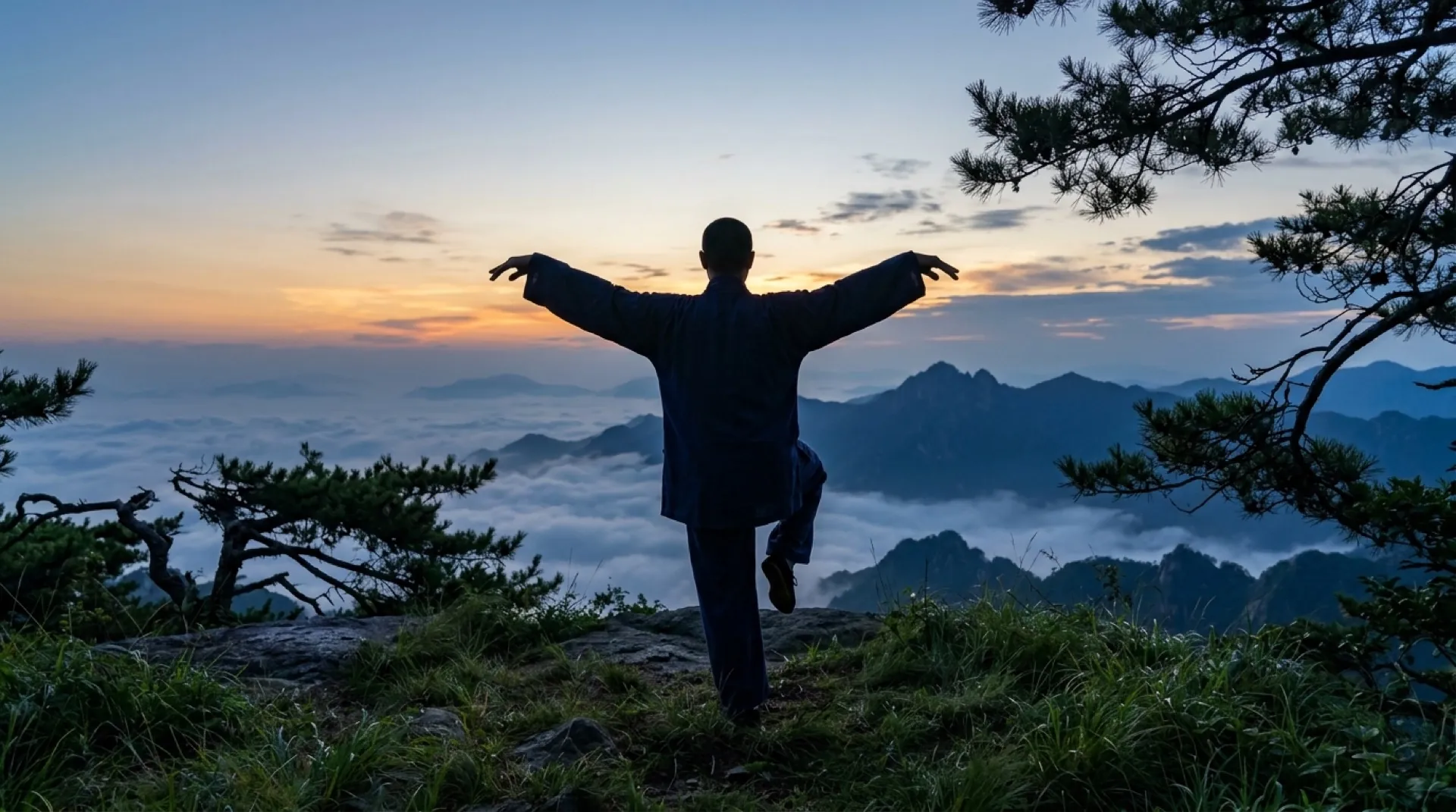
A practitioner seen from behind, standing on one leg with both arms spread wide like wings on a grassy summit among pines, above a sea of clouds at dawn.

Walking forward in Wudang Taijiquan feels natural because our eyes can see the ground ahead. The real test of spatial awareness, hip stability, and inner calm arrives when the form asks you to step backward through three or five continuous cycles of “Repulse the Monkey” (倒卷肱, Daojuanhong, also known in many lineages as 倒撵猴, Daonianhou).

In classical Chinese, Gong (肱) means the upper arm and forearm, and Daojuan (倒卷) means “to roll or coil in reverse like an ocean wave.” Embodying Chapter 69 of the Tao Te Ching (Dao De Jing)—“The strategists have a saying: I dare not act as the aggressive host, but rather as the responsive guest; I dare not advance an inch, but rather retreat a foot” (不敢进寸而退尺)—Daojuanhong teaches how to yield backward in space while delivering a calm, centered forward palm.

1. Why Beginners Lose Balance When Retreating—and the 4 Structural Keys

When retreating without proper method, students typically make two mistakes: they step straight back behind their front heel as if walking backward on a tightrope, and they lean their torso backward to reach for the ground with their heel. In Wudang mechanics (“Retreat” 退 in the Five Steps), four alignments keep every backward step as stable as a mountain:

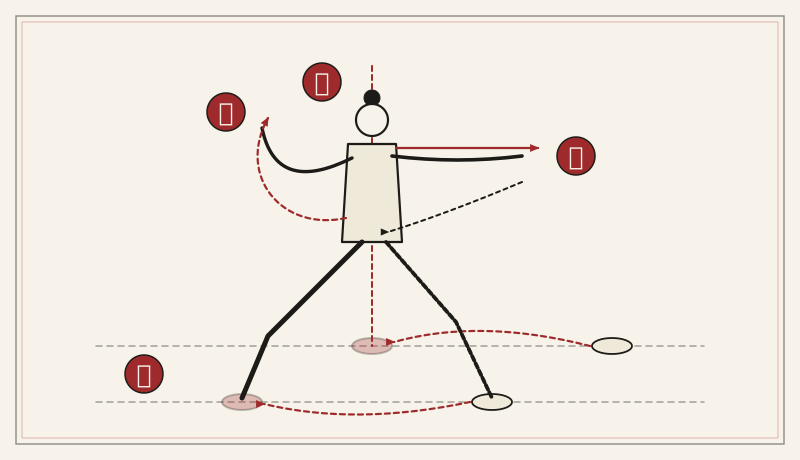
Classical ink-and-cinnabar diagram of Wudang Taijiquan Repulse the Monkey (Daojuanhong) showing the shoulder-width parallel retreat rails with arc stepping, the rear arm coiling past the ear via waist rotation, the simultaneous front-hand withdrawal and rear-palm push, and the plumb vertical spine

The four-part biomechanics of Repulse the Monkey (倒卷肱 · 弧线退步、腰卷双臂) in Wudang Taijiquan.

  1. Shoulder-Width Parallel Retreat Rails & Ball-First Touch (平行川字退步 · 弧线探地): the retreating foot sweeps gently inward past the standing ankle and steps back-and-outward onto its own shoulder-width rail, touching down softly with the ball of the foot first before rolling onto the heel (Empty and Full Stepping)
  2. Waist-Led Rear Arm Coiling (转腰卷肱 · 弧形蓄至耳侧): as the waist turns 45 degrees toward the rear side, the back hand scoops downward and arcs up smoothly past the hip and ear with a relaxed elbow—never flinging the arm behind the shoulder blade
  3. Simultaneous Withdrawal and Forward Palm (前撤后推 · 顺逆缠丝相摩): as weight shifts backward into the newly planted rear leg, the leading palm turns palm-up and draws back to the hip in an inward spiral (Chansijin) while the rear palm glides past the ear and presses forward along the centerline
  4. Plumb Vertical Spine Without Leaning Back (坐胯中定 · 立身不仰): weight transfers by folding the rear hip crease (song kua) while the crown stays suspended and the torso remains upright (Six Harmonies)

2. Why Stepping Back Uses the Ball of the Foot First (退步先落前脚掌)

Notice the crucial difference between forward and backward Cat-Walking (Maobu):

  • When stepping forward (as in Brush Knee and Twist Step), the heel touches down lightly first, then the sole, then the weight.
  • When stepping backward in Daojuanhong, if you reach back with your heel first, your knee locks and your body weight crashes backward blindly. Instead, fold the standing front hip crease first, reach back with the ball and toes of the retreating foot like a cat’s paw feeling the flagstones behind you, and only once the ball confirms solid ground on a shoulder-width track do you lower the heel and pour 70% of your weight into the rear leg—leaving the front foot in a light Empty Step with its pivot adjusted straight ahead.

3. Coordinating Breath and Gaze Across 4 Retreat Steps

  • Inhale as the waist turns and the rear arm coils up to the ear (蓄劲); exhale as the rear heel settles and the palm presses forward (发劲): This rhythm naturally deepens Natural Abdominal Breathing and warms the lower back (Mingmen Daoyin).
  • Never turn your head around to look at the floor behind you: Trust your standing leg and your peripheral awareness (Mirror-Like Mind); let your gaze follow the subtle turn of the waist slightly to the side and then return straight ahead as the palm finishes.
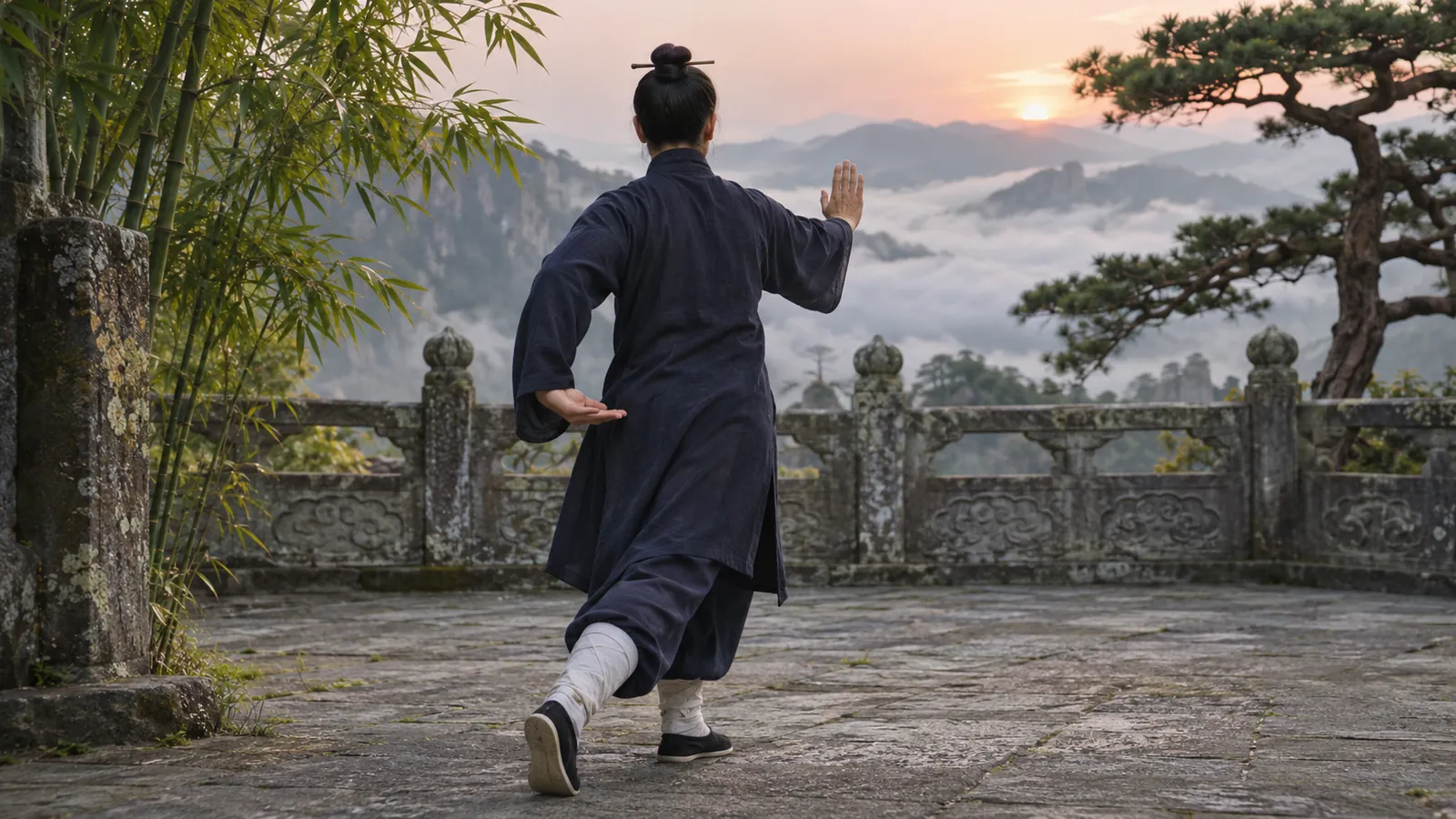
A practitioner in dark indigo Taoist robes and white cotton leg wraps seen from behind in a retreating step of Wudang Taijiquan’s Repulse the Monkey (Daojuanhong) on a stone mountain terrace above morning clouds.

Repulse the Monkey (Daojuanhong) at dawn: one palm presses forward while the other hand draws back and the foot steps back, ball of the foot first.

4. Practising Daojuanhong Between Wudang Mountain and Singapore

Connecting the living martial heritage near Wudang Mountain’s UNESCO World Heritage ancient Taoist temples with our regular classes in Singapore, Wudang.Org teaches students how to unite solo footwork with cooperative Push Hands. Start with Wudang Tai Chi for Beginners, visit Start Here, or join our Singapore Tai Chi Retreat Camp.

Safety note: Always clear two to three metres of flat floor space behind you before practising retreat steps so you never have to look backward or worry about obstacles; traditional martial training does not replace medical care.

Seeker’s Q&A · Frequently Asked Questions

What does the name “Daojuanhong” (倒卷肱) mean in Wudang Taijiquan?

Dao (倒) means reverse or retreating, Juan (卷) means to coil or roll like a wave, and Gong (肱) refers to the arm. It describes how the waist and arms spiral backward and forward while stepping in retreat—also vividly nicknamed “Repulse the Monkey” (Daonianhou).


When stepping backward in Repulse the Monkey, does the heel or the ball of the foot touch down first?

Unlike forward stepping (which places the heel first), backward stepping in Daojuanhong always places the ball and toes of the retreating foot down lightly first along a shoulder-width track, then lowers the heel before shifting weight back.

How do I stop my feet from crossing onto a single tightrope line during multiple retreat steps?

Use the “curved C-step” method: draw the retreating foot gently inward past the standing ankle first, then arc it outward to land on its own shoulder-width parallel track (Chuanzi rails) behind you.
