What is the key structural alignment in Wave Hands Like Clouds (Yunshou 云手) in Wudang Taijiquan?
Coordinating the waist-axis rotation, alternating Peng-Lv and Cai-Hua hand arcs, and level lateral footwork without bobbing the crown.
Coordinating the waist-axis rotation, alternating Peng-Lv and Cai-Hua hand arcs, and level lateral footwork without bobbing the crown
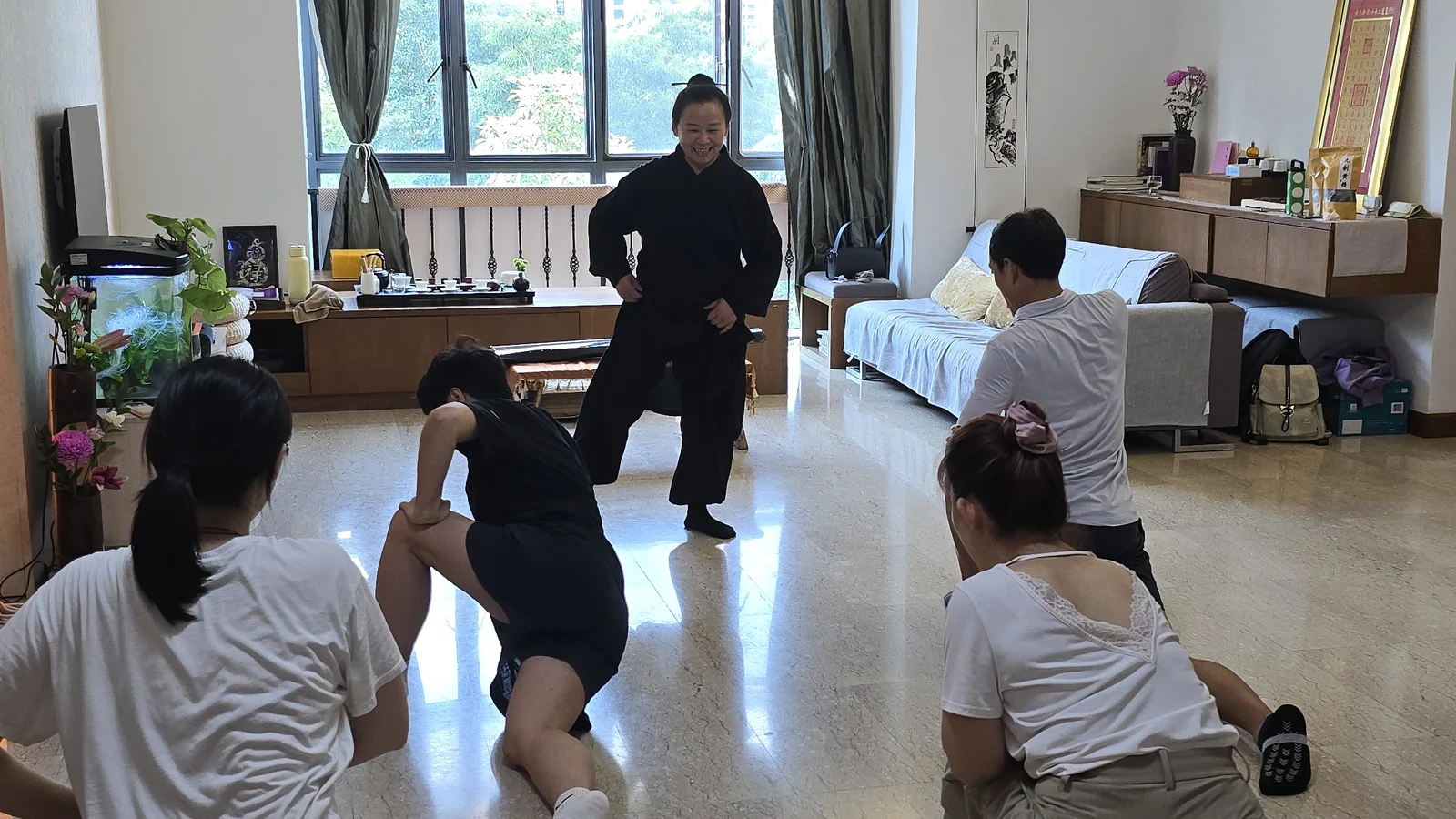
Among the foundational sequences of Wudang Taijiquan, Yunshou (云手, "Wave Hands Like Clouds") is often called the "mother of continuous circularity." Whereas linear postures such as Louxi Aobu (Brush Knee and Twist Step) or Yema Fenzong (Part the Wild Horse's Mane) advance forward along a diagonal stepping corridor, Yunshou moves laterally across the courtyard while the torso turns continuously around the central vertical axis. Like mountain clouds drifting effortlessly across the pines of Wudangshan, the upper and lower palms trace uninterrupted ellipses driven entirely by the waist and spine (Yao wei duhu 腰为蠹户).
The Taijiquan Lun (太极拳论) states: Mingyi yuanliu zai yaojian (命意源流在腰间) — "The source of vital intent resides in the waist." Beginners frequently reduce Yunshou to waving the arms left and right in front of a stationary chest. In authentic Wudang transmission, the arms do not sweep independently across the ribcage; instead, the upper hand stays broadly aligned near the central line of the sternum while the rotation of the waist and costovertebral joints carries the entire upper frame from side to side.
Because the hands rise and fall in alternating arcs, unguided practitioners often rise on the knees when a hand ascends and sink when a hand descends. Wudang footwork strictly separates the vertical rise of the palm from the horizontal stability of the pelvis:
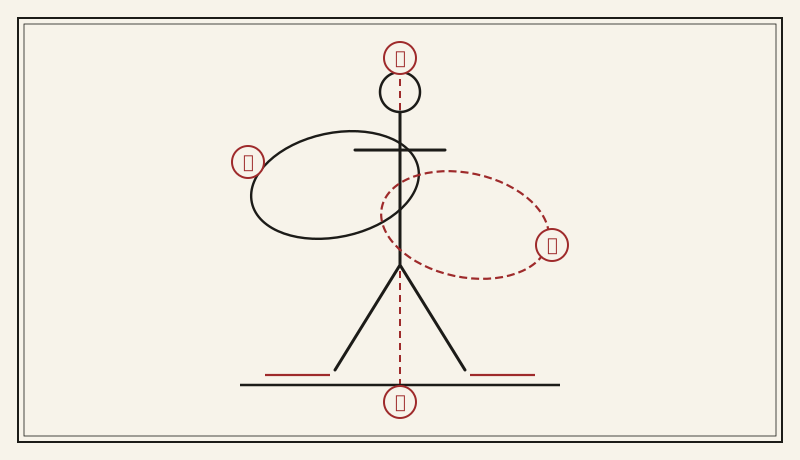
Figure 1: Structural biomechanics of Wudang Yunshou (云手) — ① Suspended crown (Xu Ling Ding Jin 虚领顶劲) and vertical Mingmen spinal axis; ② Upper palm rising and rotating outward in ward-off and rollback (Peng-Lv 掤捋) at eye-to-throat height; ③ Lower palm scooping inward and upward across the lower Dantian (Cai-Hua 采化); ④ Level lateral stepping (Pingkaibu 平开步 / Bingbu 并步) with weight shifting smoothly between substantial and insubstantial legs.
Practiced slowly in sets of six, nine, or twelve lateral steps across the training floor, Yunshou harmonizes the left and right hemispheres of movement, massages the internal organs through gentle diaphragmatic torsion, and trains continuous Chansijin (缠丝劲, silk-reeling energy). To integrate Yunshou with the rest of your form, review our guides on Grasping the Sparrow's Tail (Lanquewei), Play the Lute and White Crane Spreads Its Wings, the full Wudang Taijiquan Curriculum, and our Wudang Qigong & Daoyin foundation series.
Coordinating the waist-axis rotation, alternating Peng-Lv and Cai-Hua hand arcs, and level lateral footwork without bobbing the crown.
In-person classes in Singapore, picked to match this page. Dates and prices are on each course page.


