WUDANG TAIJIQUAN · 武当太极拳

High Pat on Horse (高探马 Gaotanma) in Wudang Taijiquan: Empty-Step Withdrawal, Forearm Deflection, and Threading Palm Release 武当太极拳“高探马”精解:高虚步松胯、前手捋采与后手穿扑掌的“引进落空、即化即打”枢机

How sinking into the rear Kwa while drawing the front foot into a buoyant ball-touch empty stance powers a simultaneous downward deflection (Lu-Cai) and overhand threading palm (Chuanzhang).

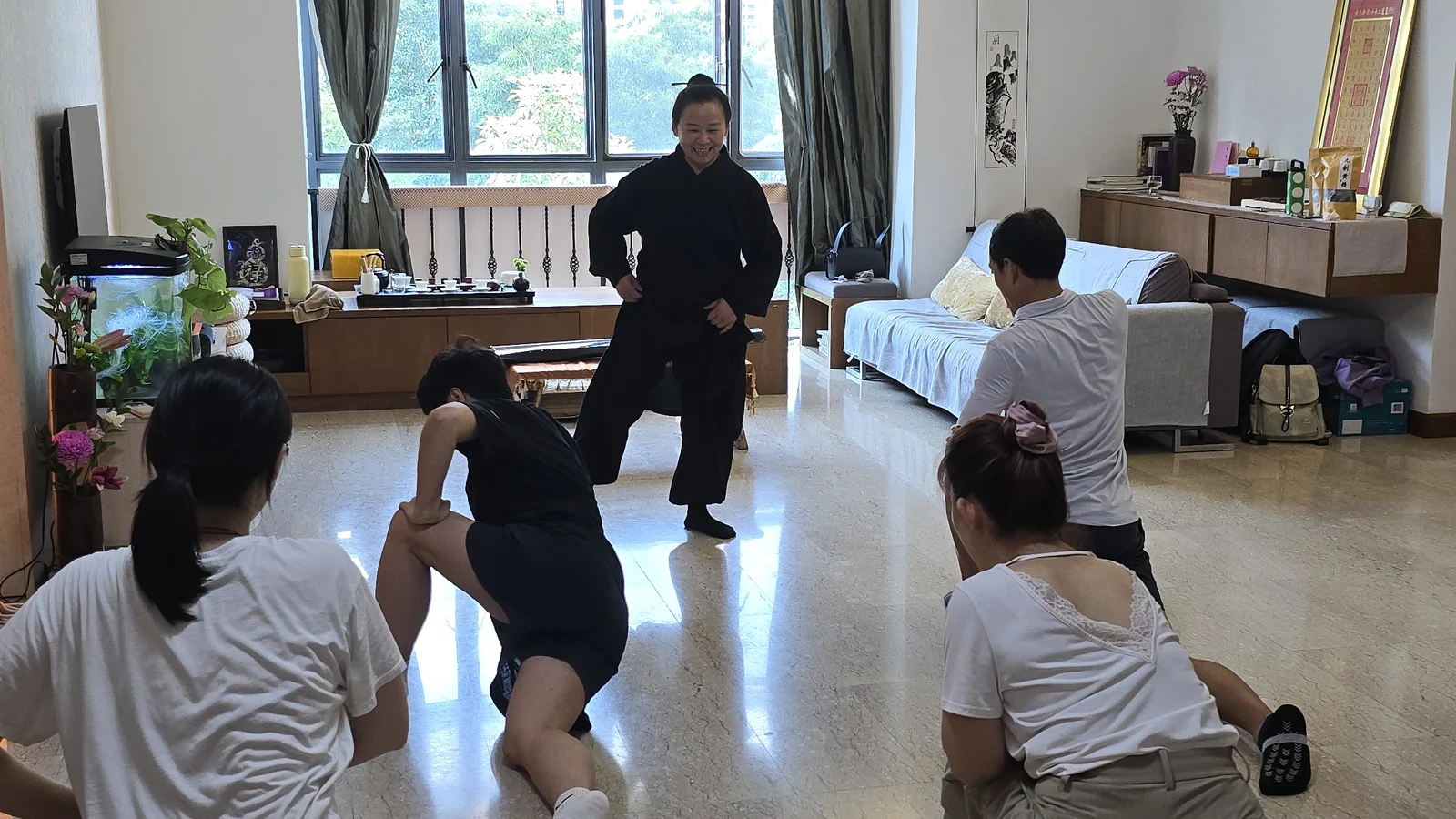
A Wudang taijiquan lesson in a sunlit room: students seen from behind kneel into deep lunges to open the hips while a teacher in black Taoist-style clothing stands in a wide stance, smiling, with an ink-painting scroll on the wall behind.

High Pat on Horse (Gaotanma 高探马)—named after the poised, upright gesture of a rider reaching forward to stroke a spirited horse’s bridle or mane while keeping their seat deeply settled in the saddle—is a signature high empty-stance (Gao Xubu 高虚步) transition in Wudang Taijiquan. Appearing after Single Whip (Danbian) or Repulse the Monkey (Daojuanhong), it trains simultaneous absorption and release (Ji Hua Ji Da 即化即打): the lead hand rotates palm-up and draws down to the hip to neutralize incoming force while the rear palm arcs past the ear and threads forward along the centerline.

1. Classical Imagery and Martial Principle of Gaotanma (高探马)

Why is this posture called Gaotanma (高探马, "High Pat on Horse" or "Reaching Out to the Horse from a High Seat")?

  1. Gao (高 — High, Upright Frame Without Stiffness): Unlike deep low stances (Pubu 仆步) or long bow stances (Gongbu 弓步), Gaotanma gathers the stance into a slightly higher, compact empty step (Gao Xubu 高虚步). Yet "high" never means floating upward; the pelvis settles deeply into the rear leg like a rider sitting heavily in the saddle while the spine suspends tall from Baihui.
  2. Tan Ma (探马 — Reaching Forward to Test and Calm the Horse): The extending palm does not punch with rigid muscular force; it reaches out with supple, probing sensitivity (Tan 探) over the lead forearm while the chest hollows slightly (Hanxiong 涵胸), embodying the classical principle of simultaneous neutralizing and issuing (Ji Hua Ji Da 即化即打).

In Wudang solo forms, Gaotanma frequently follows Single Whip (Danbian) or the final repetition of Repulse the Monkey (Daojuanhong). Where Daojuanhong retreats a full step backward, Gaotanma draws the front foot half a step back into a ball-touch empty stance while coiling the waist to exchange the hands.

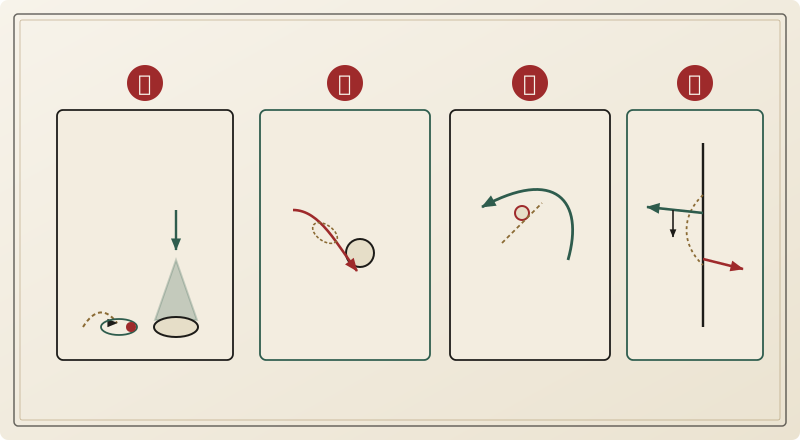
Classical Wudang Taijiquan biomechanical diagram for Gaotanma (High Pat on Horse) showing rear-Kwa rooting, ball-touch Xubu, Lu-Cai interception, and Chuanzhang threading palm
Figure 1 — Biomechanical Structure of Wudang Gaotanma (高探马): ① Rear-Kwa rooting and half-step withdrawal into a ball-of-foot empty stance (Qianjiaozhang Xubu 前脚掌虚步, red dot); ② Lead forearm supination (Yangzhang 仰掌) and downward Lu-Cai (捋采) deflection to the hip; ③ Rear hand coiling past the ear and threading forward (Chuanzhang / Puzhang 穿扑掌) over the lead forearm; ④ Hollow chest (Hanxiong 涵胸), sunk elbow (Chen Zhou 沉肘), and horizontal pull-push opposition (Duila 对拉).

2. Step-by-Step Biomechanical Breakdown

Phase Lower-Body & Kwa Action Upper-Body Spiral & Palm Action Internal Intention (Yi 意) & Breath
1. Folding the Rear Kwa & Unloading the Front Foot Shift weight smoothly backward onto the rear supporting leg (70–80% weight); fold the rear inguinal crease (Kwa 胯) and align the rear knee with the rear toes If entering from Danbian, release the rear five-finger hook (Goushou) into an open palm; rotate the lead forearm palm-up (supination, Yangzhang 仰掌) Inhale gently; "listen" (Ting Jin 听劲) with the lead wrist and forearm as if an opponent has grabbed or pressed your lead arm
2. Half-Step Gathering into Ball-Touch Xubu Draw the unloaded front foot half a step backward along its own shoulder-width rail and touch down lightly with the ball of the foot (Qianjiaozhang 前脚掌), heel slightly suspended Turn the waist 30–45° toward the rear side; the rear hand arcs upward past the rear shoulder and ear with a soft, heavy elbow Keep Xu Ling Ding Jin vertical; never let the hips pop up as the front foot draws back
3. Forearm Interception (Lu-Cai) & Overhand Threading As the waist turns back to face the front centerline, settle the tailbone (Weilu) deeper into the rear heel The lead hand draws inward and downward past the chest to rest palm-up beside the front hip (Cai 采), while the rear hand threads forward over the back of the lead forearm Transition from inhale to exhale; the two forearms cross smoothly in front of the chest without colliding
4. Hollowing the Chest & Extending Tanma Palm Maintain a stable 70/30 or 80/20 rear-weighted empty stance with the front ball of the foot lightly testing the ground The threading palm extends forward along the centerline with fingertips at eye/forehead level, palm facing obliquely downward/inward, elbow sunk (Chen Zhou 沉肘) Exhale into the lower Dantian; hollow the chest slightly (Wu Xia Qi Suo Ju — keeping the chest spacious) to unite the rear hip pull with the forward palm probe

3. Distinguishing Ball-Touch Gaotanma from Heel-Touch Tishou Shangshi

In Wudang Taijiquan, students often ask why some empty stances touch with the heel while others touch with the ball of the foot:

  • Heel-Touch Xubu (as in Raising Hands Tishou Shangshi and Play the Lute Shouhui Pipa): Used when the arms close inward and upward (He Jin 合劲) to check or uproot an opponent's structure at close range.
  • Ball-Touch Xubu (as in Gaotanma and White Crane Spreads Its Wings Baihe Liangchi): Used when the upper body is simultaneously yielding/drawing back with one hand and probing forward with the other, keeping the front foot nimble and ready to either step forward into a kick/entry or pivot away.

Practice Reflection for Students

Stand in the finished posture of Gaotanma for five quiet breaths and test your front foot: can you lift the front toes one centimeter off the floor and set them back down without your head or torso bobbing even a millimeter? When you can, your rear Kwa is truly carrying the saddle.

Seeker’s Q&A · Frequently Asked Questions

Why does the front foot touch with the ball of the foot, not the heel, in High Pat on Horse?

In High Pat on Horse one hand draws down to the hip while the other reaches forward, so the front foot has to stay light and ready to move. Touching with the ball of the foot, heel slightly lifted, lets you step, kick or pivot at once. A heel-touch empty stance, as in Raising Hands or Play the Lute, belongs to postures where both arms close inward. About 70 to 80 percent of the weight sits on the rear leg; if you can lift the front foot a centimetre without your head or body moving, the rear hip is carrying you properly.


