WUDANG TAIJIQUAN · 武当太极拳

Brush Knee and Twist Step (Louxi Aobu): Cross-Lateral Coordination, Lower-Gate Deflection, and Zhi Er Bu Si in Wudang Taijiquan 搂膝拗步:武当太极拳的顺拗步辨析、下盘横搂护膝与“直而不肆”推掌要法

A comprehensive biomechanical guide to Louxi Aobu (搂膝拗步) in traditional Wudang Taijiquan, contrasting Aobu (twist/cross step) with Shunbu (same-side step), lower-gate brushing mechanics, and waist-driven palm emission.


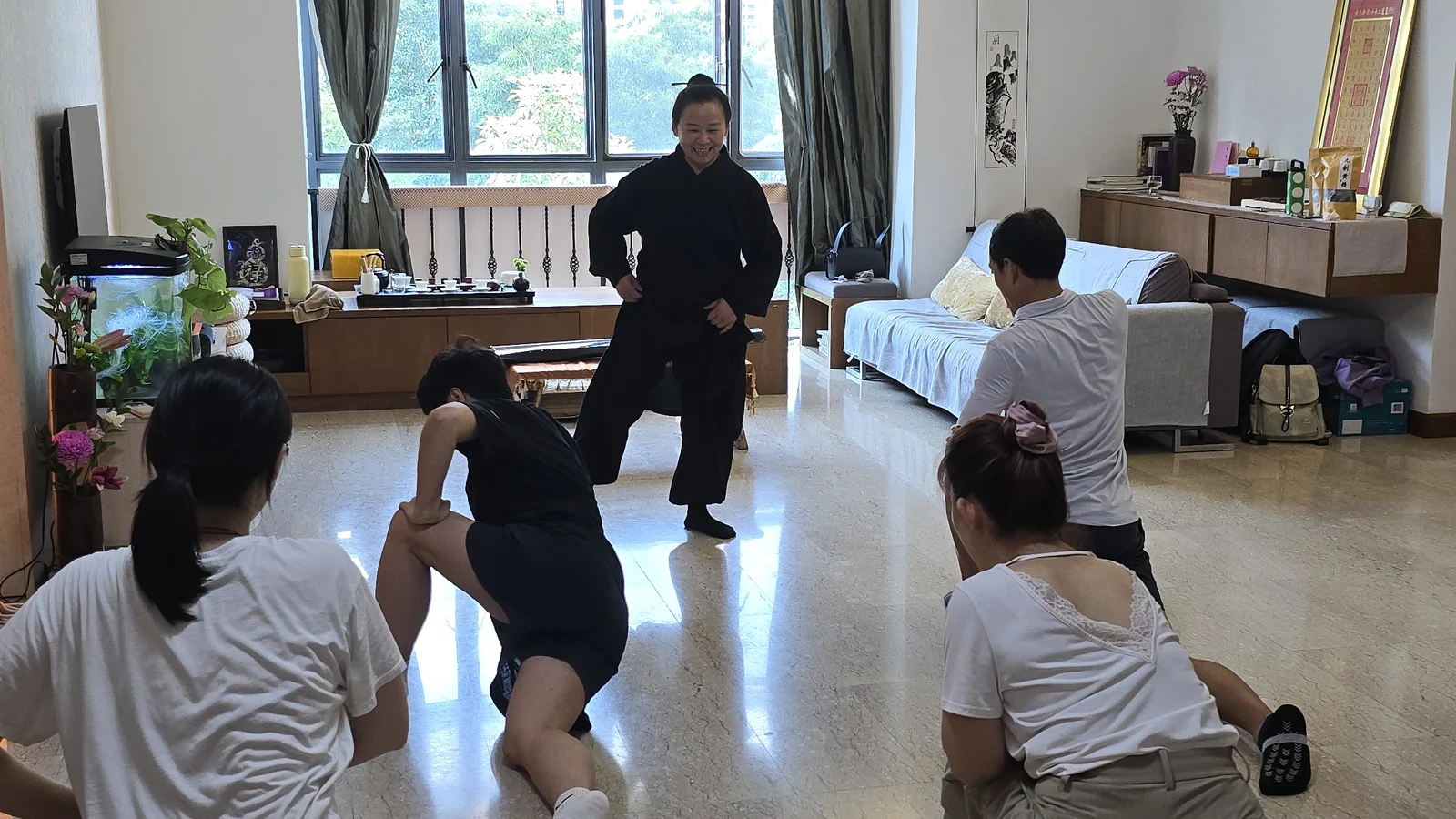
A Wudang taijiquan lesson in a sunlit room: students seen from behind kneel into deep lunges to open the hips while a teacher in black Taoist-style clothing stands in a wide stance, smiling, with an ink-painting scroll on the wall behind.

What Defines 'Aobu' (拗步) Versus 'Shunbu' (顺步) in Internal Boxing?

In traditional Wudang Taijiquan and the classical manuals studied under Taoist & Martial Classics, 'Brush Knee and Twist Step' (Louxi Aobu, 搂膝拗步) is the quintessential training posture for cross-lateral whole-body power. To understand its name, compare it with Part the Wild Horse's Mane (Yema Fenzong): in Yema Fenzong, when the left foot steps forward, the left hand also extends forward—a 'same-side step' (Shunbu, 顺步). In Louxi Aobu, when the left foot steps forward into a bow stance, the left hand brushes outward past the left knee while the right hand presses forward at chest level—a 'cross-lateral or twist step' (Aobu, 拗步). This contralateral pairing engages the spiral fascia across the anterior and posterior oblique slings of the torso, uniting the rear heel with the opposite palm.

Louxi (搂膝): Guarding the Lower Gate Without Bending the Waist

The first half of the posture—Louxi (搂膝, 'Brushing the Knee')—protects the lower gate against a low kick or mid-low strike, and serves as the setup for sequences such as Stepping Up to Plant Punch (Shangbu Zaichui). As the supporting hip folds and the lead foot steps forward (The Five Phases of Stepping: Wuxingbu), the lead palm sweeps downward across the abdomen and arcs horizontally past the kneecap until it settles beside the outer hip with the palm facing down. Crucially, the hand reaches knee level because the stances lower through hip-and-knee flexion, never because the practitioner bends the waist forward.

Brush Knee and Twist Step (Louxi Aobu): Cross-Lateral Coordination, Lower-Gate Deflection, and Zhi Er Bu Si in Wudang Taijiquan

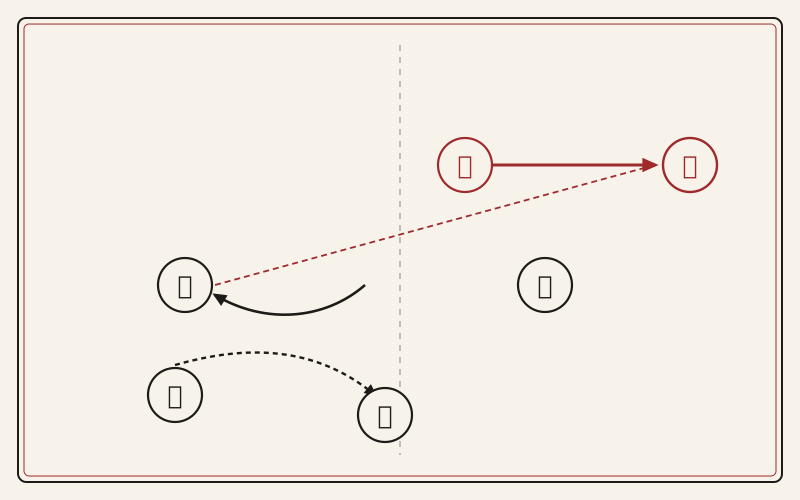
Biomechanical structure of Louxi Aobu (Brush Knee and Twist Step): ① Rear-leg root and waist coiling while the rear hand rises to ear level, ② Cat-like forward step into a shoulder-width Bow Stance (Gongbu) establishing cross-lateral Aobu geometry, ③ Lead hand sweeping horizontally across the front knee (Louxi — brushing deflection of a low-line kick or strike), ④ Rear palm spiraling forward past the ear along the centerline with a seated wrist (Zuowan), ⑤ Straight Yet Not Overextended (Zhi Er Bu Si — micro-bend in the elbow and sunk scapula), and ⑥ Cross-lateral diagonal connection between the brushing hand, waist pivot, and emitting palm.

Aobu Tui Zhang: Passing the Ear and Embodying 'Zhi Er Bu Si'

While the lead hand brushes across the knee, the rear hand circles upward from behind to coil beside the ear with the palm facing obliquely inward. As the bow stance settles and the waist rotates forward, the rear palm spirals out past the cheek along the centerline with the wrist seated (Zuowan, 坐腕) and the fingers pointing up at shoulder height. Here the practitioner directly applies Tao Te Ching Chapter 58's maxim Zhi Er Bu Si (直而不肆, 'straight yet not overextended'): the palm travels along a straight line from the ear to the target, yet the shoulder socket stays nestled back and the elbow retains a soft downward curve.

Avoiding the 'Tightrope Stance' in Continuous Louxi Aobu Drills

When practicing three consecutive left-and-right repetitions of Louxi Aobu—as taught in the courtyards of Wudang Mountain and our Start Here guide—beginners often step with both feet on a single narrow line, causing the pelvis to wobble during the cross-lateral waist turn. Always maintain a natural shoulder-width transverse channel (Hengdang, 横裆) between the left and right tracks so the waist can rotate freely.

Seeker’s Q&A · Frequently Asked Questions

What is the key structural alignment in Brush Knee and Twist Step (Louxi Aobu)?

A comprehensive biomechanical guide to Louxi Aobu (搂膝拗步) in traditional Wudang Taijiquan, contrasting Aobu (twist/cross step) with Shunbu (same-side step), lower-gate brushing mechanics, and waist-driven palm emission.
