WUDANG TAIJIQUAN · 武当太极拳

Play the Lute (Shouhui Pipa) & White Crane Spreads Its Wings (Baihe Liangchi): Empty-Stance Opening and Closing in Wudang Taijiquan 手挥琵琶与白鹤亮翅:武当太极拳的两种虚步规矩、开合升降与合劲听化要法

A comparative technical guide to Baihe Liangchi (白鹤亮翅) and Shouhui Pipa (手挥琵琶) in traditional Wudang Taijiquan, examining toe-touch versus heel-touch Empty Stances (Xubu), vertical Kai expansion, and inward He listening.


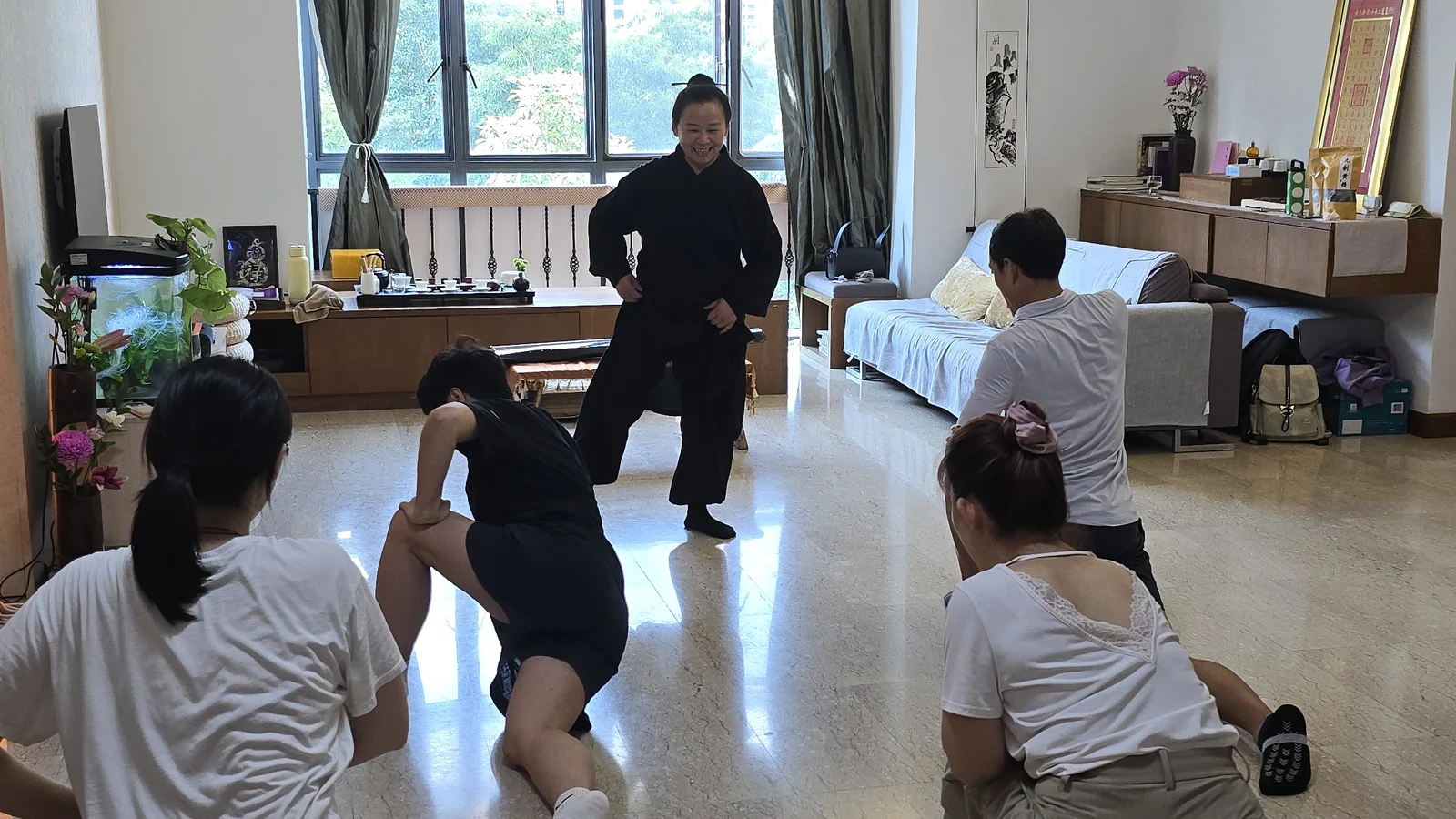
A Wudang taijiquan lesson in a sunlit room: students seen from behind kneel into deep lunges to open the hips while a teacher in black Taoist-style clothing stands in a wide stance, smiling, with an ink-painting scroll on the wall behind.

Two Complementary Empty-Stance Archetypes: Vertical Kai and Horizontal He

In the opening section of traditional Wudang Taijiquan—interwoven directly with Brush Knee and Twist Step (Louxi Aobu)—two postures train the practitioner to stand poised on the rear leg in an Empty Stance (Xubu, 虚步): 'White Crane Spreads Its Wings' (Baihe Liangchi, 白鹤亮翅) and 'Play the Lute' (Shouhui Pipa, 手挥琵琶). Together they form a textbook study in Opening (Kai, 开) and Closing (He, 合) as described in the classical treatises (Taoist & Martial Classics). Where Baihe Liangchi opens the frame vertically and diagonally like a crane unfurling its wings above a mountain pine, Shouhui Pipa gathers both forearms inward toward the central plane like a musician cradling a vertical four-stringed pipa lute.

Baihe Liangchi (白鹤亮翅): Toe-Touch Empty Stance and Vertical Peng-Cai Split

Transitioning into Baihe Liangchi, the rear hip folds to receive the body weight while the front foot draws back slightly to rest lightly on the ball and toes (Dingxubu, 点虚步). Simultaneously, the right arm arcs upward so the palm rests above and slightly in front of the right temple with the palm facing inward-outward, while the left palm presses downward beside the left hip. The key refinement is to coordinate the upward float of the crown and upper arm with the downward sinking of the tailbone, rear heel, and lower palm—opening the ribs and flank meridians without arching the lower back or lifting the shoulders.

Play the Lute (Shouhui Pipa) & White Crane Spreads Its Wings (Baihe Liangchi): Empty-Stance Opening and Closing in Wudang Taijiquan

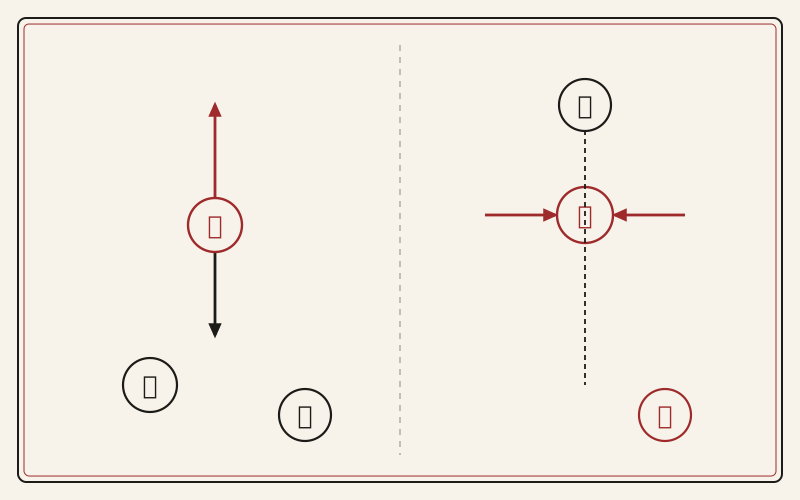
Biomechanical contrast between Baihe Liangchi (White Crane Spreads Its Wings — Vertical Opening / Kai) and Shouhui Pipa (Play the Lute — Horizontal Gathering / He) in Empty Stance (Xubu): ① Rear-leg sit and deep inguinal fold (Songkua) supporting 70–80% of the weight, ② Baihe Liangchi: upper palm arcing above the temple and lower palm settling beside the hip in vertical two-way expansion (Kai), ③ Light empty-toe contact on the lead foot in Baihe Liangchi, ④Half follow-step (Genbu) and heel-touch Empty Stance for Shouhui Pipa, ⑤ Shouhui Pipa: both vertical palms closing inward toward the centerline at chest and elbow level like holding a vertical pipa lute (He), and ⑥ Unbroken Zhongding plumb line governing both opening and closing.

Shouhui Pipa (手挥琵琶): Heel-Touch Empty Stance and Scissor-Like He-Jin

To enter Shouhui Pipa, the rear foot takes a half follow-step forward (Fist Under Elbow and Following Step Genbu Guide), sits into the rear hip, and lifts the front foot slightly to place the heel lightly on the stone flagstone with the toes upturned. As the heel touches down, the lead hand rises along the centerline with the palm vertical (Lizhang, 立掌) and index finger at nose level, while the rear palm draws forward to guard opposite the lead elbow. Both armpits remain softly rounded (Xu Ye, 虚腋) as if holding a small sphere under each arm. Tactically, Shouhui Pipa uses inward-closing energy (Hejin, 合劲) and tactile listening (Tingjin, 听劲) to adhere to an opponent's extended arm—embodying Tao Te Ching Chapter 60's principle of neutralizing force without mutual harm (Liang Bu Xiang Shang).

Why Baihe Liangchi Naturally Flows Into Louxi Aobu and Haidizhen

In the courtyard practice of Wudang Mountain and our Start Here curriculum, notice how the toe-touch empty stance of Baihe Liangchi immediately prepares the downward brushing sweep into Louxi Aobu, while the heel-touch gathering of Shouhui Pipa prepares either another Louxi Aobu or the deep inguinal fold of Needle at Sea Bottom (Haidizhen). In both postures, test your root by lifting the front empty foot half an inch off the ground without shifting your torso.

Seeker’s Q&A · Frequently Asked Questions

What is the key structural alignment in Play the Lute (Shouhui Pipa) & White Crane Spreads Its Wings (Baihe Liangchi)?

A comparative technical guide to Baihe Liangchi (白鹤亮翅) and Shouhui Pipa (手挥琵琶) in traditional Wudang Taijiquan, examining toe-touch versus heel-touch Empty Stances (Xubu), vertical Kai expansion, and inward He listening.
