
WUDANG TAIJIQUAN · 武当太极拳

Deflect, Parry, and Punch (Ban Lan Chui) in Wudang Taijiquan: Three-Beat Spiral Clearing, Stepping Rhythm & Waist-Driven Vertical Fist 武当太极拳“搬拦捶”详解:旋臂搬化、弧形拦掌与转腰立拳三连环

Why the most recurring punch combination in traditional Taijiquan never strikes down an unguarded line—and how Ban (Deflect), Lan (Parry), and Chui (Punch) flow as one continuous waist-driven wave.

A figure in a long dark robe, seen from behind, standing with both hands clasped behind the head on a rock outcrop between pines, facing a valley of golden mist.

If Grasp the Sparrow’s Tail (Lanquewei) is the signature open-palm sequence of Wudang Taijiquan, then “Step Forward, Deflect, Parry, and Punch” (进步搬拦捶, Jinbu Ban Lan Chui) is its quintessential fist sequence. Appearing repeatedly throughout the traditional form as the gateway into Apparent Close-Up (Rufeng Sibi 如封似闭), those three syllables—Ban (搬), Lan (拦), and Chui (捶)—contain a complete lesson in how internal martial arts clear the centerline before issuing power.

1. What Do “Ban,” “Lan,” and “Chui” Actually Mean?

Many students blur the first two movements into vague arm-waving before throwing a punch. In Wudang transmission, each word names a distinct spiral vector driven by the waist and stepping feet:

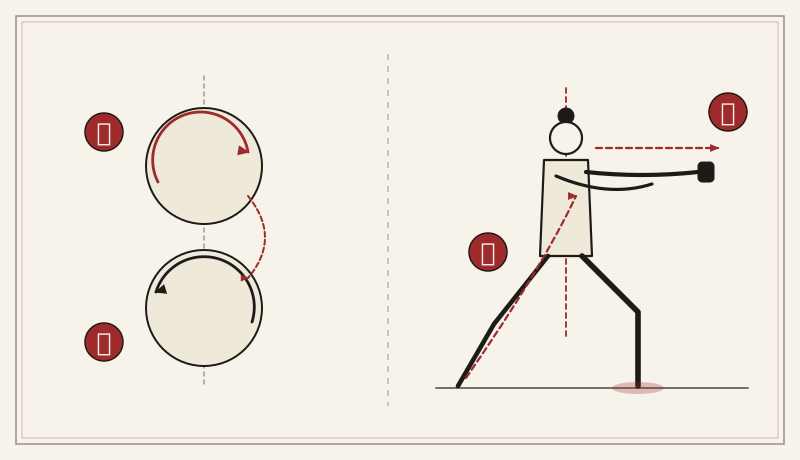
Classical ink-and-cinnabar diagram of Wudang Taijiquan Deflect, Parry, and Punch (Ban Lan Chui) showing the outward Ban deflection and inward Lan parry circles on the left, and the final Bow-Stance vertical fist with accompanying left guard palm on the right

Three-Beat Spiral Mechanics of Deflect, Parry, and Punch (武当太极拳“搬拦捶”三连环力学图解).

  1. Beat 1 — Ban (搬, “Move Aside / Deflect”): as the transition foot turns 45 degrees outward, the right fist and forearm roll outward from the inside of the chest to deflect an incoming strike off the centerline while the right fist coils back to the right hip
  2. Beat 2 — Lan (拦, “Parry / Fence Across”): as the lead foot steps forward, the left palm arcs across the front of the chest from outside to inside—sealing the opponent’s other arm so they cannot counter
  3. Beat 3 — Chui (捶, “Waist-Driven Vertical Fist”): as weight settles into the front Bow Stance, power rises from the rear heel through the waist (Six Harmonies) to issue the right vertical hollow fist at chest height
  4. Mutual Accompanying of Fist and Palm (右拳左掌相随 · 曲中求直): the left palm draws back softly to guard near the inside of the right forearm while the right elbow retains its elastic curve (Arm Bow)

2. Why Two Circular Deflections Precede One Straight Punch

Echoing Chapter 63 of the Tao Te Ching (Dao De Jing)—“Undertake difficult things where they are still easy” (图难于其易)—punching straight into an opponent whose arms still control the centerline simply trades blows. Instead, Ban Lan Chui uses two alternating Silk-Reeling (Chansijin) circles:

  • Ban clears from inside to outside (like opening the first leaf of a double wooden gate);
  • Lan brushes from outside to inside (closing the second leaf over the opponent’s elbow);
  • Chui travels straight down the newly opened corridor along the centerline without meeting resistance.

3. Three Keys to a Grounded, Effortless “Ban Lan Chui”

  • Match the Three Hand Beats to the Stepping Rhythm: Step 1 (turning the transition foot 45° outward) pairs with Ban; Step 2 (stepping the lead foot out onto a shoulder-width track, Empty and Full) pairs with Lan; Step 3 (shifting into the Bow Stance) pairs with Chui.
  • Keep the Vertical Fist Upright (“Tiger’s Mouth Facing Up,” 虎口朝上): The striking surface is the flat vertical alignment of the knuckles at solar-plexus height, with the wrist level and never bent upward or downward.
  • Let the Left Palm Guard Without Clinging Tightly: At the completion of the punch, your left palm rests a fist-width inside your right forearm—ready to listen (Tingjin) and transition seamlessly into Apparent Close-Up.
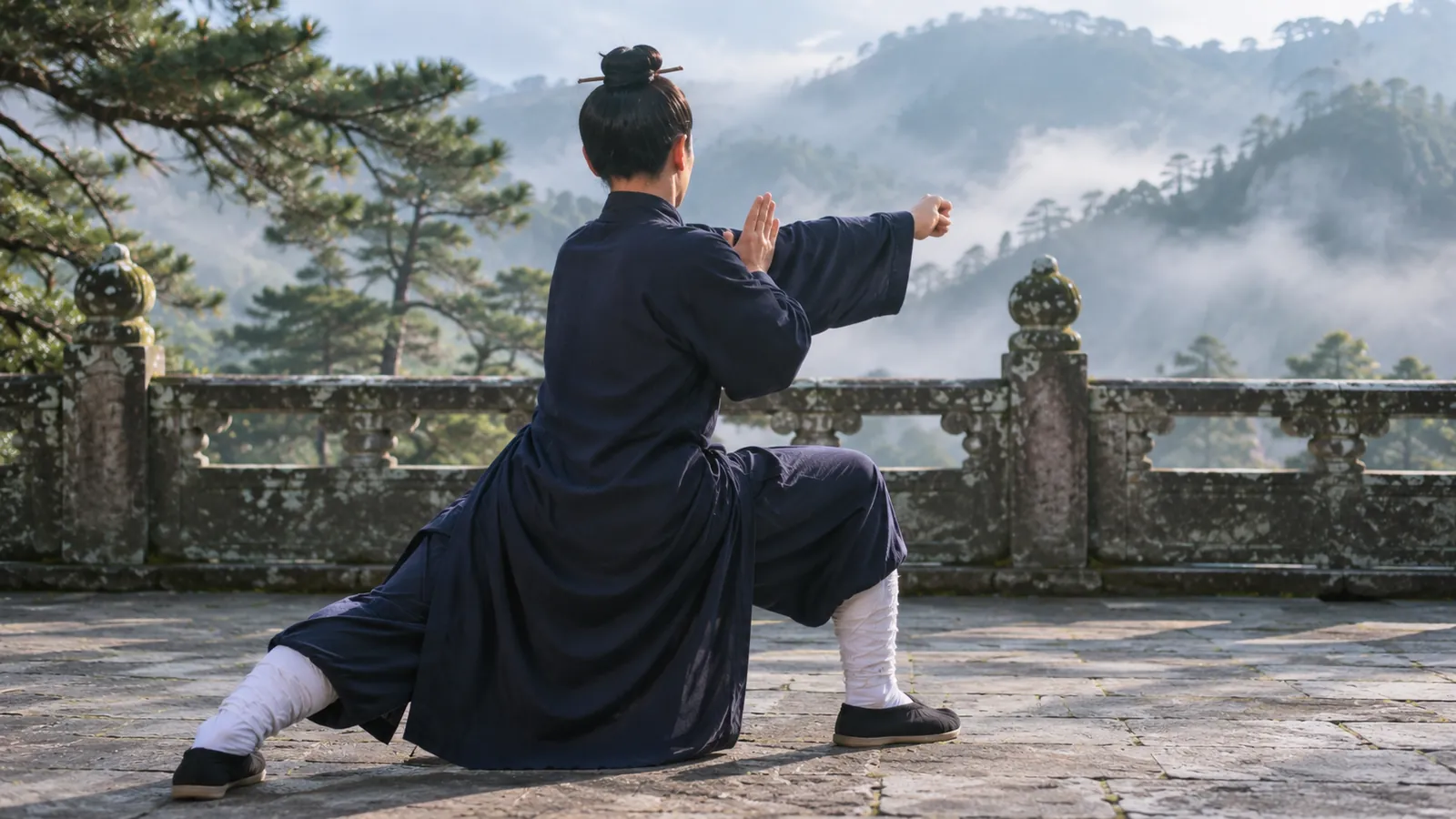
A practitioner in dark indigo Taoist robes and white cotton leg wraps seen from behind in a deep Deflect, Parry and Punch (Ban Lan Chui) stance of Wudang Taijiquan, one fist thrust forward at chest height and the other forearm drawn across the body, on a stone mountain terrace before misty pines.

Deflect, Parry and Punch (Ban Lan Chui) at dawn: the front fist travels forward while the other hand guards the centreline.

4. Training Authentic Form and Application Between Wudang Mountain and Singapore

Connecting the living martial heritage near Wudang Mountain’s UNESCO World Heritage ancient Taoist temples with our regular classes in Singapore, Wudang.Org teaches students the clear purpose behind every movement of the form. Begin with Wudang Tai Chi for Beginners, visit Start Here, or join our Singapore Tai Chi Retreat Camp.

Safety note: Turn the transition foot outward 45 degrees only while it is unweighted, and keep the punching shoulder sunken (Chenjian Zhuizhou) and elbow micro-curved; traditional martial training does not replace medical care.

Seeker’s Q&A · Frequently Asked Questions

What is the difference between “Ban” (搬, Deflect) and “Lan” (拦, Parry) in Ban Lan Chui?

“Ban” uses the right forearm and backfist rotating outward from the centerline to move an incoming strike aside and coil to the hip; “Lan” uses the left open palm sweeping inward across the chest to seal the centerline as you step forward.


How do the feet coordinate with the three hand movements (Ban, Lan, Chui)?

Follow the three-beat rhythm: Beat 1 (turning the transition foot 45° outward and shifting weight onto it) matches Ban; Beat 2 (stepping the front foot forward onto its heel) matches Lan; Beat 3 (shifting into the front Bow Stance) matches Chui.

Where should the left hand rest when the right fist finishes punching in Ban Lan Chui?

The left palm rests softly about a fist-width inside the right forearm (without pressing flat against the skin), guarding the centerline and preparing to thread under the elbow for the next posture, Apparent Close-Up (Rufeng Sibi).
